









The problem with the cloud
Most mainstream smart home setups, like the ones from big-tech giants, rely on a 'cloud-first' architecture. This means when you press a button or a sensor detects motion, that signal travels from your house to a server farm owned by a corporation, and
then back to your device. Not only does this create a privacy risk by letting companies track your daily habits, but it also introduces latency and makes your home useless if your internet goes down. To build a truly private smart home, you need to move the 'brain' of your operation from the cloud to a local server that stays inside your four walls.
Meet Home Assistant
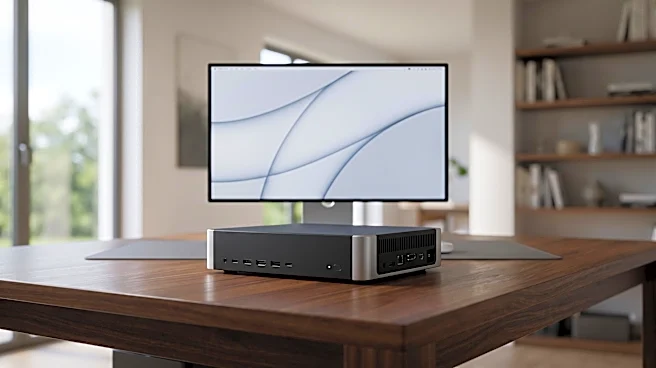
The cornerstone of a privacy-focused setup is Home Assistant. It is an open-source platform that acts as a central hub, allowing different brands and types of devices to talk to each other locally. Instead of your data leaving your house, Home Assistant processes everything on your own hardware. This gives you total control over your automation logic and, most importantly, your data. Because it is open-source, it is incredibly flexible, but it does require a bit of a learning curve to get everything running smoothly.
Offloading the Wi-Fi congestion
One of the biggest mistakes beginners make is buying dozens of Wi-Fi-based smart plugs and bulbs. If you have 40 smart devices all fighting for space on your Wi-Fi, your Netflix streaming will suffer and your smart lights will become unresponsive. To avoid this, you should look for devices that use Zigbee or Thread. These protocols create a separate mesh network specifically for low-power devices. To get started, you'll need a dedicated coordinator, such as a Sonoff Zigbee 3.0 USB Dongle. This small device plugs into your Home Assistant server and creates a dedicated lane for your sensors and switches, leaving your Wi-Fi free for your phones and laptops.
Essential hardware for your setup
If you are looking to build out your system during a sale, there are a few specific types of hardware that offer the best bang for your buck in a local-first ecosystem. First, consider contact sensors. Brands like ThirdReality offer Zigbee-based door and window sensors that are highly reliable and run on standard AAA batteries rather than those annoying coin cells. Second, look for video doorbells that support Power over Ethernet (PoE). While Wi-Fi doorbells are common, they are prone to dropping connections. A PoE doorbell, like those from Reolink, provides a rock-solid connection and allows you to store video locally on an SD card or a private NVR, completely bypassing the need for monthly cloud subscriptions.
The power of the mesh network
The beauty of using Zigbee devices is the ability to extend your range without buying expensive extenders. In a Zigbee mesh, many devices—especially those that are plugged into a wall, like smart plugs—act as signal repeaters. They catch the signal from the hub and pass it along to the next device. This means you can start with a single dongle and gradually expand your coverage throughout a large home by simply adding more plugged-in devices. This creates a resilient, self-healing web of connectivity that is much harder to break than a traditional Wi-Fi setup.