








The Dark Ages of Network Setup
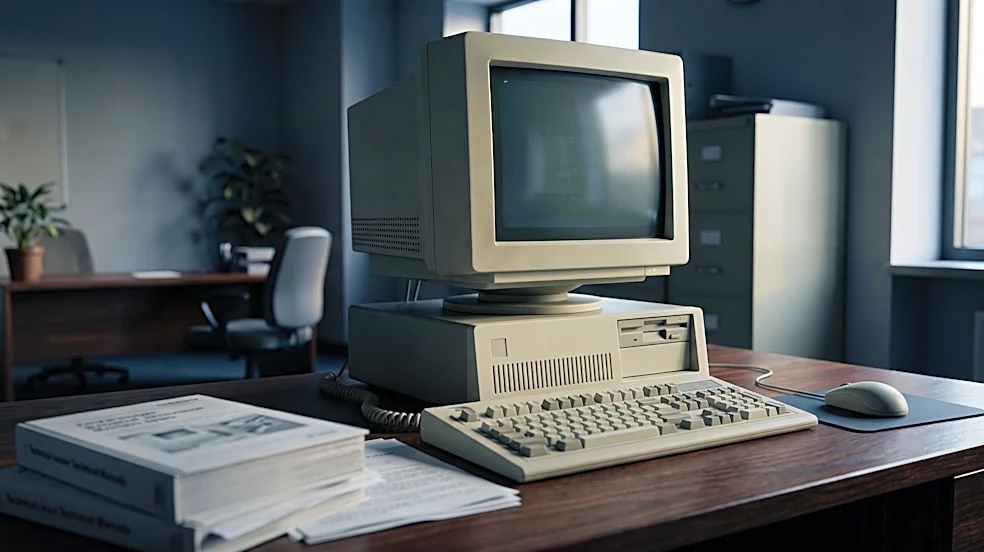
Imagine a world where connecting a new computer to a network required a call to an IT administrator. They'd consult a physical spreadsheet, find an unused IP address, and then walk over to your desk to manually type it in. This was the reality of the 1980s
and early 1990s. Every device needed a unique, hand-assigned number to communicate. A typo could bring down a chunk of the network. As networks grew from dozens to hundreds of devices, this manual system became an operational nightmare. A protocol called the Bootstrap Protocol, or BOOTP, offered some relief. Developed in the mid-80s, BOOTP allowed a 'diskless workstation' to boot up and ask a server for its assigned IP address. It was a step forward, centralizing the address list, but it was still fundamentally static. An administrator had to manually pre-register the hardware address of every single device into the BOOTP server. It saved a trip to the desk, but it didn't solve the core problem of scalability or the need for manual data entry for every new device.
A Call for True Automation
By the early 1990s, the writing was on the wall. Networks were exploding in size. The idea of a user bringing their own laptop into an office was shifting from a novelty to a necessity. The static, one-to-one mapping of BOOTP couldn't handle this dynamic environment. What if a device was only on the network for an hour? It held an IP address hostage until an admin manually freed it up. There was no mechanism for reclaiming and reusing addresses automatically. The Internet Engineering Task Force (IETF), the body that develops internet standards, recognized the need for something better. They needed a protocol that could assign addresses on-demand from a pool, lease them out for a set period, and reclaim them when they were no longer in use. This would allow for a much larger number of devices to use a limited number of IP addresses, just not all at the same time. This new protocol had to be dynamic, efficient, and above all, automated.
Enter DHCP: Automation with a Lease
In 1993, a working group led by Ralph Droms of Bucknell University delivered the answer: the Dynamic Host Configuration Protocol (DHCP), first detailed in RFC 1531. DHCP introduced the revolutionary concept of 'leases'. Instead of a permanent assignment, a device would be 'lent' an IP address for a specific period. When the lease expired, the device could renew it or the address would return to the pool for another device to use. But the true genius of DHCP—the 'real reason' for its incredible success—was a crucial design decision: it was built as an extension of BOOTP. DHCP messages were designed to be compatible with BOOTP message formats. It even used the same network ports. This meant that a new DHCP server could answer requests from older BOOTP clients, and the existing infrastructure of 'BOOTP relays', which forwarded requests across different network segments, worked for DHCP out of the box. This backward compatibility was a killer feature. It allowed network administrators to upgrade their systems gradually without a disruptive 'flag day' where everything had to switch over at once.
Pragmatism Over Perfection
The design philosophy of DHCP was explicitly to be a 'mechanism rather than a policy'. It didn't try to be a perfect, all-encompassing network management tool. It focused on solving one major problem exceptionally well: the automatic allocation of IP addresses. It was designed to be simple and robust. The goal was zero-touch configuration for the end client, taking the burden entirely off the user and dramatically simplifying life for administrators. This pragmatic approach—solving the immediate, painful problem while ensuring an easy migration path—is why DHCP was adopted so rapidly and universally. The designers chose not to reinvent the wheel. Instead, they put a powerful new engine on an existing, trusted chassis. They prioritized practical implementation and adoption over theoretical elegance. This decision ensured that DHCP wasn't just a good idea on paper; it was an immediately useful tool that could be deployed into the growing networks of the 90s with minimal friction.