




The Undisputed King of AI Hardware
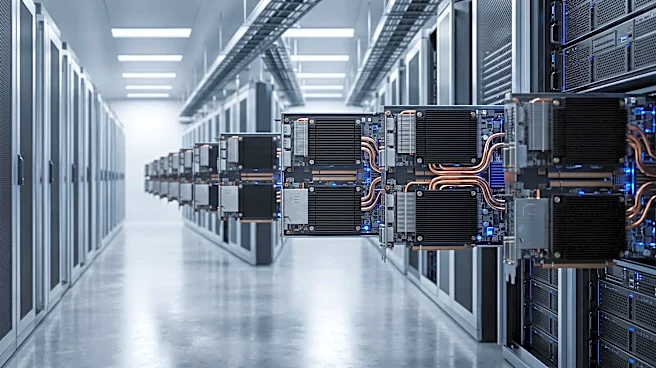
To understand the AI boom, you have to understand Nvidia's role in it. The company doesn't build the AI models themselves, but it builds the picks and shovels for the gold rush: Graphics Processing Units (GPUs). Originally designed for video games, these
powerful chips are exceptionally good at the kind of parallel calculations needed to train and run large language models. As a result, Nvidia's high-end data center GPUs—like the H100, H200, and the new Blackwell and Vera Rubin series—have become the essential, non-negotiable infrastructure for anyone serious about AI, from big tech to startups. This dominance gives Nvidia immense pricing power and makes its financial health a barometer for the entire industry's investment in AI. When Nvidia’s Data Center revenue jumps 110% year-over-year to over $107 billion, it tells you that the demand for AI horsepower is not just strong, it's insatiable.
The Two AI Philosophies: Open vs. Closed
The AI world is currently split between two competing philosophies. On one side are the 'closed' models, like OpenAI's GPT series or Anthropic's Claude. You can use them through an API, but you can't see the code, download the model weights, or run it on your own servers. You're paying for access to a black box. On the other side are 'open-weight' models. Models like those from Llama or DeepSeek are published with their parameters (weights) available for download. This allows anyone with the technical skill and hardware to run, modify, and fine-tune them for specific tasks, often on their own infrastructure. This offers greater control, privacy, and potentially lower long-term costs, avoiding vendor lock-in. The trade-off has historically been performance, but in 2026, that gap is rapidly closing for many common business tasks.
Connecting the Dots: The High Price of Power
Here’s where Nvidia’s earnings become critical. Training and even running a powerful open-weight model isn't free—far from it. It requires massive clusters of expensive GPUs. A single high-end Nvidia B200 can rent for nearly $8/hour, and training a large model can require hundreds or thousands of these chips running for weeks. The compute cost to train a frontier model can run into the hundreds of millions of dollars. While fine-tuning an existing open-weight model is far cheaper, deploying it at scale for millions of users still requires a significant investment in hardware. When Nvidia reports record-breaking earnings and massive gross margins of around 75%, it reflects the sky-high demand and prices for its chips. This directly sets the cost structure for the entire AI ecosystem. A world where Nvidia's chips are expensive and in high demand is a world where it's very costly for anyone—especially independent developers and smaller companies—to compete with the giant, closed-model labs that can afford to buy GPUs by the thousands.
A Double-Edged Sword for Open AI
Nvidia’s continued success is a double-edged sword for the open-weight movement. On one hand, the company's incredible revenue growth validates the entire AI revolution, fueling investor confidence and ensuring a steady stream of ever-more-powerful hardware. Nvidia actively supports the open-source community with tools and optimizations, recognizing that a vibrant ecosystem benefits everyone. On the other hand, the economics underpinning those earnings reports create a formidable barrier to entry. The immense cost of compute, driven by demand for Nvidia's hardware, favors the deep-pocketed tech giants building closed models. It creates a dynamic where open-weight AI is perpetually playing catch-up, reliant on the hardware economics dictated by a single, dominant company. While open models are becoming more efficient, the very success that drives Nvidia’s stock price also reinforces the concentration of power in the hands of those who can afford the hardware at scale.