
A Powerhouse Designed to Be Accessorized
The Mac Studio’s design is a deliberate statement. It’s a compact, headless computer that packs immense power but lacks a built-in screen, keyboard, or mouse. Instead, it offers a generous array of high-performance
ports. This wasn't an oversight; it was an invitation. Apple created a powerful core and trusted a burgeoning ecosystem of third-party manufacturers to build out the rest of the workstation. By focusing on a port-rich chassis—especially with multiple Thunderbolt connections—Apple set the stage for a new kind of modularity. Unlike the intimidating internal upgrades of a traditional PC tower, this modularity is external, user-friendly, and based on a simple plug-and-play philosophy. This design choice has allowed creative professionals to customize their setups to a degree that was previously impossible without complex custom builds.
The Thunderbolt Multiplier Effect
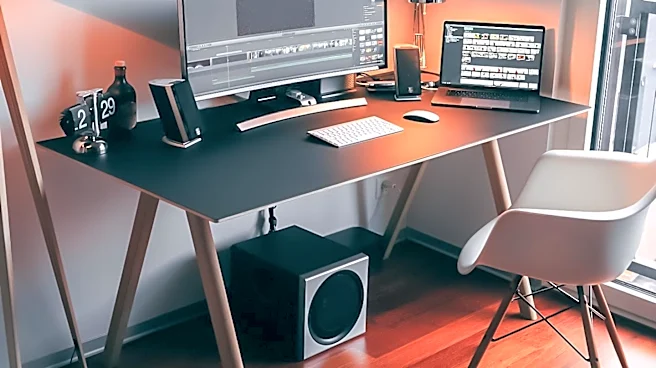
The key to this entire ecosystem is Thunderbolt. With data transfer speeds of up to 40 Gbps, a single Thunderbolt 4 port can handle multiple high-resolution displays, high-speed storage, and other peripherals simultaneously. Think of it as a superhighway for data. A video editor can connect two 4K monitors, a professional audio interface, and a lightning-fast external drive, all through a single cable connected to a dock. This capability, managed by advanced Thunderbolt docks, transforms the Mac Studio from a simple computer into a central hub for an entire creative studio. It eliminates the cable clutter that has plagued creative desks for decades while ensuring that performance never becomes a bottleneck, even when running extremely demanding applications. This single-cable convenience is the cornerstone of the modern, minimalist, yet immensely powerful creative workspace.
When External Storage Rivals Internal
For years, the rule was simple: internal storage was always faster. That rule is now being broken. Thanks to Thunderbolt and the rise of affordable NVMe SSDs, external storage solutions now offer speeds that are often indistinguishable from, and in some cases even faster than, the Mac Studio's own internal drive. Creative professionals working with massive 8K video files or complex 3D rendering projects no longer need to pay exorbitant prices for Apple's internal storage upgrades. They can now build vast, multi-terabyte storage libraries externally for a fraction of the cost, without sacrificing performance. This shift has profound implications. Projects become more portable, storage can be upgraded as needs evolve, and the line between a scratch disk and an archival drive blurs completely. Companies like OWC are even creating stackable docks with integrated NVMe and HDD bays, allowing users to build a storage monster that seamlessly matches the Mac Studio's design.
The Dawn of the Hyper-Specialized Hub
The evolution of the dock is another critical piece of this puzzle. Early USB-C hubs were simple port expanders. Today's Thunderbolt docks are hyper-specialized pieces of hardware in their own right. There are docks designed specifically for video editors, featuring front-facing CFexpress and SD card readers for quick media offloads. There are docks for audio producers with specific port layouts to accommodate interfaces and MIDI controllers. Some high-end docks even feature their own internal chipsets to manage data flow efficiently, preventing the bottlenecks that plague cheaper hubs when multiple high-bandwidth devices are connected. These accessories are no longer just passive add-ons; they are active components that augment and specialize the Mac Studio's inherent power, allowing each user to tailor the machine to their exact workflow.
Looking Ahead to the M4 Max Era
While the M4 Max chip remains on the horizon, the trends established by the M1 and M2 generations of Mac Studio are clear. As Apple's silicon gets even more powerful, the demands on the surrounding ecosystem will only grow. We can expect to see the adoption of next-generation standards like Thunderbolt 5, which promises to double bandwidth yet again, enabling even more ambitious setups. The core idea, however, will remain the same: the Mac Studio is the brain, but its power is fully realized through the constellation of specialized accessories orbiting it. This quiet revolution has democratized the professional workstation, proving that the future of consumer hardware isn't just about what’s inside the box, but about the flexible, powerful, and ever-expanding universe of tools it can command.