







Choosing a smart thermostat by comparing spec sheets is a recipe for confusion. The truth is, the real performance of Nest, Ecobee, and Honeywell has less to do with Wi-Fi bands and more to do with their fundamentally different philosophies.
The Core Philosophy: What a Spec Sheet Won't Tell You
When you boil
it down, the battle between the big three smart thermostats isn't about screen resolution or temperature accuracy within a fraction of a degree. All of them are good at the basics. The real difference lies in how they achieve comfort and savings. It’s a choice between three distinct approaches: automated intelligence, granular control, or user-driven reliability. Google's Nest bets you want a device that learns your habits and runs itself. Ecobee believes true comfort comes from knowing the temperature and occupancy of every important room. And Honeywell, the legacy giant, focuses on rock-solid, programmable performance for users who want to be in command. Understanding which of these philosophies best fits your lifestyle is the key to picking the right device, because the on-paper features only tell a fraction of the story.
Nest: The 'Set It and Forget It' AI
Nest's claim to fame, and its single biggest differentiator, is its learning algorithm. For the first week or so, you adjust the temperature as you normally would. The Nest Learning Thermostat quietly observes these changes and builds a schedule for you, automatically. It learns when you wake up, when you leave for work, and when you go to bed. The goal is a truly hands-off experience where the thermostat anticipates your needs. This is brilliant for people who don't want to program complex schedules. It integrates seamlessly into the Google Home ecosystem, as you'd expect. The trade-off? Sometimes its 'learning' can be frustrating if it misinterprets your habits. But for users who want their thermostat to think for them, Nest's focus on predictive, invisible intelligence is what makes it feel 'smarter' than its specs suggest.
Ecobee: The Multi-Room Realist
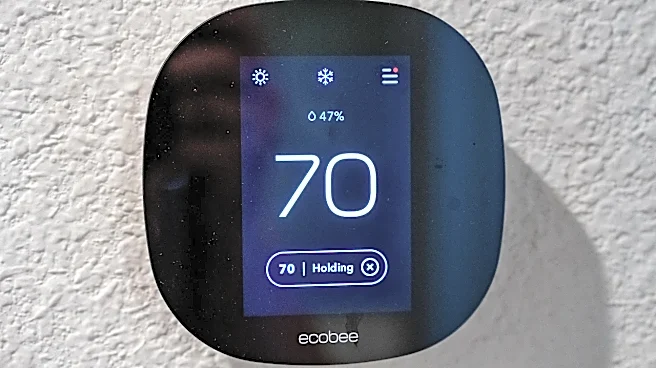
Ecobee's philosophy is that a thermostat in a hallway can't possibly know the temperature in your upstairs bedroom or the nursery. Its solution is the SmartSensor, a small, wireless device that measures both temperature and occupancy in other rooms. This is the real game-changer. Instead of heating or cooling based on one central point, Ecobee can average the temperature across several occupied rooms or prioritize a specific one. If you have a home with stubborn hot or cold spots, this is a much more direct way to solve the problem than an algorithm alone. While Nest now offers temperature sensors, Ecobee's system was built around this concept and its sensors also detect motion, which makes its 'Follow Me' feature more effective. This approach appeals to users who want precise, room-by-room control and is especially strong for those in the Apple HomeKit or Alexa ecosystems.
Honeywell: The Dependable Traditionalist
Honeywell, a name synonymous with thermostats for decades, plays a different game. Its smart thermostats, like the T9 or T10 series, are less about AI learning and more about giving the user powerful, reliable tools. The interface is often more straightforward, prioritizing robust scheduling and geofencing that you control directly. While they also support remote sensors, Honeywell's appeal lies in its reliability and focus on HVAC fundamentals. For users with complex systems like multi-stage heat pumps, Honeywell often provides more granular control over critical settings, like when expensive auxiliary heat kicks on. This appeals to homeowners who prefer to set their own schedule and trust that the device will execute it flawlessly, rather than handing control over to an algorithm. It's the smart choice for the user who wants to be the master of their own castle.