






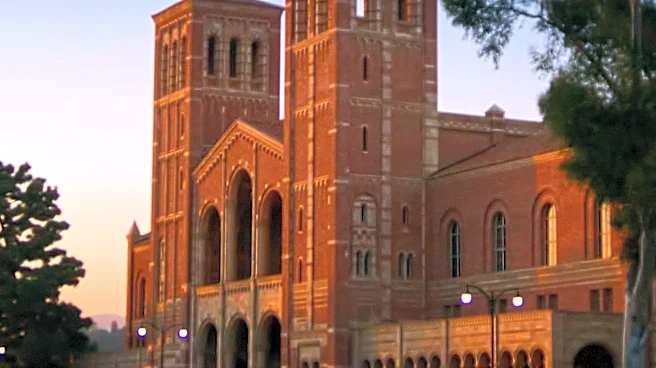

The Scene: A UCLA Lab in 1969
The year was 1969, three months after the moon landing, and the digital universe consisted of a few hulking mainframe computers scattered across the country. In a lab at UCLA, Room 3420 of Boelter Hall, a team of researchers and students gathered around
an SDS Sigma 7 computer. This machine was one of the first four “nodes” of a new, experimental network funded by the Department of Defense’s Advanced Research Projects Agency. They called it ARPANET. The goal was ambitious but, in the moment, incredibly mundane: to see if one computer could talk to another over a great distance. The man overseeing the project was Professor Leonard Kleinrock, and the student at the keyboard was Charley Kline. They weren’t trying to change the world; they were just trying to see if their fragile creation worked at all.
The Simple Plan: Just 'LOGIN'
The task was straightforward. Kline was to log in to the second node on the network, an SDS 940 computer at the Stanford Research Institute (SRI) over 350 miles away. To do this, he needed to type the command “LOGIN.” On the other end of a telephone line, a programmer at SRI named Bill Duvall was waiting to confirm if the letters appeared on his screen. The whole system was connected by primitive routers called Interface Message Processors (IMPs), ruggedized minicomputers designed to handle the data packets. There was no grand speech prepared, no cameras, and no recordings beyond a simple entry in the IMP’s logbook. The decision was simply to try, to see if the theoretical concept of a wide-area computer network could become a reality.
The Moment of Truth: 'L-O… Crash'
At 10:30 p.m. on October 29, 1969, the test began. Kline typed the letter 'L'. Over the open phone line, he asked Duvall if he saw it. “Got the L,” came the reply. He then typed 'O'. “Got the O,” Duvall confirmed. Then Kline typed 'G'. The system crashed. The connection was severed. The grand attempt to type “LOGIN” had failed. The very first message sent across the precursor to the internet wasn't a profound statement like Samuel Morse’s “What hath God wrought.” It was an unceremonious, two-letter fragment: “LO.” The team at UCLA spent the next hour debugging the issue before they successfully managed a full login. But the first transmission was, for all intents and purposes, an error.
Why an 'Oops' Became Prophetic
The “hidden decision” wasn’t a single, conscious choice to send a cryptic message. It was the collective decision to push forward into the unknown, to build something new, and to accept the failures along the way. That crash was not the end of the experiment but its true beginning. It proved that sending data packets between two remote machines was possible, even if it was fragile and imperfect. In hindsight, that accidental message—“LO”—has been given a more poetic meaning: “lo and behold.” It serves as a powerful symbol for the nature of technological progress. It rarely arrives fully formed and flawless. Instead, it emerges from trial, error, and unexpected outcomes. The internet did not begin with a bang, but with a glitch. That humble, accidental start is a far more honest and human origin story for a technology that would, in time, connect the entire planet.