


What Are Feature Flags, Anyway?
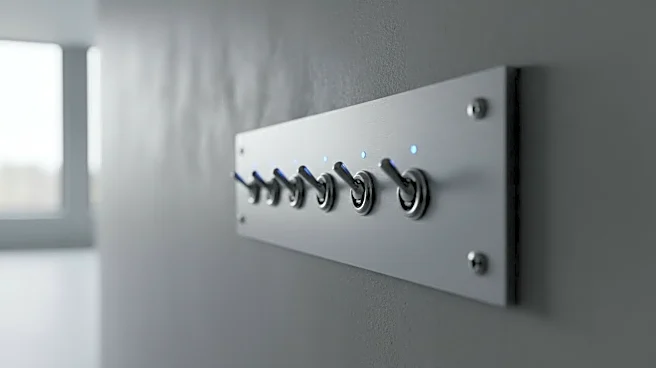
At its core, a feature flag is like a simple light switch embedded in an application's code. An engineering team can deploy new code to everyone with a specific feature turned "off." Then, without needing to ship a whole new update, they can flip that
switch to turn the feature "on" instantly. This fundamental technique is also known as a feature toggle or switch. It separates the act of deploying code from the act of releasing a feature, which completely changes how software is built and managed. A developer can push unfinished code to the live app, but keep it hidden behind a flag, preventing users from ever seeing it.
From Simple Switches to Sophisticated Dials
Modern feature flags are far more advanced than a simple on/off switch. Think of them more like a complex control panel with dimmer dials. Using platforms from companies like LaunchDarkly and Split, developers can do much more than just enable a feature for everyone. They can perform "canary releases," rolling out a new feature to just 1% of users to see if it causes problems. They can target specific groups, like giving beta testers or users in a certain country early access. They can even run A/B tests by showing 50% of users a green button and 50% a blue one to see which performs better. This level of control allows companies to test in a live production environment with minimal risk.
Ending the Era of 'Big Bang' Releases
This technology marks the end of the high-stress, all-or-nothing "launch day." In the past, releasing a major update was a high-stakes event. If a bug slipped through, the only solution was a frantic, time-consuming rollback of the entire application. With feature flags, the stakes are dramatically lower. If a new feature causes the app to crash, a product manager can simply flip a "kill switch" to disable it in seconds, instantly solving the problem for all users without needing engineers to redeploy code. This de-risks the entire development process, allowing teams to release smaller changes more frequently and confidently.
The Companies Powering the Revolution
While a company could build its own basic feature flag system, a growing number rely on specialized third-party platforms. LaunchDarkly and Split (which was acquired by Harness) are two of the most prominent names in this space. These companies provide sophisticated dashboards that let not just engineers, but also product managers and marketing teams, control feature releases. They offer powerful tools for user targeting, performance monitoring, and running complex experiments. By turning feature management into a service, they allow development teams to focus on building products instead of building and maintaining complex internal tools.
What It Means for You, the User
For the average person, the rise of feature flags means software feels more dynamic and, usually, more stable. You get access to new innovations faster because companies aren't afraid to test them. When things go wrong, they're often fixed before you even notice there was a major problem. The trade-off is that your experience might not be identical to your friend's. You might be in the 10% of users testing a new homepage, or you might see a feature disappear as the company decides to disable it. In essence, you're part of a continuous, live feedback loop that helps make the software you rely on better, one tiny, controlled step at a time.