




More Than Just a Uniform
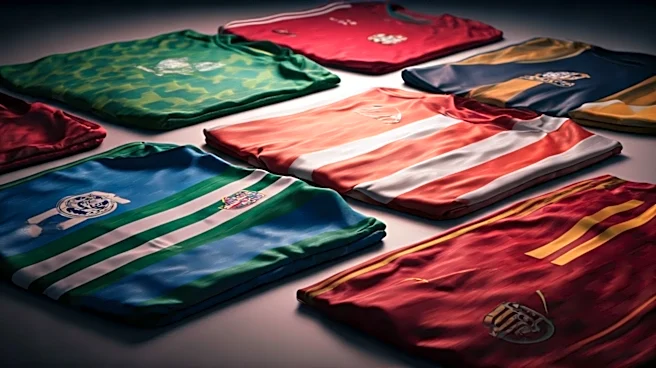
At its core, a national team jersey is a flag you can wear. It’s the most visible and personal symbol of national identity in a global tournament. For 90 minutes, players aren't just athletes; they are extensions of their country's pride, history, and culture. The design of the shirt they wear carries that weight. A simple, classic design like Brazil’s canary yellow (the *Canarinho*) is synonymous with fluid, joyful football. Croatia’s red-and-white checkerboard is an unmissable and proud nod to its coat of arms. When designers get this right, the jersey feels like an authentic representation of a nation's spirit. When they get it wrong—by using a generic template or a color that feels alien to the flag—fans react with a sense of betrayal. The outrage
isn’t about aesthetics alone; it's about a perceived disrespect to the nation itself.
The Runway on the Pitch
Somewhere along the way, soccer jerseys crossed the line from athletic equipment to high-demand fashion items. This shift is a huge reason for the increased scrutiny and conversation. The watershed moment for this modern trend was arguably Nigeria’s 2018 World Cup kit. With its electrifying green-and-white feather pattern, it sold out in minutes, queues snaked around Nike stores, and it was spotted on celebrities who had likely never watched a minute of Nigerian football. It proved a jersey could be a cultural artifact, a piece of streetwear coveted for its design alone. This puts immense pressure on brands like Adidas and Nike. They aren't just designing for performance; they’re trying to create a hit record that resonates from the stadium to the city street. The result is a cycle of bigger, bolder, and sometimes more outlandish designs aimed at capturing the non-fan's wallet as much as the die-hard's heart.
Nostalgia Is a Powerful Playmaker
Jerseys are time capsules. A single design can instantly transport a fan back to a specific moment of glory or heartbreak. The iconic 1990 West Germany kit, with its jagged, flag-colored chest band, is inseparable from the image of Lothar Matthäus lifting the trophy. Argentina's sky-blue and white stripes evoke Diego Maradona’s genius in 1986. Even the kits that were once mocked can become beloved through the warm filter of nostalgia. Take the USA’s 1994 “denim” jersey. Widely ridiculed at the time as a hokey attempt at Americana, it’s now a cherished cult classic, a symbol of a uniquely American moment in soccer history. Brands know this. That’s why so many modern kits feature “retro-inspired” elements, hoping to borrow some of the emotional weight of a past era and convert it into present-day sales.
Engineered for Online Debate
In the age of social media, a quiet, universally liked jersey might be a commercial failure. Controversy creates conversation, and conversation is free marketing. A bold pattern, a strange collar, or a minimalist crest that removes traditional elements is a guaranteed way to get the entire internet talking. Within minutes of a leak or official reveal, Twitter, Instagram, and Reddit are flooded with hot takes, memes, and rankings. Some designs seem almost scientifically engineered to be divisive. Is it brilliant or an abomination? A modern masterpiece or a lazy template? This binary creates engagement. The kit becomes a trending topic, driving clicks and commentary far beyond the sports media bubble. For the brands, even negative attention is attention, ensuring that when the tournament finally kicks off, their product is already one of the main characters.