







A Billion-Dollar Game of Tetris
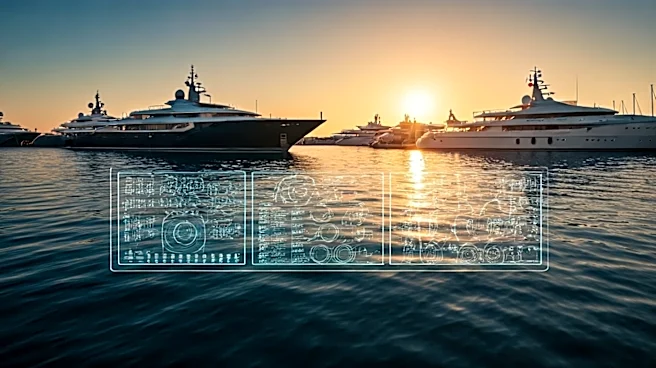
The central challenge is a simple one of supply and demand. The Vieux Port, the main harbor adjacent to the Palais des Festivals, has a limited number of berths capable of handling the colossal superyachts that descend on the French Riviera. These aren't just boats; they are floating mansions, some stretching over 200 feet and worth hundreds of millions of dollars. Securing a prime spot isn't a matter of calling a few weeks ahead. Charter companies and owners book their slots a year or more in advance, engaging in a strategic battle for position. The port authority, or 'Capitainerie,' doesn't just hand out spots first-come, first-served. They orchestrate a complex puzzle, considering yacht length, beam (width), and draft (how deep it sits in the water)
to maximize every inch of the harbor. It’s less like parking cars and more like playing a 3D game of Tetris where the blocks are worth more than most city buildings.
The Physics of the Squeeze
This is where the real 'science' kicks in. Maneuvering a 1,500-ton vessel into a space with mere feet of clearance on either side is a masterclass in applied physics. Captains and port pilots must contend with hydrodynamics—the way water moves around the hull. Propeller wash from one yacht can create powerful, unpredictable currents that can push another vessel dangerously off course. They also use sophisticated modeling to account for windage (the effect of wind on the yacht's large surface area) and tidal flows, however minor, within the harbor. The process is often assisted by smaller, powerful tugboats, whose pilots are experts in nuzzling these giants into place without a scratch. Every movement is slow, deliberate, and calculated, often using bow and stern thrusters that allow for precise lateral movement. One miscalculation could lead to a multi-million-dollar collision, making every arrival and departure a high-pressure performance.
The Unseen Infrastructure
A berth is more than just a parking spot; it's a life-support connection. Once moored, these yachts become temporary hotels, restaurants, and nightclubs, demanding a staggering amount of resources. The port's infrastructure must provide 'shore power'—massive electrical connections that can power everything from air conditioning and professional kitchens to state-of-the-art sound systems. The collective power draw is equivalent to that of a small town. Furthermore, the logistics of servicing the yachts are immense. They require daily replenishment of fresh water, removal of tons of garbage, and, critically, the pump-out of 'black water' (sewage) and 'grey water' (from sinks and showers). Specialized service barges move through the crowded waterways like clockwork, providing fuel, provisions, and waste management, all while trying to remain invisible to the VIPs enjoying themselves on deck. It's a city-scale utility operation hidden in plain sight.
The Human Algorithm
While technology plays a huge role, the system is ultimately managed by human expertise. The harbormaster and their team act as the central processor, the human algorithm at the heart of the operation. They maintain a dynamic schedule, juggling planned arrivals with unexpected departures, mechanical issues, and the ever-present security concerns that come with hosting the world’s elite. They work hand-in-hand with yacht management companies, who act as concierges and fixers for the yacht owners. These managers handle the paperwork, crew logistics, and coordinate the endless stream of caterers, florists, and entertainers. This network of seasoned professionals relies on decades of experience, personal relationships, and an uncanny ability to solve impossible problems under extreme pressure. They are the true architects of the effortless glamour that defines the festival's waterfront.