





The Question of Agency
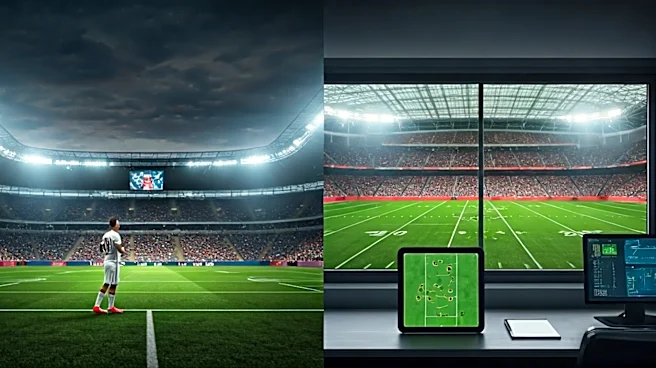
The most significant difference comes down to a simple question: Who started this? In the NFL, NBA, or NHL, a coach’s challenge is an act of agency. A coach, a tangible figure on the sideline, makes a conscious, strategic decision to risk a timeout for a shot at justice. It’s a gamble. Fans see their team’s leader take a stand. This creates a clear narrative: our guy thinks the refs blew it, and he’s putting something on the line to prove it. That drama is compelling. VAR (Video Assistant Referee) in soccer has no such protagonist. The review is initiated by an anonymous official in a remote booth who feels a “clear and obvious error” may have occurred. The decision to stop the game is wrested from the participants and handed to a faceless authority.
For fans, it feels less like a strategic play and more like a bureaucratic intervention. There’s no team-driven gamble, only a sudden, often confusing, halt to the action imposed by an unseen force. This lack of agency is at the heart of why VAR can feel so frustratingly passive.
Transparency vs. The Black Box
When an NFL coach throws a red flag, the process is relatively transparent. The referee typically announces what is being challenged (e.g., “The ruling on the field of a completed pass is being challenged”). Fans, broadcasters, and even the stadium announcer know exactly what to look for on the replay. Everyone becomes a detective, analyzing the play from the same perspective. VAR, by contrast, can feel like a black box. A “silent check” is always happening in the background, which is good in theory but unnerving in practice. When a formal review is triggered, it’s not always immediately clear what’s being looked at. Was it a potential handball from 10 seconds ago? An offside in the buildup to the goal? The confusion allows anxiety and speculation to fester. While broadcast feeds eventually show the angles, the initial opacity creates a sense of being left in the dark, which is the opposite of the shared, focused analysis that a coach’s challenge invites.
The Standard of Overturning a Call
The philosophical bar for changing a call is also critically different. In most American sports, the standard is something like “indisputable video evidence.” The goal is to find concrete proof the on-field call was wrong. It’s a high but relatively objective bar. If you can’t definitively prove the ball carrier’s knee was down, the call stands. VAR operates on the principle of correcting a “clear and obvious error.” This sounds straightforward, but in practice, it’s maddeningly subjective. What’s “obvious” to one person is a 50/50 call to another. This leads to endless debates where officials spend minutes examining high-definition, slow-motion replays of an incident to determine if a subjective mistake was “clearly” made. The longer they look, the less “obvious” the error seems, creating a paradox that infuriates fans. It turns a tool meant to eliminate egregious mistakes into a device for microscopic, and often still controversial, re-refereeing.
Impact on Game Flow and Emotion
A coach’s challenge is a defined, theatrical pause. It fits within the stop-start rhythm of a sport like American football. The challenge itself is a moment of high tension, followed by a definitive outcome and a resumption of play. It’s a self-contained dramatic arc. VAR’s impact on soccer’s fluid rhythm is more jarring. The worst-case scenario, which happens all too often, is the delayed celebration. A team scores a brilliant goal, players and fans erupt in euphoria, and then… everyone waits. The goal is “under review.” The emotional peak is flattened, replaced by several minutes of nervous anticipation. Sometimes the goal is chalked off for a minuscule offside infraction that occurred 30 seconds earlier. This doesn’t just correct an error; it retroactively kills joy and disrupts the emotional narrative of the match in a way a coach’s challenge rarely does.