


The Myth: More Shots Equals More Goals
For generations, the prevailing wisdom in sports like basketball, soccer, and hockey was straightforward: put pressure on the defense by creating shot volume. The idea is that more shots lead to more chances for lucky bounces, rebounds, and defensive breakdowns. A goalie can only save so many pucks; a defender can only block so many attempts. In this view, a team that takes 30 shots is inherently more threatening than a team that takes 15. This belief celebrates the gunslinger, the player who isn’t afraid to fail. Think of a basketball star pulling up from a contested spot or a soccer midfielder launching a prayer from 35 yards out. In this mindset, passivity is the enemy, and aggression, measured in sheer number of attempts, is the key to victory.
Coaches would praise the effort, fans would applaud the confidence, and the box score would tell a simple story of who was the more aggressive, and therefore, more deserving team.
The Fact: Shot Quality is the New King
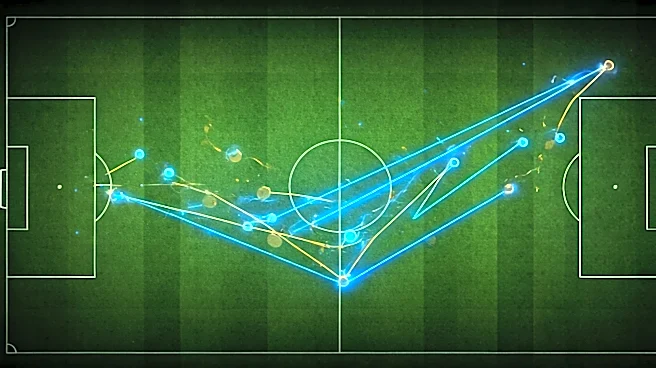
The analytics revolution has completely upended this old-school thinking. The new mantra isn't "shoot more," it's "shoot smarter." Data has given teams the ability to analyze not just the quantity of shots but their quality. A contested 20-foot jumper in basketball is simply not as valuable as a layup. A hopeful 40-yard shot in soccer is statistically almost worthless compared to a tap-in from inside the six-yard box. This shift is powered by concepts like "Expected Goals" (xG) in soccer, which assigns a probability value to every shot based on its location, the type of pass that led to it, and the position of defenders. A team can have fewer shots but a higher xG, meaning they created better, more dangerous chances. In basketball, "Effective Field Goal Percentage" (eFG%) and shot charts show a similar story. The most efficient shots are at the rim or from the three-point line. The least efficient? The long two-point jumper—the exact shot that was once the hallmark of many volume scorers.
Case Study: The NBA's Mid-Range Extinction
Nowhere is this trend more obvious than in the NBA. For decades, the mid-range jumper was a staple of superstar offenses. But analysts like Daryl Morey, former general manager of the Houston Rockets, famously championed "Moreyball": a strategy that relentlessly pursues only the most efficient shots. The math is simple: a 3-pointer is worth 50% more than a 2-pointer. Therefore, a 34% three-point shooter is just as effective as a 51% two-point shooter. This realization has transformed the league. Teams now design entire offenses to generate layups, dunks, and open threes, while actively avoiding the 18-foot pull-up. Players who once made a living on those shots have had to adapt or risk becoming obsolete. The result is an offensive explosion across the league, not because teams are just shooting randomly, but because they’re hunting for the best possible shot on every possession.
The Modern Attacker's Mindset
So, does this mean players should stop shooting? Not at all. But it does mean the definition of a great attacker has evolved. It’s no longer just about the courage to shoot; it’s about the intelligence to know *when* and *from where* to shoot. The best offensive players in the modern era don't just take a lot of shots—they create and take a lot of *high-quality* shots. They use their skill to bend the defense and create an opening at the rim, or they leverage their gravity to create an open three-point shot for a teammate. This is the crucial distinction: the goal of an offense isn't just to end a possession with a shot, but to generate the highest-percentage look possible. A passed-up bad shot is often more valuable than a forced one.