


The Problem with Watching Soccer
Let’s be honest. For many Americans raised on the constant action of basketball, watching a 90-minute soccer match can be an exercise in frustration. The ball moves sideways, backward, and then someone hoofs it 50 yards to nobody. It can feel like a game of random motion punctuated by rare, frantic moments near the goal. You see the grace of the world-class players, but the grand strategy feels elusive, hidden beneath a layer of what seems like jogging. But just like in basketball, where a casual viewer sees a pick-and-roll and a hardcore fan sees a dozen micro-decisions dictating the entire possession, soccer has a hidden geometry. The best teams aren’t just running around; they are manipulating space with the same precision as a championship
point guard. Once you know where to look, the entire game opens up.
Introducing the 'Half-Space'
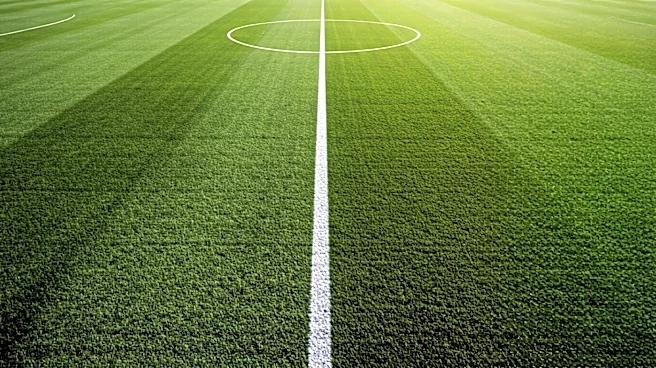
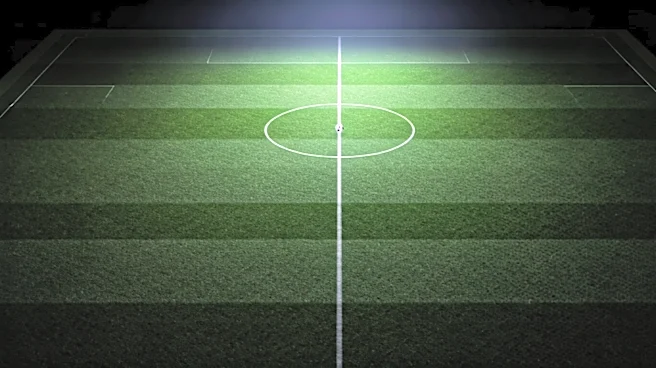
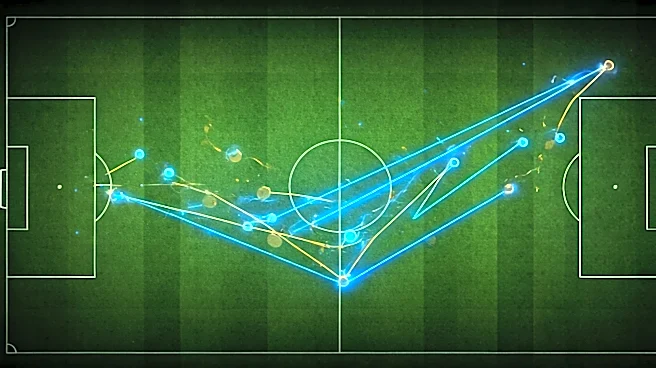
The secret lies in a part of the field that doesn’t have any lines painted on it. Imagine the soccer pitch divided into five vertical lanes. You have the two wide lanes (the wings), the central lane, and in between them, two channels known as the “half-spaces.” This is the promised land. It’s the zone where a team’s most creative players—think Lionel Messi or Kevin De Bruyne—love to operate. Why? Because receiving the ball here is a tactical cheat code. A player in the half-space has a diagonal view of the goal, can pass wide, slip a ball through the center, or shoot. They are facing the play, not stuck on the sideline with limited options. More importantly, they occupy a zone that gives defenders a nightmare. It pulls a central defender out of position or forces a wide defender to abandon their wing, creating a domino effect that breaks down the entire defensive structure.
The NBA Equivalent: The Slot
So, what’s the basketball comparison? Think about where the most effective pick-and-roll action happens. A guard uses a screen at the top of the key and drives into the “slot”—that area between the three-point line and the paint, just off-center. This is the NBA’s half-space. From here, a player like Steph Curry or Luka Dončić has the entire defense on a string. Does the big man’s defender step up to stop the drive? The guard throws a lob or a bounce pass to the rolling big for an easy dunk. Do the defenders drop back to protect the rim? The guard pulls up for a high-percentage floater or midrange jumper. Does a wing defender crash in to help? The guard kicks it out to an open shooter in the corner. The principle is identical: occupying this specific zone forces the defense into a series of impossible choices, none of which are good.
Why This Zone Creates Chaos
In both sports, the power of this space comes from its ability to disrupt a defense's primary rules. Soccer defenses are designed to stay compact and protect the center of the field. Basketball defenses are built to protect the rim and contest the three-point line. The half-space (in soccer) and the slot (in basketball) attack the seams of that defensive logic. When a player like Kylian Mbappé receives a pass in the half-space while running toward goal, the center-back faces a dilemma: do I leave my central post to challenge him, creating a huge gap for another attacker to run into? Or do I let him receive the ball under control, where he can now shoot or play a final pass? It’s the soccer version of a defender getting caught in no-man’s-land, stuck between guarding the roller and the ball-handler. The result is often a high-quality scoring chance, or what basketball analysts would call an “efficient possession.”