






The Obvious Answer: It's All About the Look
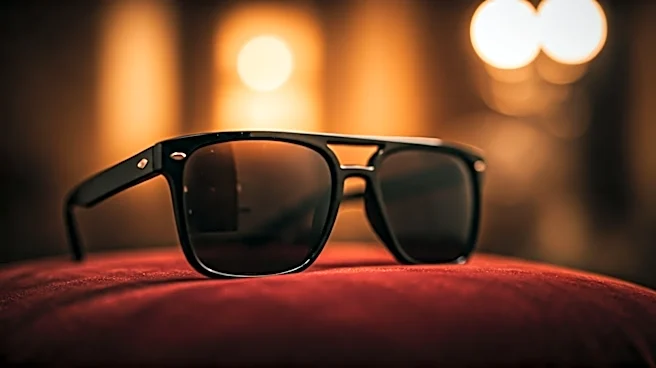
Let’s get the easy answer out of the way first: yes, it’s about fashion. The Cannes Film Festival is as much a runway as it is a cinematic showcase. Stylists work for months to craft looks that will land their clients on best-dressed lists, and a pair of designer sunglasses can be the accessory that ties it all together. Think of fashion icons like Karl Lagerfeld or Anna Wintour, who were rarely seen without their signature shades. Sunglasses add an air of mystery, an untouchable coolness that is central to the modern celebrity brand. They create a barrier, turning a person into an icon and completing the carefully constructed armor needed to face the world’s media. In a place where every detail is scrutinized, sunglasses are a deliberate, powerful
style choice.
The Real Enemy: The Paparazzi 'Wall of Flash'
Here's the part that's less glamorous. The main reason for indoor sunglasses isn’t vanity; it’s self-preservation. Imagine walking the Cannes red carpet. You're not just posing for a few photographers. You are facing what is often described as a “wall of flash”—a chaotic, blindingly bright gauntlet of hundreds of cameras firing simultaneously. The flashes are not intermittent; they are a constant, disorienting strobe light. For several minutes, you are bombarded with intense bursts of light from every angle. It’s an aggressive, overwhelming sensory experience that photographers and journalists who have covered the festival describe as physically jarring. Without protection, this barrage of light can be genuinely painful and temporarily blinding, leaving stars seeing spots as they try to navigate stairs, interviews, and introductions.
A Practical Tool for Professionalism
Viewed through that lens, the sunglasses suddenly look less like a diva move and more like essential work equipment. Dark lenses significantly reduce the intensity of the flashbulbs, allowing the celebrity to keep their eyes open and their composure intact. It’s difficult to look poised and elegant when you’re squinting, flinching, or momentarily blinded. By wearing sunglasses, stars can walk the red carpet, smile, and wave without being visually assaulted. It helps them avoid stumbling or looking dazed and confused just as they’re meant to be projecting maximum confidence. In this context, the sunglasses are a tool that enables them to do their job, which is to look impossibly glamorous under impossible conditions. It’s not about hiding; it’s about being able to see where you’re going.
The Psychological Armor
Beyond the physical protection, sunglasses offer a significant psychological benefit. The festival schedule is notoriously grueling, filled with back-to-back press junkets, premieres, and after-parties, often on little sleep and across different time zones. Sunglasses can help mask the tell-tale signs of exhaustion. More importantly, they provide a thin but crucial layer of emotional privacy. In an environment where your every micro-expression is being captured and analyzed, shades allow a person to maintain a neutral “poker face.” You can’t be accused of looking bored during a press conference or snubbing another actor on the carpet if no one can see your eyes. It creates a small, personal bubble, a shield against the intense scrutiny that defines modern fame. It’s a way to remain present without feeling completely exposed.