





From Chaos to Choreography
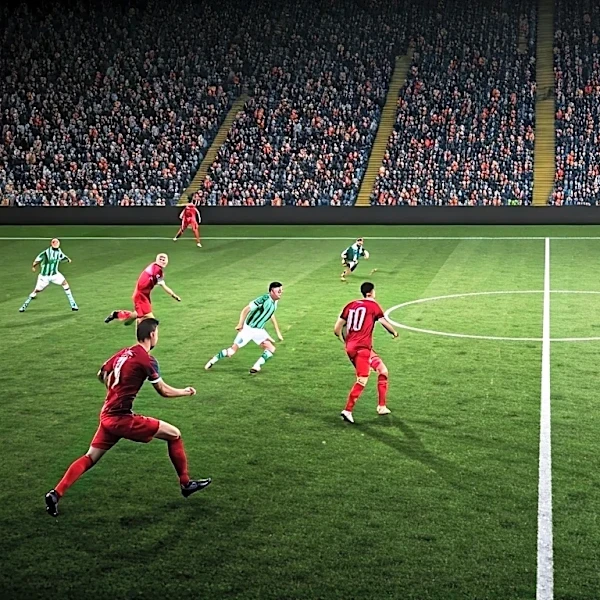
In the fluid, often chaotic world of soccer, free kicks and corners—collectively known as set pieces—are a rare gift. They are the only moments when a team can stop, reset, and execute a pre-designed play, much like a special teams unit in American football or an inbounds play in basketball. For decades, many teams treated these opportunities with a surprising lack of imagination: kick it high and hope your tallest player gets a head on it. But in the modern, data-driven game, that approach is ancient history. Today, set pieces account for a significant percentage of all goals scored, and championship teams know that mastering them provides a massive competitive edge. They've become a tactical laboratory where coaches design intricate routines
to unlock stubborn defenses. What looks like a frantic scramble is often a sequence of moves rehearsed hundreds of times on the training ground.
The Rise of the Set-Piece Coach
The growing importance of set pieces has created a new, highly specialized role on the coaching staff: the set-piece coach. These specialists are the tactical nerds of the soccer world, spending their days poring over video footage and data spreadsheets. Their job is twofold: design attacking routines to exploit an opponent's weaknesses and organize their own team's defense to shut down threats. Does the opposing team leave the back post open? Do they struggle with balls delivered low to the near post? The set-piece coach finds these vulnerabilities and designs a specific play to attack it. On defense, they decide whether the team will use 'man-marking' (each defender marks a specific opponent) or 'zonal marking' (each defender is responsible for a specific area). Some teams even employ a hybrid system. This level of detail has turned set pieces from a game of chance into a calculated science.
The Playbook: Blockers, Decoys, and Stacks
So what do these carefully designed plays actually look like? They often involve principles familiar to fans of other sports. One common tactic is the 'block' or 'screen,' where an attacking player positions themself to obstruct a defender, freeing up a teammate to make an unopposed run toward the ball—it's a moving pick, just like in basketball. Another is the 'stack' or 'train,' where several attacking players line up behind one another before breaking in different directions as the kick is taken. This chaos of movement is designed to confuse defenders who are trying to track their assigned man. The attackers know where they're going; the defenders can only react. These routines are layered with decoys—players making dramatic runs to draw defenders away from the real target area, creating a pocket of space for the intended goalscorer to attack.
It’s All in the Delivery
The design isn't just about the movement in the box; it's also about the kick itself. The player taking the kick—the deliverer—has a huge role. An 'in-swinger' is a kick that curls toward the goal, which is difficult for a goalkeeper to handle but can be easier for attackers to glance into the net. An 'out-swinger' curls away from the goal, pulling the defense outward and making it easier for attackers to run onto the ball with power. Some routines even call for short corners, where the kick is played to a nearby teammate to change the angle of attack and pull the defensive structure out of its organized shape. Each type of delivery is chosen to maximize the strengths of a team’s specific routine and target the weaknesses of the opponent’s defensive setup. It’s a complete system, from the placement of the ball to the final header.