






The Team's Anchor and Shield
In simple terms, the holding midfielder is the player who operates in the space between their team's defenders and the rest of the midfield. Think of them as the team’s anchor. Their primary job is to protect the back line. If the midfield is a picket fence, the holding midfielder is the main post keeping it all together. They are often referred to as the “number 6.” While other midfielders are bombing forward to join the attack, the holding midfielder provides balance, staying disciplined and positioned to snuff out danger before it reaches the most vulnerable areas. They are the first line of defense, tasked with breaking up the opponent’s rhythm and winning the ball back. A great holding midfielder gives the team’s creative, attacking players
the freedom to take risks, knowing there’s a safety net behind them.
The Two Main Flavors: Destroyer and Conductor
Not all holding midfielders are created equal. They generally fall into two main categories, though the best players often blend both. First, you have the “Destroyer.” This player is a ball-winning machine. Their game is built on relentless running, bone-crunching tackles, and an uncanny ability to read the opponent’s next pass and intercept it. They are pure disruption. France’s N’Golo Kanté, famous for his time at Chelsea and Leicester City, is the modern icon of this style—a player who famously seemed to cover so much ground it felt like there were two of him on the field. Second, there's the “Deep-Lying Playmaker,” or *regista* in Italian. This player is less about brute force and more about brains. They sit deep, but their main job is to control the game's tempo with their passing. They absorb pressure, find teammates in space, and launch attacks from their own half. Spain’s Sergio Busquets, a legend for Barcelona, was the master of this art—a player who never looked fast but was always one step ahead mentally, dictating play with calm, precise passes.
An American Sports Analogy
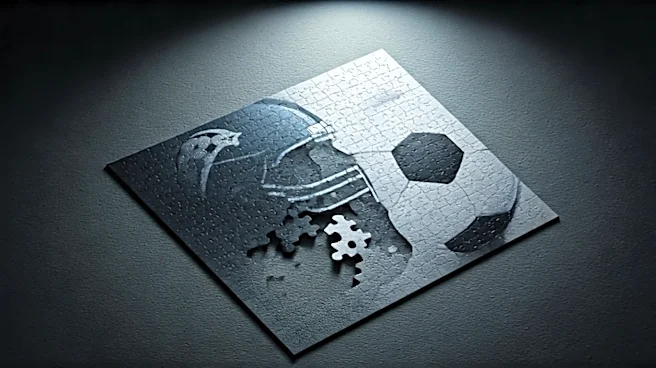
Still trying to picture it? Let's use an analogy from American football. A “destroyer” type of holding midfielder is a lot like a star middle linebacker. They are responsible for reading the opposing offense, plugging running lanes, and making crucial tackles in open space. They are the defensive heart of the team, stopping plays before they can develop into something dangerous. On the other hand, the “deep-lying playmaker” has shades of a point guard in basketball, but one who plays much further from the basket. They don’t score all the points, but they are the ones who initiate the offense, control the pace of the game, and make the key pass that leads to the assist. They see the whole floor—or in this case, the whole field—and make everyone around them better.
The Players Who Became Legends
The importance of the position was truly cemented in the early 2000s by a French player at Chelsea named Claude Makélélé. He was so singularly brilliant at shielding the defense that the role was simply called “the Makélélé role” for years. He redefined what was possible from that spot on the field. Before him, teams often didn’t use a dedicated defensive specialist in midfield. After him, every top team needed one. Today, the best teams are almost always built around an elite holding midfielder. Manchester City’s dominance is underpinned by Rodri, a masterful player who blends the destroyer’s defensive instincts with the conductor’s passing genius. In the Premier League, Arsenal’s Declan Rice is another prime example, a player whose energy and intelligence have transformed his team’s entire structure.