






It's a Business Deal, Not a Shopping Trip
Here’s the biggest misconception: that a celebrity or their stylist simply picks a pretty dress. The reality is that a major red carpet appearance, especially at a global event like Cannes, is a carefully negotiated business contract. The surprising reason these gowns take months to create isn't just the craftsmanship; it’s the strategic planning. A fashion house is investing hundreds of thousands, sometimes millions, of dollars in a single dress. That investment isn't just for the fabric and labor—it's for the media value of having their creation on a specific A-list star. This process begins 4-6 months out with conversations between the brand, the celebrity's agent, and their stylist. It involves exclusivity clauses, ensuring the star doesn't
wear a competing brand, and agreements on press. The dress is less a garment and more a marketing vehicle, and that campaign needs a long runway.
The Blueprint of a 'Moment'
Once the deal is inked, the creative process begins. This isn't a designer just sketching in a vacuum. It’s a collaboration to engineer a viral “fashion moment.” The stylist brings a mood board, the celebrity provides input on comfort and personal style, and the designer translates it into a concept that aligns with the brand's DNA. They consider everything: How will the color look against the red carpet? How will the fabric catch the flash of hundreds of cameras? Will it photograph well from every angle? This initial design phase can take weeks of back-and-forth before a single piece of fabric is cut. The sketch has to be approved by multiple stakeholders, because once the haute couture process begins, major changes become astronomically expensive and time-consuming.
An Army of Artisans Mobilizes
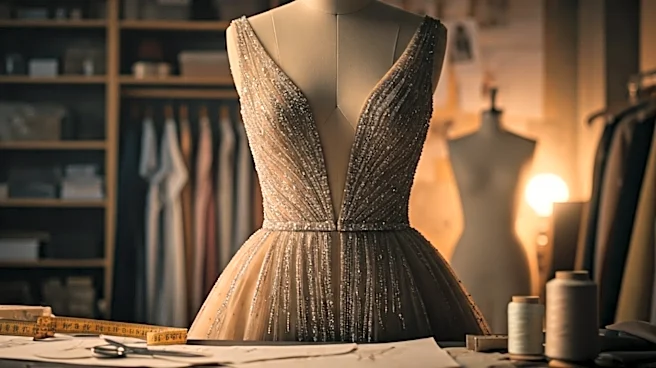
With the design approved, the famous couture atelier, or workshop, springs to life. This is the part people imagine, but its scale is often underestimated. A single gown can require a team of 10 to 30 specialized artisans—the *petites mains* (little hands) of the couture world. The process starts with creating a custom dress form molded to the celebrity’s exact measurements. Then, a mock-up of the dress, called a toile, is made in simple muslin. This version is flown to the celebrity for the first of many fittings. While this happens, other teams are working in parallel. A single yard of hand-beaded fabric can take hundreds of hours to complete. For a Dior or Chanel couture gown, embroidery might be outsourced to a legendary house like Lesage, where artisans work for weeks on a single panel. This is slow, painstaking, ancestral work that cannot be rushed, and it forms the core of the physical construction timeline.
The Transatlantic Fitting Gauntlet
A custom gown requires at least three to five fittings, and they are rarely convenient. The celebrity might be shooting a film in Budapest, the stylist is based in Los Angeles, and the atelier is in Paris. The dress, or sometimes a dedicated tailor, must be flown around the world to accommodate the star’s schedule. Each fitting is a critical checkpoint. Does the dress move correctly? Is it comfortable enough to sit in for hours? How does it look on camera? Adjustments are made down to the millimeter. Sometimes, a feature that looked great in the sketch doesn't work in reality, forcing a frantic redesign of a sleeve or neckline. This logistical ballet of travel, scheduling, and constant refinement adds weeks to the clock.
The Final 48 Hours
Even after months of work, the final days before the premiere are a nail-biting sprint. The finished gown is transported with its own security detail, often hand-carried by a courier. A dedicated tailor from the fashion house is on-site in Cannes for any last-second emergencies—a popped seam, a broken zipper, or a hemline that needs to be adjusted based on the final choice of shoes. This is the final, tense culmination of the entire strategic and artistic effort. The brand, the stylist, and the star are all gambling that these months of work will pay off in a deluge of positive press, landing them on best-dressed lists and creating an iconic image that reinforces their place in the cultural zeitgeist. The dress isn't done when the sewing stops; it's done when it walks the carpet flawlessly.