




The Arena vs. The Open Field
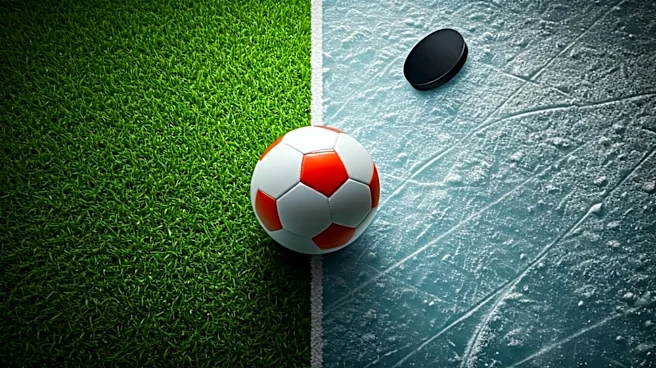
The first and most fundamental difference is the playing surface. A hockey rink is a confined, enclosed space—roughly 200 feet by 85 feet—with boards that keep the puck in almost constant play. The action is contained, compressed, and chaotic. A turnover can mean the puck is on your goalie's stick in three seconds. Contrast this with a soccer pitch, a vast expanse of open grass that can be up to 390 feet long and 295 feet wide. There are no walls to ricochet a pass off. This difference in geography is everything. In hockey, the rink’s boundaries create a perpetual pressure cooker where speed and territorial advantage are paramount. In soccer, the sheer size of the field makes space the most valuable commodity. Possession isn't just about having
the ball; it's about controlling specific, valuable areas of this massive green chessboard.
The High Cost of a Mistake
In hockey, losing the puck is routine. It happens dozens of times a minute. Because the rink is small and players can change on the fly, a turnover in the neutral zone, while not ideal, is often a recoverable event. The game immediately resets into another battle for possession. In soccer, the cost of a turnover is exponentially higher and entirely dependent on location. Losing the ball in your own defensive third can be a death sentence, leading directly to a high-quality scoring chance for the opponent with acres of space to exploit. This high-risk environment is precisely why you see soccer teams engage in long, seemingly tedious stretches of sideways and backward passing. It’s not indecisiveness; it’s risk management. They are probing for an opening while consciously refusing to risk a catastrophic giveaway in a dangerous area. A hockey team that played this cautiously would be booed out of its own building.
Shot Volume vs. Shot Quality
Hockey is a game of volume. The strategic aim of puck possession is often to simply get the puck directed toward the net. Deflections, rebounds, screens, and chaos are a primary source of goals. A team might take 30-40 shots in a game, and a 10% shooting percentage is considered excellent. Therefore, any possession that ends in a shot attempt (what analytics experts call a Corsi event) is a small victory.
Soccer is the opposite. It’s a game of quality. Teams can go an entire 90-minute match with fewer than 10 total shots, and some of the world’s best strikers have a conversion rate north of 20%. The goal of possession in soccer is not to generate a high volume of low-percentage shots from 30 yards out. It’s to patiently work the ball into a position—inside the 18-yard box, with a clear look at the goal—where the probability of scoring is drastically higher. A soccer team that just flings the ball toward the net from anywhere would be considered tactically clueless. The entire possession game is a calculated effort to create one perfect chance, not ten hopeful ones.
The Option to Not Have It
Perhaps the most telling difference is that in soccer, deliberately ceding possession can be a dominant and winning strategy. A defensive style known as the “low block” involves a team pulling all its players back, staying compact, and allowing the opponent to have the ball in non-threatening areas. The goal is to absorb pressure and then strike with lethal speed on the counter-attack when the other team overcommits. Teams have won the biggest trophies in the sport—from the World Cup to the Champions League—with less than 40% possession in key matches.
This is almost unthinkable in hockey. While a defensive shell exists, willingly giving up the puck and allowing the opponent to cycle it in your zone for minutes on end is a recipe for disaster. The speed of the game and the confined space mean that sustained pressure almost always leads to a defensive breakdown or a penalty. In hockey, you fight for the puck everywhere, all the time. In soccer, you pick your battles, and sometimes the smartest battle is the one you don't fight at all.