

The Loneliest Walk in Sports
It all begins with a walk. The journey from the center circle to the penalty spot is often called the loneliest walk in sports, and for good reason. For those 40-odd yards, a player is utterly alone with the weight of their team, their fans, and their nation on their shoulders. Unlike a basketball player shooting a free throw, who is surrounded by teammates and a familiar routine, the penalty taker is isolated in a stadium that has fallen into a hushed, agonizing silence. The goal, which looks enormous during the run of play, suddenly shrinks. The goalkeeper, a static figure for much of the game, transforms into a towering, intimidating obstacle. Cognitive scientists have studied this phenomenon, noting that the immense pressure can lead to 'attentional
misdirection,' where players focus on the threat (the keeper) rather than the solution (the open spaces in the net). This isn't just a physical test; it's a battle against one's own mind before the ball is even touched.
The Goalkeeper’s Impossible Guess
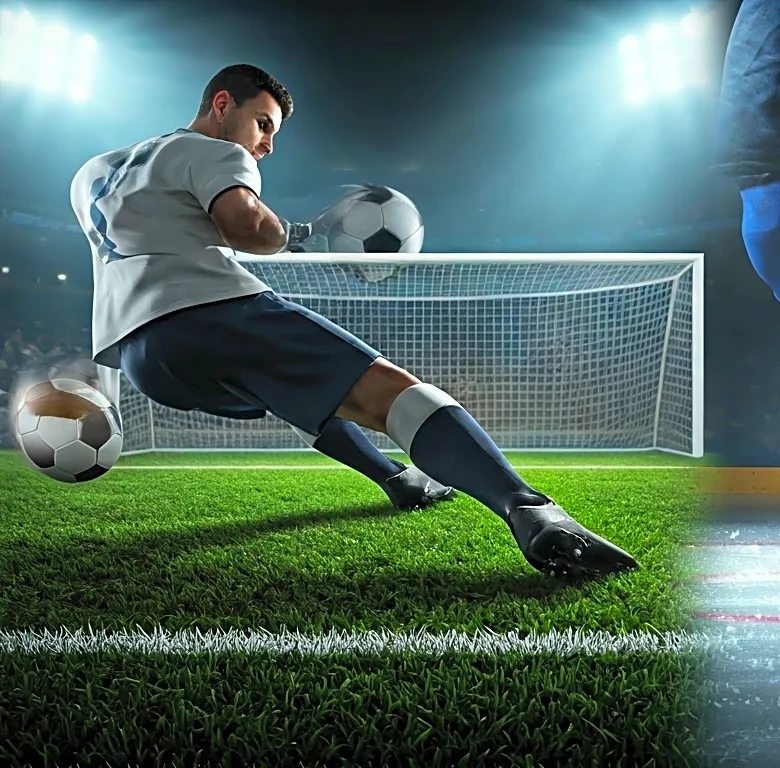
From 12 yards away, a well-struck soccer ball can travel at over 70 miles per hour, reaching the goal line in less than half a second. The average human reaction time is about a quarter of a second. The math is brutal: a goalkeeper cannot simply wait and react. They must guess. This turns the keeper’s role from one of pure athleticism to that of a master psychologist and statistical analyst. They study kickers’ habits for days, looking for tells. They might dance on the line to distract the shooter, point to one side to play a mind game, or simply stand perfectly still to create an unnerving void. Research shows that goalkeepers who move around more or delay the kick have a slightly better chance of success. Their job isn't really to save the penalty; it's to do everything in their power to make the kicker miss. By making themselves look bigger, sowing a seed of doubt, or correctly guessing the right direction, they can flip a 75-80% chance of a goal into a moment of glory.
A Test of Technique, Not Just Power
If the keeper is guessing, why doesn’t the kicker just blast it down the middle? Some do. The 'Panenka'—a cheeky, delicate chip named after the Czechoslovakian player who floated one into the net in the 1976 European Championship final—is the ultimate expression of confidence over power. This highlights the kicker's dilemma: do you choose power or placement? Do you aim for a 'safe' spot or go for the 'unsaveable' corner? Great players like Lionel Messi and Cristiano Ronaldo have devoted their careers to perfecting this craft, yet both have missed crucial penalties. It’s a reminder that past success means nothing in that moment. The decision to stutter-step, to look one way and shoot the other, or to simply hit it as hard as humanly possible is a strategic choice made under the most extreme duress. It’s a test of who can execute a highly refined technical skill when their heart is pounding and their legs feel like lead.
The Ultimate Crucible of Character
Ultimately, the penalty shootout endures because it’s far more than a tiebreaker. It’s a narrative engine that creates legends and goats in a matter of seconds. It’s Italy’s Roberto Baggio, one of the greatest players of his generation, skying his shot over the bar in the 1994 World Cup final—a moment of failure that unfairly defined his brilliant career. It’s Brandi Chastain, ripping her shirt off in celebration after converting the winning kick for the U.S. Women’s National Team in 1999, creating an iconic image of triumph and empowerment. A shootout doesn't determine which team was better over 120 minutes; it reveals character under a microscope. It’s a gut-wrenching, exhilarating, and deeply human piece of sports theater, and its power lies in its beautiful, terrible simplicity.