

The Communication Breakdown
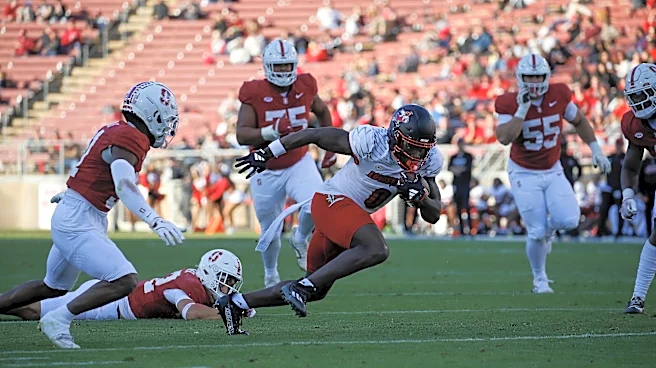
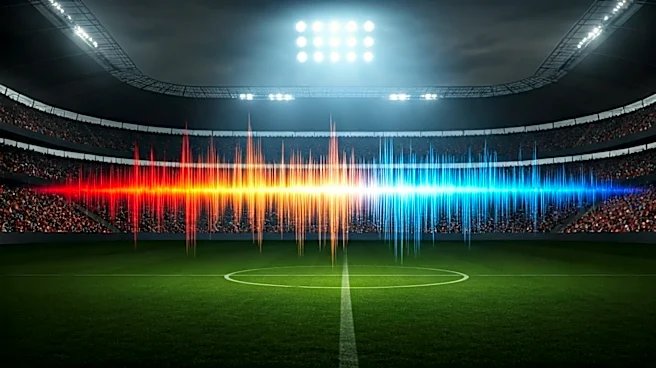
The most obvious impact of crowd noise is on communication. In sports like football, where a quarterback needs to bark out an audible at the line of scrimmage, a roaring stadium is a tactical weapon. Opposing crowds aren't just cheering; they are actively trying to jam the offensive signal. A delay-of-game penalty or a burned timeout because the right guard couldn't hear the snap count is a direct victory for the fans. This forces teams to resort to silent counts, hand signals, and other complex, non-verbal cues that are inherently slower and more prone to error than simply yelling. On the basketball court, a coach screaming a defensive adjustment from the sideline might as well be miming. The sound wall created by thousands of fans effectively
isolates players, forcing them to rely on instinct and pre-game planning rather than in-the-moment coaching.
The Psychological Warfare
Beyond the practical challenges, crowd noise wages a war on the psyche. For the home team, a supportive roar can be an incredible performance enhancer, triggering a surge of adrenaline and a feeling of validation. Studies have even suggested that home teams may experience a subtle increase in testosterone levels in response to a friendly crowd, boosting aggression and confidence. Conversely, for the visiting team, a hostile crowd creates a constant, low-level stressor. This environment can elevate cortisol—the body's primary stress hormone—which can impair fine motor skills, cloud judgment, and lead to mental fatigue. A kicker shanking a game-winning field goal isn't just choking; he might be physiologically compromised by the sonic assault he's been enduring for three hours. The feeling of being 'alone' in a sea of hostility can make every mistake feel magnified and every success feel temporary.
Swaying the Officials
Referees and umpires are professionals trained to be impartial, but they are also human. Research has repeatedly shown a phenomenon known as 'home-field advantage' in officiating. While outright bias is rare, subconscious influence is very real. A crowd's instantaneous, unified roar of disapproval on a close 50/50 call can create social pressure that may subtly sway an official’s decision-making process on the *next* call. Imagine making a judgment call on a block/charge foul in basketball. The immediate, deafening feedback from 20,000 people can plant a seed of doubt. This doesn't mean refs are cheating; it means they are susceptible to the same psychological cues as everyone else. The noise provides instant, powerful feedback, and over the course of a game, that can add up to a few extra calls going the home team's way—often enough to make a critical difference.
The Momentum Machine
Momentum is one of the most powerful, yet intangible, forces in sports. And crowd noise is its fuel. A big defensive stop that gets the stadium on its feet can create a palpable shift in energy. The visiting team feels the pressure mount, while the home team feeds off the wave of sound. A turnover becomes louder. The subsequent score becomes deafening. This feedback loop—good play, loud noise, more energy, better play—is how a small lead can snowball into a blowout. The crowd doesn't just react to the game; it becomes a participant in the momentum swing. For the visiting team, quieting the crowd becomes a strategic objective in itself. A long, methodical scoring drive or a crucial three-pointer that silences the arena isn't just points on the board; it's a direct counter-attack against the opponent's most passionate and numerous player: the fans.