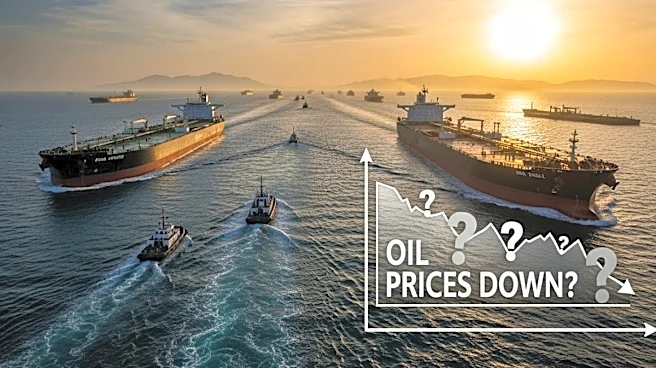
The World Bank has warned that India’s projected economic growth of 6.6% for the financial year 2026-27 (FY27) is tilted towards the downside, citing rising global uncertainties and domestic challenges. In the World Bank's most recent Global Economic Prospects report, the growth forecast for India for FY27 was held steady at 6.6%. Nevertheless, the Bank has listed several reasons why the economy may grow at a slower rate than anticipated; primarily ongoing geopolitical issues regarding the Middle East (particularly with Iran) and potential closure or disruption to shipping in the Strait of Hormuz.These will both increase India's oil import bill, create upward pressure on inflation, and negatively impact India's current account deficit through
higher prices. Other downside risks include:
- Weak global demand
- Volatility in financial markets
- Slower recovery in private investment
- Possible impact of erratic monsoon on agriculture
India has continued to see quick economic growth, but keeping it going is not going to be easy due to the current environment. The World Bank's report pointed out several positive factors that support India's continued growth such as strong domestic demand, rising manufacturing production and the government's focus on infrastructure development. However, it cautioned that these factors may not completely overcome the impact of external shocks.The World Bank has agreed to reduce its estimate for global economic growth due to concerns about international trade disputes, excessive national debt across the world, and the ongoing impacts of inflation rates worldwide. In India, economists suggest that in order to meet or exceed the Government of India’s annual target of 6.6%, it is essential to manage inflation through appropriate monetary policy, maintain a strong fiscal policy, and implement necessary structural economic reforms.This is not the first time that a global agency has warned against the threat of weak global economic growth affecting future Indian GDP rates. Earlier in 2017, the IMF also revised its estimate for India’s economic performance downward for 2020 because of similar external factors. The coming months will be critical for the Indian economy; therefore, policymakers will need to pay close attention to a variety of factors including global oil prices, the timing of this annual monsoon season, and overall global economic conditions to keep the momentum of the Indian economy moving in a positive direction.
/images/ppid_a911dc6a-image-177572982858752832.webp)

/images/ppid_a911dc6a-image-177563888491032835.webp)


/images/ppid_59c68470-image-177570772309624519.webp)

/images/ppid_59c68470-image-17756450616789478.webp)


/images/ppid_a911dc6a-image-17758052676777246.webp)
/images/ppid_59c68470-image-177563002819132492.webp)


/images/ppid_59c68470-image-177583253098546796.webp)