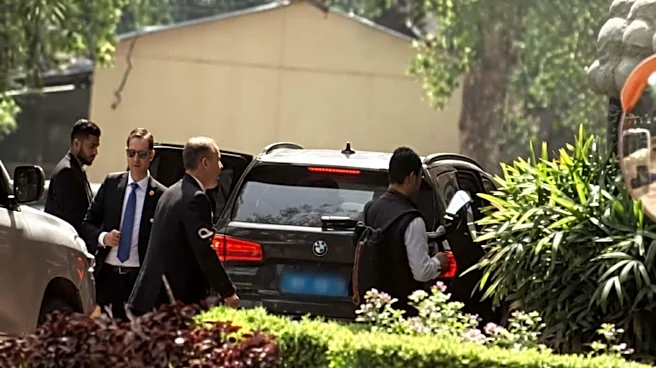
Union Commerce and Industry Minister Piyush Goyal met US Trade Representative Jamieson Greer in the national capital on Tuesday, June 23, as India and the United States sought to conclude a trade pact. The talks at aimed at salvaging and recalibrating a proposed bilateral trade agreement after changes in US tariff policy upended a framework negotiated earlier this year. Notably, Washington's temporary 10 per cent tariff on imports from trading partners is due to expire on July 24. "Warm welcome to @USTradeRep Amb Jamieson Greer, @USAmbIndia Amb Sergio Gor and their delegation to @DoC_GoI. Looking forward to productive discussions on the bilateral trade agreement between (India & US)," Commerce and Industry Minister Piyush Goyal said in a post
on X.
India-US Trade Negotiations - The Timeline
India and the US formally launched BTA negotiations on February 13, 2025, and around a year later, on February 7, 2026, the two sides announced that they had reached a framework for an interim agreement regarding reciprocal and mutually beneficial trade.As per the agreed framework, the US announced that it will reduce tariffs on India to 18 per cent from 50 per cent. It had removed the 25 per cent tariffs on Indian goods for buying Russian oil and was to cut the remaining 25 per cent to 18 per cent under the pact. Under the agreed framework, India proposed to eliminate or reduce tariffs on all US industrial goods and a wide range of food and agricultural products, including Dried Distillers' Grains (DDGs), red sorghum for animal feed, tree nuts, fresh and processed fruit, soybean oil, wine and spirits, and additional products.Later, the US Supreme Court ruled against these tariffs and struck them down. The Trump-administration then announced 10 per cent tariffs under Section 122 of the Trade Act on all countries for 150 days on February 24. It will expire on July 24 this year.Meanwhile, the US Trade Representative launched two Section 301 investigations on March 11 and 12 covering about 60 economies. One focused on alleged excess industrial capacity, while the other examined forced-labour concerns in global supply chains. India was included in both investigations.On conclusion, the USTR said that the investigated economies (including India) failed to effectively enforce prohibitions on goods linked to forced labor. As a result, the US proposed an additional 12.5% import tariff on Indian goods. The meeting between the two sides is important on account of these changes in the US tariff regime.
/images/ppid_a911dc6a-image-178221428214014590.webp)

/images/ppid_a911dc6a-image-17820062206923798.webp)
/images/ppid_59c68470-image-178194502493266454.webp)




/images/ppid_59c68470-image-178210255520987451.webp)


/images/ppid_a911dc6a-image-178211253847782944.webp)
/images/ppid_59c68470-image-17821076159803596.webp)