/images/ppid_a911dc6a-image-178059974750459021.webp)

/images/ppid_59c68470-image-178040752572010151.webp)
/images/ppid_a911dc6a-image-178036302211793467.webp)
/images/ppid_59c68470-image-178057259648849574.webp)

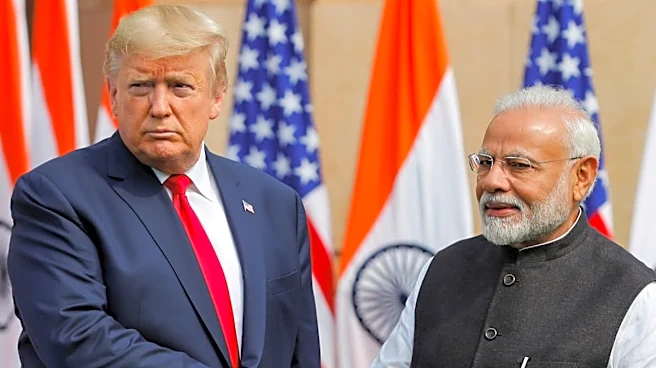
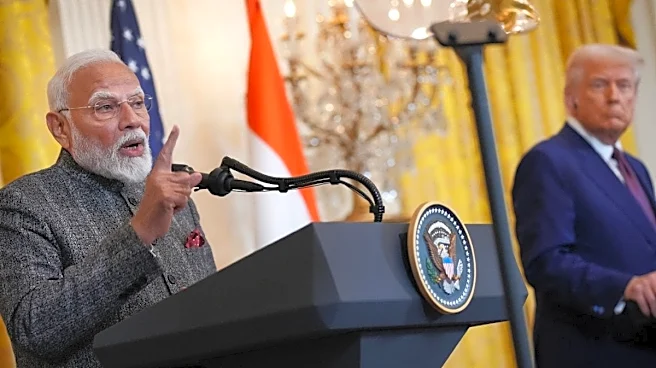
India and the US have reaffirmed their commitment to conclude a mutually beneficial trade agreement that strengthens bilateral trade and economic ties, an official statement said on Thursday.Chief negotiators of the two countries concluded the four-day talks (June 1-4) in New Delhi."The engagements were marked by a spirit of cooperation and pragmatism, with both sides reaffirming their commitment to concluding a mutually beneficial agreement that strengthens bilateral trade and economic ties," the commerce ministry said.The two teams held constructive and positive discussions across a wide range of issues, covering trade in goods, non-tariff measures, customs and trade facilitation, economic security alignment and other areas of mutual interest,
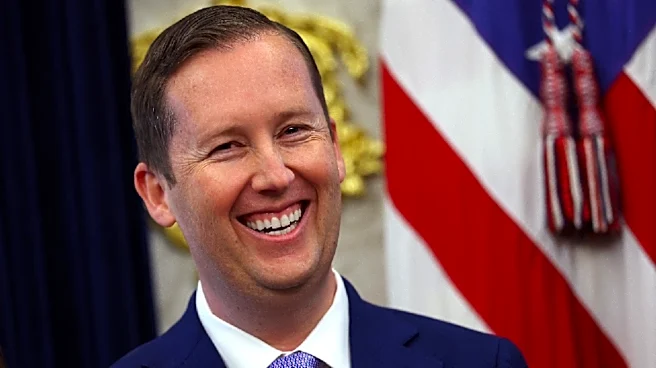
it said.The US team was led by its chief negotiator Brendan Lynch. India's chief negotiator is Darpan Jain, who is an additional secretary in the Department of Commerce.After finalising the framework for the first phase of the bilateral trade agreement (BTA), the two countries are looking to finalise the details of the interim trade pact and take forward the negotiations for the broader BTA.Commerce and Industry Minister Piyush Goyal on Monday said India and the US have finalised most elements of the first phase of the bilateral trade agreement, and negotiations are now focused on a few minor issues, "commas and full stops".On February 7, India and the US issued a joint statement finalising the contours or framework of the first phase of the BTA or an interim trade deal.According to that framework, the US had agreed to reduce tariffs on India to 18 per cent from 50 per cent. It had removed the 25 per cent tariffs on Indian goods for buying Russian oil and was to cut the remaining 25 per cent to 18 per cent under the pact.But, on February 20, the US Supreme Court ruled against President Donald Trump's sweeping reciprocal tariffs, which were imposed under the 1977 International Emergency Economic Powers Act (IEEPA).After that, the US President announced the imposition of 10 per cent tariffs on all countries for 150 days, starting February 24.In light of these changes, the two sides met in Washington in April, when the Indian team, headed by Jain, visited America from April 20-23, 2026.To carry forward those discussions, the US team was here for the talks.As the tariff landscape has changed in the US, both sides may wish to revisit the agreement's framework.Under the agreed framework, India proposed to eliminate or reduce tariffs on all US industrial goods and a wide range of food and agricultural products, including dried distillers' grains (DDGs), red sorghum for animal feed, tree nuts, fresh and processed fruit, soybean oil, wine and spirits, and additional products.New Delhi has also expressed its intentions to purchase USD 500 billion of US energy products, aircraft and aircraft parts, precious metals, technology products, and coking coal over the next five years.When the framework was agreed, India had a comparative advantage over its competitor countries, such as Sri Lanka, Pakistan and Bangladesh.Now, with all US trading partners facing a uniform 10 per cent tariff, the pact requires recalibration.According to experts, it is important that India gets an advantage over its competitor nations on the tariff front in the trade pact.As the US Supreme Court has ruled against Trump's sweeping tariffs, the US administration now has the option of using the Section 301 investigation mechanism to impose new tariffs.In March, the US Trade Representative (USTR) launched two unilateral Section 301 investigations against a number of countries, including India, over excess capacity and failures to eradicate forced labour in global supply chains.On June 2, the USTR proposed imposing 12.5 per cent tariffs on 54 countries, including India, for allegedly failing to prohibit the import of goods produced with forced labour.The proposed duty follows investigations launched in March against 60 countries under Section 301 of the Trade Act of 1974 over concerns related to forced labour.The measure remains a proposal and has not yet been finalised, the USTR said, adding that interested parties can submit requests to appear at hearings and summaries of testimony by June 22. The USTR is scheduled to hold hearings on July 7.The US was the second-largest trading partner of India in 2025-26. India's outbound shipments to the US grew marginally by 0.92 per cent to USD 87.3 billion during the last fiscal year, while imports increased 15.95 per cent to USD 52.9 billion. The trade surplus declined to USD 34.4 billion in 2025-26 from USD 40.89 billion in 2024-25.
/images/ppid_59c68470-image-178058258254712390.webp)

/images/ppid_59c68470-image-178049509302128948.webp)
/images/ppid_59c68470-image-178048504152511562.webp)
/images/ppid_59c68470-image-178058503312784554.webp)

/images/ppid_59c68470-image-17805900485586844.webp)