For
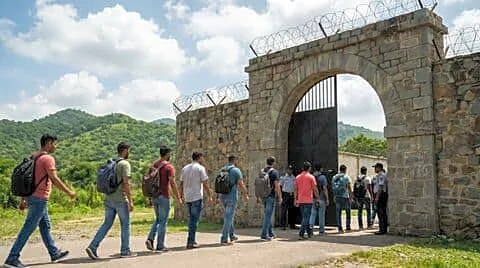
years, the insurgency in Mizoram existed less in active conflict and more as a shadow—present, remembered, unresolved. On Thursday, that shadow lifted. With the surrender of the final faction of the Hmar People’s Convention (Democratic), or HPC(D), the state has formally been declared insurgency-free. The moment came not in combat, but in ceremony—a “homecoming” event near Aizawl where 43 cadres, including leader Lalhmingthanga Sanate, laid down their arms.
The Last Terror Holdout
The Sanate faction had long been considered the final surviving insurgent element in Mizoram. Operationally weak, often dormant, but symbolically significant. Its demands were not new. The group had continued to push for an autonomous district council for Hmar-inhabited areas under the Sixth Schedule. That demand—unresolved for decades—had sustained its existence, even as other factions entered peace processes.Now, that chapter has closed. The surrender follows a peace accord signed on April 14 between the Mizoram government and the HPC(D), the culmination of backchannel negotiations that gathered pace under the current administration. Chief Minister Lalduhoma framed the moment carefully—not as victory, but as resolution. “The shadow of insurgency remained in our minds whenever we spoke of peace,” he said at the ceremony. “Today… we have reached our goal.”
From Insurgency To Negotiation
The history of the HPC traces back to 1986, when it began as a political movement before turning to armed insurgency a year later. That transition followed frustration over the lack of progress through peaceful means—a familiar pattern across insurgent movements in the Northeast.A peace accord in 1994 brought many cadres overground, leading to the formation of the Sinlung Hills Development Council. But not all factions accepted the settlement.The HPC(D), led by Sanate, remained outside that framework—splintering further in 2011 and continuing its demand for greater autonomy. Subsequent agreements, including the 2018 accord that created the Sinlung Hills Council, addressed parts of the demand structure. But the final holdout remained. Until now.Officials have described the day as “historic,” but the real test begins after the ceremony ends. The government has committed to working with former cadres to integrate them into mainstream society—through administrative and democratic mechanisms rather than coercive ones.
/images/ppid_a911dc6a-image-177762789937525920.webp)







/images/ppid_a911dc6a-image-177752386190377803.webp)