/images/ppid_a911dc6a-image-177608602913220410.webp)




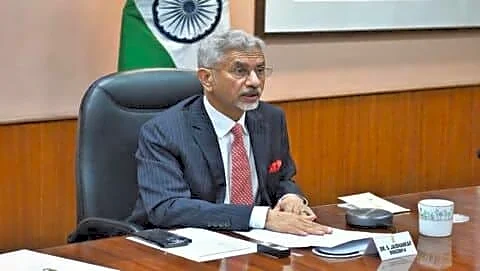
In his first comments since the US-Iran war, the Union Minister of Ports, Shipping & Waterways, Sarbananda Sonowal, speaks exclusively to Timesnownews.com on the Hormuz disruption, India’s preparedness and global trade impact. Here's the full interview.1. You have said that rapid and coordinated measures by your ministry ensured stabilization of movement through the Strait of Hormuz. Can you please share the details of these measures?-We acted swiftly through continuous monitoring and close coordination with all major ports and stakeholders. A real-time review mechanism was put in place to track vessel movement, cargo congestion and port-wise operations. Prime Minister Narendra Modi has given us clear instructions that we must take whatever
means possible to minimise the impact and ensure sustained supply chain. Ports were directed to adopt innovative operational strategies, enhance yard capacity and streamline logistics planning. These coordinated interventions ensured that disruptions caused by the situation in the Strait of Hormuz were contained quickly and operations were stabilised with minimal impact on trade.
2. You have also said that the backlog due to the strait closure has been effectively cleared. So, do we presume that all India-bound traffic is in clear waters now?-Nearly 90% of the backlog cargo has been cleared across major ports. This is a significant achievement considering the scale of disruption. While the situation has largely been normalised and vessel movement has stabilised, we continue to maintain close monitoring. Our approach remains cautious and proactive to ensure that any residual or emerging issues are addressed immediately, and that India-bound traffic continues to move smoothly. 3. You have maintained that the Modi government’s priority is to safeguard the interests of all stakeholders, including exporters and logistics partners. How will you ensure that it translates on the ground during these tough times?-Modi government’s priority has been to ensure that the burden on exporters, importers and logistics partners is minimised. We have directed all port authorities to implement financial relief measures such as waivers on ground rent and concessions on reefer charges. Importantly, these benefits are being passed on directly to stakeholders without procedural delays. At the same time, we have strengthened grievance redressal mechanisms to ensure that any operational or cost-related concerns are resolved swiftly. 4. You have cautioned against profiteering during these stressed times. Are there any such reports that your ministry has received?-We have taken a very clear and firm stand on this issue. The Directorate General of Shipping has been instructed to ensure complete transparency in all shippingrelated charges. While we remain vigilant, the emphasis is on prevention through strict monitoring and documentation. This crisis must not be used as an opportunity for undue profiteering, and any such instances, if found, will be dealt with firmly in the interest of fair trade practices. 5. Do you believe that tough times on marine lanes are behind us?-The situation has improved significantly, and our timely intervention has helped restore operational normalcy to a large extent. However, given the evolving global scenario, we remain prepared for any contingencies. Our focus is on maintaining a state of readiness, ensuring resilience in our maritime sector and safeguarding India’s trade interests at all times.



/images/ppid_a911dc6a-image-177621863516613488.webp)
/images/ppid_a911dc6a-image-177612762787784195.webp)
/images/ppid_a911dc6a-image-177606790685682187.webp)
/images/ppid_a911dc6a-image-177601842356169751.webp)