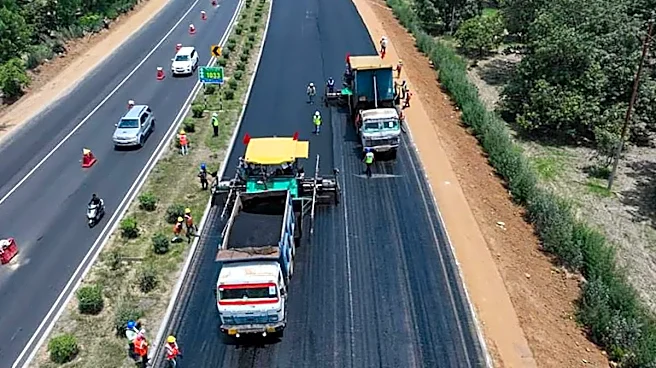
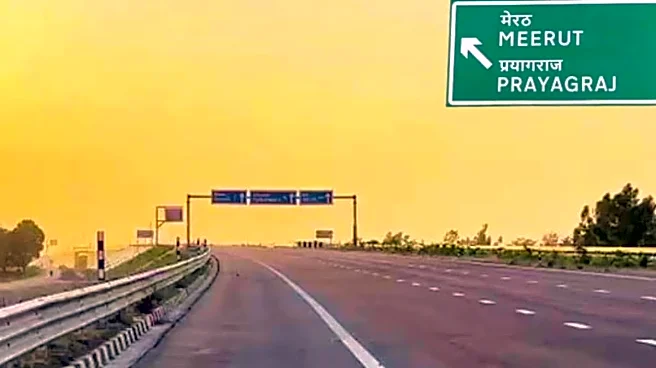
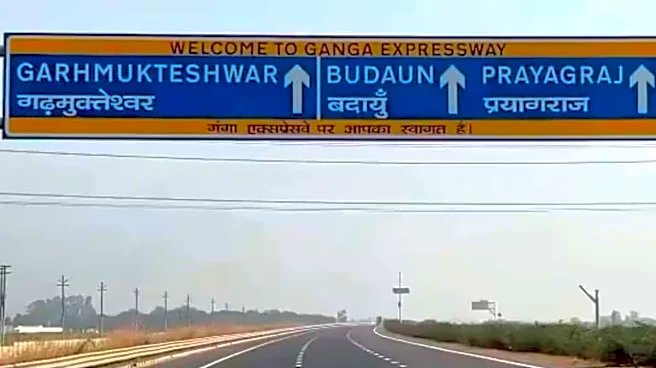
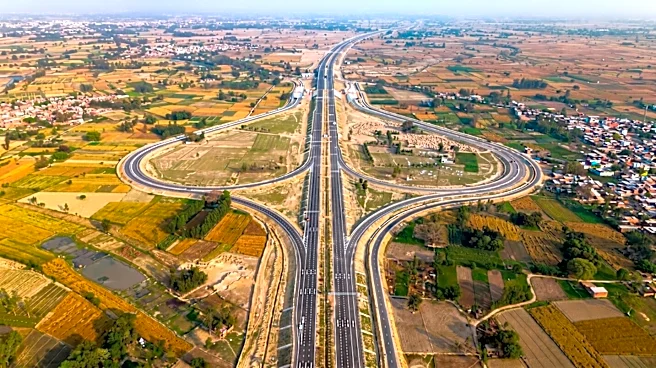
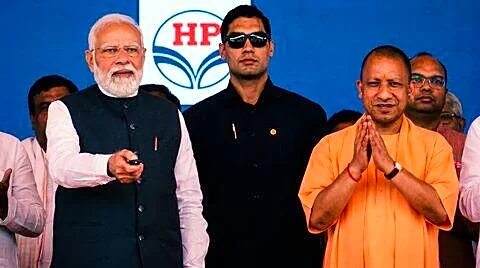
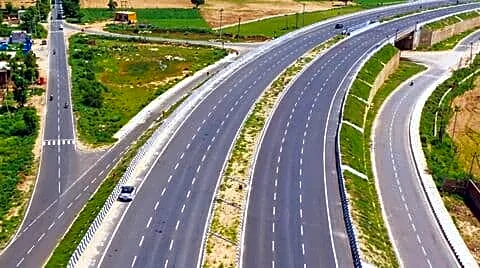
If Uttar Pradesh were a country, its economy would rank roughly alongside Argentina or South Africa. Yet, for decades, its sheer size has been less of an asset and more of a logistical headache. Moving goods from the western industrial belts to the eastern interiors has historically been an exercise in patience, navigating choked city roads and aging highways. To achieve its $1 Trillion economy ambition, UP needs more than just favourable policies; it needs a physical rewiring of its geography. That rewiring is the Ganga Expressway.Beyond Infrastructure: Solving FrictionLet’s be clear, 594 km of road is not just infrastructure. In economic terms, this is a high-velocity arterial system designed to solve the one problem that has kept UP from its true
potential: friction.The primary argument for the Ganga Expressway isn't distance, it’s time. Currently, moving a container from Meerut to Prayagraj can take anywhere from 10 to 12 hours. In logistics, time isn't just money—it’s inventory cost, driver wages, and, most importantly, perishability. The Ganga Expressway slashes this transit time to roughly six hours.This compression of time does something critical for the $1 Trillion goal as it makes ‘Just-in-Time’ manufacturing viable. Global auto giants and electronics manufacturers operate on razor-thin margins where parts must arrive exactly when needed. You cannot run a modern supply chain on a route where a traffic jam in a small town delays a shipment by four hours. By guaranteeing a consistent 100-120 km/h speed limit with zero intersections, this expressway reduces vehicle operating costs by an estimated 15-20%. It instantly upgrades the competitiveness of every factory located along its axis.
Redrawing the Economic Map
The most exciting aspect of this project is how it redefines the economic map of the state. Historically, investment in UP was hyper-concentrated in the National Capital Region (NCR) and to a lesser extent, Lucknow. The rest of the state was often viewed as the hinterland.The Ganga Expressway kills that concept. It creates what experts call a ‘Linear Economic Zone’ connecting 12 districts—Meerut, Hapur, Bulandshahr, Amroha, Sambhal, Budaun, Shahjahanpur, Hardoi, Unnao, Rae Bareli, Pratapgarh and Prayagraj.These are not just random stops but are nodes in a massive new network. A district like Hardoi or Shahjahanpur, which struggled to attract large industries due to poor connectivity, is now effectively a suburb of the NCR for freight purposes. We are looking at a combined population of nearly 60 million people—larger than the population of Italy or Spain—being brought into a unified, high-speed market. This is the demographic dividend UP has been waiting to unlock.
Backbone of Defense and Multi-Modal Connectivity
This is where the strategic genius of the project becomes apparent. The Ganga Expressway isn't built in a vacuum, but it is the spine of the Uttar Pradesh Defense Industrial Corridor. It connects crucial nodes like Aligarh, Kanpur and Lucknow. For defense manufacturing, a sector prioritized by the central government, speed and security of transport are paramount. Being able to move high-value components from a plant in the Bundelkhand region to the Jewar Airport in a matter of hours is a capability few states possess.Speaking of the Jewar Airport (Noida International Airport), the expressway effectively turns the entire state into the airport’s backyard. A farmer in Unnao or a weaver in Pratapgarh is now just a few hours away from a global air cargo hub. This multi-modal connectivity—Road + Rail + Air— is the hallmark of any $1 Trillion economy.We cannot ignore the wealth effect. India has seen this movie before. The Yamuna Expressway turned a swath of undeveloped land into a hub for data centers, universities and the upcoming Tata-Airbus plant. Land values along that corridor skyrocketed, creating a new tax base for the state and wealth for local landowners.The Ganga Expressway is set to replicate this on a much larger scale. As the state government prepares to plug in logistics hubs, textile parks and medical device parks along this route, we are going to see a massive appreciation of land and a boom in construction activity. This isn't speculation; it is a predictable outcome of high-speed connectivity. The construction phase alone created 50,000 jobs, but the long-term employment from the industrial ecosystems this road will support will dwarf that number.To hit the $1 Trillion mark by 2027-2028, UP needs to maintain a massive growth rate. You cannot do that with a logistics cost of 14% of GDP. The Ganga Expressway is the tool that will drive that cost down toward 8-10%, aligning the state with global standards.When you look at the math—₹36,000 crores in investment unlocking billions in GDP growth through increased productivity—the project pays for itself. It integrates UP’s four other expressways into a cohesive grid, ensuring that a factory in the East can feed a port in the West without delay.The Ganga Expressway signals that Uttar Pradesh is no longer a collection of disconnected districts, but a unified market ready to do business with the world. When that ribbon is finally cut, the clock on UP’s economic future starts ticking a lot faster.
/images/ppid_a911dc6a-image-177739910973126945.webp)

/images/ppid_a911dc6a-image-177745369282145902.webp)


/images/ppid_a911dc6a-image-177744846677637517.webp)
/images/ppid_a911dc6a-image-177743803153221033.webp)