/images/ppid_a911dc6a-image-17809844270194361.webp)


/images/ppid_59c68470-image-17808850285391185.webp)

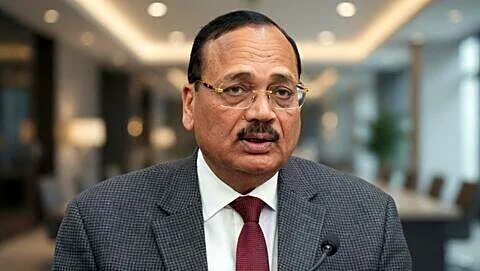
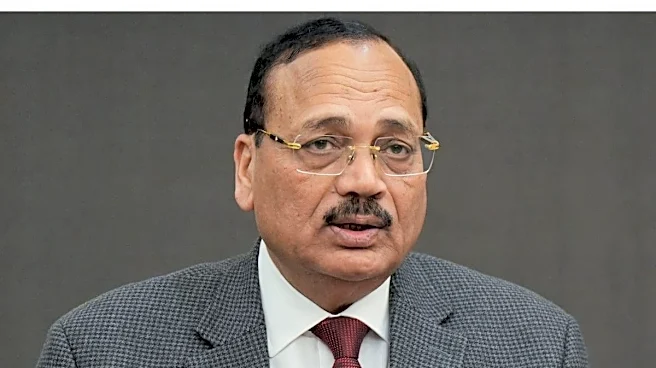
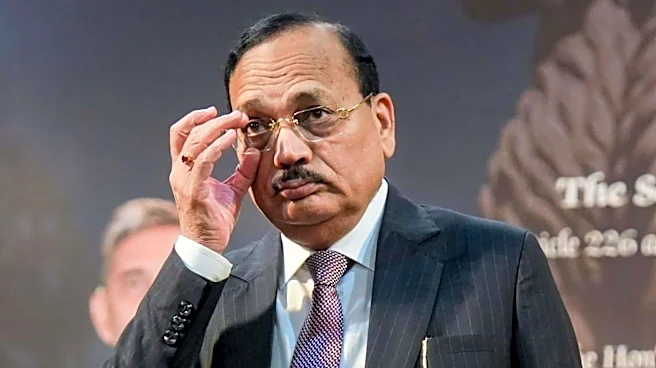
True measure of a nation’s legal maturity is not found in how many thousands of disputes its courts can command and adjudicate, rather in how effectively its system empowers its citizens to sustain their own relationships and reconcile their differences consensually, Chief Justice of India Surya Kant said.The CJI made this remark in his lecture on ‘Mediation, Arbitration, and the Courts: Converging trends in the Indian and English approaches in Commercial Dispute Resolution’ at an event held in Supreme Court Of The United Kingdom.Observing that the gathering was not to reflect upon the legacies of the past, CJI Kant said, “Our purpose today is to engage with the contemporary trends influencing commercial disputes across our respective jurisdictions
and to examine how our legal systems are responding to these dynamic realities.”“We must decisively reject the archaic narrative that pits alternative dispute resolution against the majesty of formal courts. Our traditional courts must continue to remain the ultimate guardians of public legal standard-setting and constitutional accountability. Yet, where the court provides the architecture of certainty, mediation serves as the adaptive mechanism for private commercial harmony,” he said.“While it is certainly true that the institutional structure of our modern courts bears the imprint of that inherited legal architecture, the underlying philosophy of consensual dispute resolution is far older and more deeply rooted in our own traditions. Long before the emergence of formal adversarial systems, Indian society recognised the value of negotiated settlement, reconciliation and community-based resolution as legitimate and effective means of preserving social and commercial harmony,” said the CJI.The head of Indian judiciary said questions relating to the very existence or validity of the arbitration agreement, the appointment of arbitrators, the determination of the juridical seat, the distinction between seat and venue, issues of jurisdiction, and challenges to interim or final awards frequently travel before courts at multiple stages. “The consequence is that disputes which were intended to be resolved with efficiency and expedition can, at times, become drawn into prolonged procedural contests,” he added.CJI Kant said this phenomenon is by no means a concern confined to the Indian judiciary alone. “Jurisdictions across the world appear to be grappling with similar difficulties, whether in the context of domestic arbitration or commercial disputes or complex cross-border disputes.”He went on to add: “I am told that the United Kingdom, too, has witnessed a growing number of court applications under Sections 67 and 68 of the Arbitration Act, prompting recent legislative reforms through the Arbitration Act 2025 aimed litigation at reducing and arbitration-related reinforcing procedural efficiency within the arbitral framework. The long-term consequences and practical impact of those reforms are, of course, still unfolding and will reveal themselves only with time and judicial experience.”Ending his speech CJI Kant said: “As the curtains draw to a close, it is perhaps fitting to reflect on the very geography that connects our two legal traditions. For centuries, the Thames here in London and the great rivers of India have served as the vital arteries of global commerce, carrying wealth, ideas, and occasionally, the friction of human ambition. There is an old, evocative proverb that reminds us: “A river does not drink its own water, nor does a tree eat its own fruit.” They exist to sustain the wider ecosystem around them.

/images/ppid_59c68470-image-178093253337559260.webp)





/images/ppid_a911dc6a-image-178071145947745525.webp)

/images/ppid_a911dc6a-image-178083622688934557.webp)