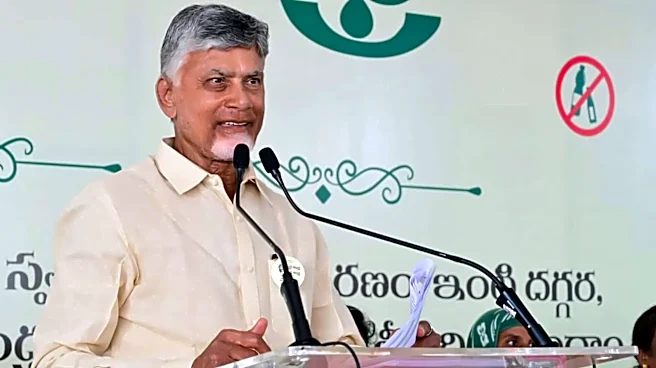
In a move to boost birth rates, Andhra Pradesh Chief Minister N Chandrababu Naidu on Saturday (May 16) announced incentives for parents having third and fourth child, stating that they will get Rs 30,000 and Rs 40,000, respectively. This comes as Andhra Pradesh is making efforts to reverse the state’s declining population trend. Addressing a public meeting at Narsannapeta in Srikakulam district, Naidu said the government had taken the decision and would announce further details within a month.Naidu, while speaking on the sidelines of the SwarnaAndhra–SwachAndhra cleanliness programme, said, “I have made a new decision. We will provide Rs 30,000 immediately after the birth of a third child and Rs 40,000 for a fourth child. Isn’t this the right
decision?” Although he had once advocated population control measures, the CM said the time had now come for society to work together to increase the birth rate.
'Rs 25000, For Birth of Second Child'
Naidu’s latest announcement follows an earlier proposal to provide a Rs 25,000 incentive for the birth of a second child. On March 5, the CM informed the Assembly that the state government was considering an incentive of Rs 25,000 for couples having a second child.However, Health Minister Satya Kumar Yadav later told PTI that the government had decided to extend the incentives to families having a third child and beyond.According to Naidu, some couples are opting to have only one child as their incomes rise, while others choose to have a second child only if their firstborn is not a boy. As a result, he warned that the state’s population growth rate is declining and stressed the importance of maintaining the replacement-level Total Fertility Rate (TFR) of 2.1.Naidu noted that a population remains stable only when the average fertility rate is 2.1 children per woman. He claimed that declining populations and ageing societies in several countries have negatively affected their economies.Rejecting the notion that children are a burden, Naidu argued that they are an asset and said he would prove it.
/images/ppid_a911dc6a-image-177893044119772678.webp)