/images/ppid_a911dc6a-image-177831682975944135.webp)

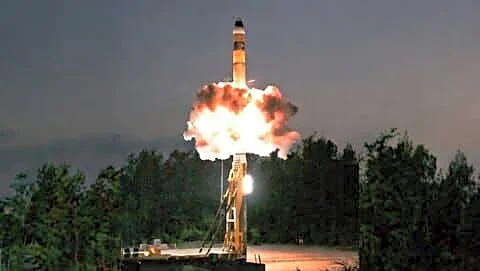

The ceasefire came quickly. Too quickly, some Indian military analysts argue, for a country publicly projecting resilience and strategic confidence during the May 2025 India-Pakistan conflict. But months after Operation Sindoor, a different picture appears to be emerging — not from official admissions, but from Pakistan’s own military behaviour afterwards.A series of accelerated procurements, command restructurings, artillery reorganisations and emergency capability inductions now point towards something Islamabad has not formally acknowledged: the conflict may have exposed far deeper operational vulnerabilities than Pakistan initially admitted publicly. And at the centre of that assessment sits one date. May 10, 2025.
#OperationSindoorIndia’s
resolute response calibrated and precise. Committed to safeguarding sovereignty and its people.#JusticeServedJai Hind. pic.twitter.com/fegLXxMJjm
— ADG PI - INDIAN ARMY (@adgpi) May 7, 2026
The Moment Escalation Changed
India’s initial strikes under Operation Sindoor on May 07 targeted nine terror-linked locations across Pakistan and Pakistan-occupied Jammu & Kashmir. Crucially, India avoided Pakistani military facilities in the opening phase — a calibrated signalling decision that effectively offered Islamabad an off-ramp. But the conflict did not stop there. Pakistan subsequently attempted to probe Indian air defence systems using drone deployments while also launching limited rocket and long-range artillery attacks between May 8 and 10. The response that followed altered the trajectory of the confrontation.निश्चय कर अपनी जीत करौं।With firm resolve, I shall secure victory.#SindoorAnniversary #JusticeEndures#NationFirst pic.twitter.com/WAFnKnsD0z
— ADG PI - INDIAN ARMY (@adgpi) April 29, 2026
The Fear Was Not Just Damage — It Was What Came Next
The deeper concern inside Pakistan’s military calculus appears to have centred around escalation dominance. The Indian strikes carried an implicit message that further phases had already been planned — potentially extending towards command-and-control infrastructure, leadership nodes and strategic force multipliers. In practical military terms, that raises the spectre of progressive command disruption. Or worse from Pakistan’s perspective: decapitation risk. The possibility that links between GHQ, corps headquarters and subordinate formations could be systematically degraded appears to have created genuine strategic concern within Pakistan’s security establishment.That context matters when examining what happened afterwards. Because Pakistan’s post-conflict military activity does not resemble the behaviour of a force fully satisfied with its wartime readiness. It resembles rapid institutional correction.A Military Already Operating Under Pressure
The timing of the conflict also mattered. Pakistan’s military posture was already stretched across multiple theatres and commitments:- Deployments linked to Saudi Arabia
- Preparations along the Durand Line
- Counterinsurgency activity under Operation Azm-e-Istekam
- Internal security pressures across Khyber Pakhtunkhwa and Balochistan


/images/ppid_a911dc6a-image-177821806434170406.webp)