New
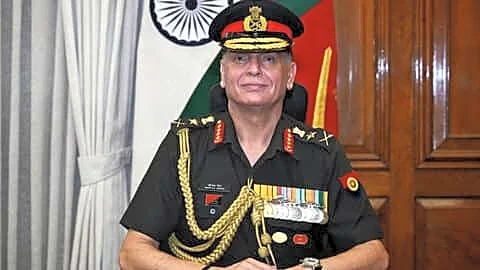
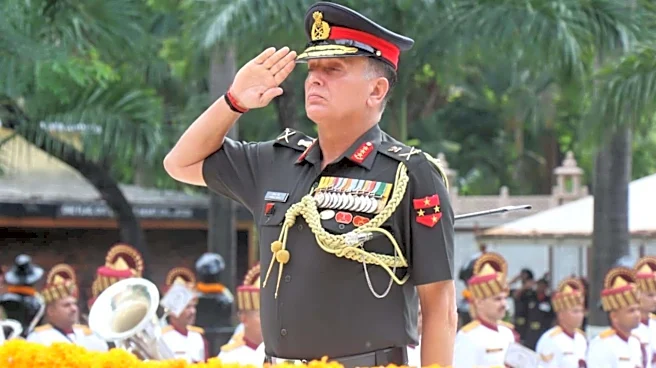
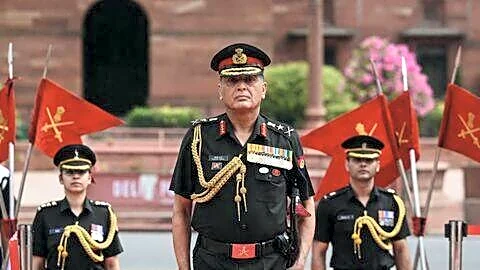
Delhi: In a wide-ranging conversation with Times Now's Mayank Singh, the Chief of Army Staff outlines how the Indian Army is reading the security landscape of 2026 — from the Line of Actual Control to the lessons of Operation Sindoor. He speaks on the changing character of warfare, the growing role of drones, new battlefield formations, and the push for Atmanirbharta in defence.
Here is the full Q&A:
Q1. How do you view the present situation along the Line of Actual Control and the Army’s priorities there?"The situation along the
northern borders is stable, but sensitive. Recent agreements have contributed to improving stability on the ground, and both sides are showing greater responsiveness towards each other’s concerns.Established mechanisms such as military-level talks, hotlines, flag meetings and commander-level engagements are working well. Regular ground-level interactions are taking place and help in routine border management besides preventing misunderstandings.As regards our priorities are concerned, they are clear. First, to maintain peace and stability along the Line of Actual Control. Second, to resolve local issues through dialogue and established mechanisms. Third, to maintain a strong and credible deployment posture to meet any contingency."
Q2. What does Operation Sindoor tell us about the Indian Army’s ability to respond to emerging security challenges?"Operation Sindoor demonstrated India’s resolve, capability and restraint. It was a calibrated military response to terrorism, carried out with precision, clear purpose and disciplined planning.For the Indian Army, the operation underlined the importance of credible intelligence, joint planning, secure communications, precision capability and effective information management. It showed that military action in the present environment is not only about the use of force, but also about speed, coordination, clarity and control.The operation also offered important lessons for the future. Conflicts may be short, intense, technology-driven and fought under continuous information scrutiny. In such an environment, success will depend on reliable information, strong networks, integrated command systems and the ability to act with precision."
Q3. Ongoing conflicts worldwide have reflected upon the need to adapt. How is the Indian Army preparing itself for the changing character of warfare?"The character of warfare is changing rapidly, and the Indian Army is adapting accordingly. Modernisation is now being seen as a larger process that includes structures, training, technology, doctrine, systems and human resource management.Future operations will require faster decision-making and closer integration of intelligence, surveillance, weapons, communication networks and commanders. The Army is therefore moving towards more agile, networked and technology-enabled formations.New structures such as
Rudra Brigades, Bhairav Battalions, Ashni Drone Platoons, Shaktibaan Regiments and Divyastra Batteries are part of this transformation. These initiatives are aimed at improving speed, precision, battlefield awareness and responsiveness."
Q4. What role do drones now play in the Army’s operational thinking?"Drones have become an important part of
modern military operations. They are being used for variety of tasks ranging from intelligence gathering, target identification, precision engagement, logistics, battle damage assessment and force protection.Different types of drones are required for different roles. Some are useful for local surveillance, some for longer-range observation, some for logistics support, and some for precision or specialised tasks.Our focus has been on building a complete drone ecosystem. This includes indigenous manufacturing, trained manpower, maintenance support, regular training, doctrine, counter-drone capabilities, and integration with operational planning. The objective is to give soldiers and formations the technological advantage required on future battlefields."
Q5. How important is Atmanirbharta for the Indian Army’s future preparedness? What are the core areas of effort of the Indian Army in this regards?"Atmanirbharta is now a core requirement of national security and future warfighting. In a crisis, the nation must be able to rely on its own systems, industrial base and ability to sustain operations.Indigenous systems are becoming central to surveillance, communications, electronic warfare, precision engagement, information management, and operational decision-making. Indigenous capability is no longer peripheral to military preparedness; it is increasingly becoming an essential part of it.At the same time, modern warfare is evolving rapidly. Capability requirements will continue to emerge in areas such as long-range precision fires, advanced munitions, drones and counter-UAS, electronic warfare, resilient communications, autonomous platforms, and battlefield awareness.The effort is to develop Indian solutions for Indian challenges. Our terrain, threat matrix and operational requirements are unique, and our engagement with DRDO, DPSUs, private industry, MSMEs, start-ups and academia is aimed at faster trials, better hand-holding and quicker induction."
/images/ppid_a911dc6a-image-178283306182977634.webp)





/images/ppid_a911dc6a-image-178296567105286158.webp)



/images/ppid_a911dc6a-image-178279662219623516.webp)
/images/ppid_a911dc6a-image-178279924397740800.webp)
/images/ppid_a911dc6a-image-178289805704566999.webp)
/images/ppid_a911dc6a-image-178280451895771078.webp)
/images/ppid_a911dc6a-image-178280182999429013.webp)