/images/ppid_a911dc6a-image-177744587002022986.webp)

/images/ppid_a911dc6a-image-17772274286776852.webp)


Senior Congress leader Rahul Gandhi on Wednesday launched a sharp attack on the proposed Great Nicobar Project, calling it "one of the biggest scams and gravest crimes against the natural and tribal heritage of the country." After visiting Campbell Bay, Gandhi accused the government of sacrificing one of India's most pristine ecosystems for development."I travelled throughout Great Nicobar today. These are the most extraordinary forests I have ever seen in my life. Trees older than memory. Forests that took generations to grow," Gandhi said.He added, "The government calls what it is doing here a 'project'. What I have seen is not a project. It is millions of trees marked for the axe. It is 160 sq km of rainforest condemned to die. It is communities
that have been ignored while their homes have been snatched away. This is not development. This is destruction dressed in development's language."
What Is The Great Nicobar Project?
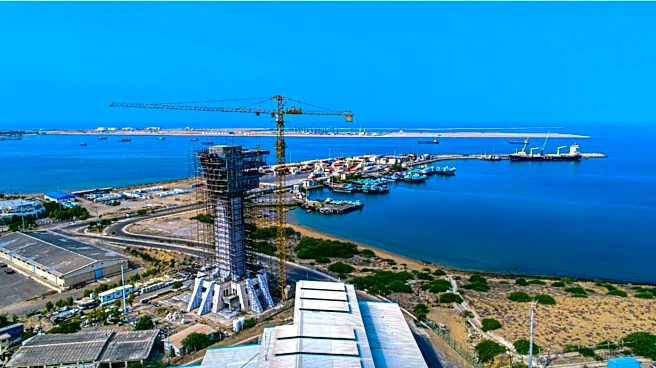
The project is a massive infrastructure plan near Galathea Bay in Great Nicobar. It is expected to cost between Rs 72,000 crore and Rs 92,000 crore.It includes:- A transhipment port
- A civil and military airport
- A township
- A gas and solar power plant
Why The Government Supports It
The Centre says the project is vital for India's economic and strategic interests.Great Nicobar is located close to the Malacca Strait, one of the world's busiest shipping lanes. A large portion of India's cargo currently passes through foreign ports like Colombo. The government believes the new port can reduce India's dependence on overseas hubs, strengthen national security and create over 1.28 lakh jobs.Why Rahul Gandhi And Activists Oppose It
Gandhi, environmentalists and tribal groups have raised serious concerns. The project would require clearing vast forest areas and cutting down nearly one million trees.A section of tribal communities fears displacement, loss of livelihood and threats to the vulnerable Shompen tribe.Titus Peter, First Captain of Pulobhabi village, warned that increased outside contact could expose the Shompen community to diseases. He also said the project could harm rare plants and animals found only on the island.What Experts And Courts Have Said
In February, the National Green Tribunal upheld the project's environmental clearance.The tribunal said, "We do not find any good ground to interfere."It noted the project's strategic importance and said adequate safeguards had been built into the approval process.The NGT also made it clear that strict environmental compliance would be mandatory throughout construction.Why NGT Approved The Project
The National Green Tribunal (NGT) said the Great Nicobar Project is extremely important for both India's economy and national security.One major reason is its location. Great Nicobar lies just 40 kilometres from the Malacca Strait, one of the world's busiest shipping routes. Nearly one-third of global trade passes through this narrow sea route.The tribunal noted that the island has significant geopolitical importance, especially as India seeks to strengthen its presence in the Indian Ocean amid China's growing influence in the region.It recalled, "noted (without any comment) media reports that the area is located in China's 'string of pearls' strategy, which is sought to be countered by Indian Authorities under India's Act East policy. Indian Ocean has emerged as a key intersection zone of Indian and Chinese strategic interests."The NGT also highlighted the economic benefits. The project is expected to create around 1,28,558 jobs and help Great Nicobar emerge as a major global maritime hub. It could also reduce India's dependence on foreign ports for cargo transhipment.The tribunal said, "Every developmental activity is bound to have some adverse impact on (the) environment but if impact can be mitigated and advantages to the society are greater, such project(s) have to be allowed in larger public interest."It further observed in an earlier order that a "hyper technical approach should not be adopted, ignoring ground reality and national security."Environmental Safeguards Promised
The government has promised:- New wildlife sanctuaries for turtles, megapodes and corals
- Research stations for biodiversity monitoring
- Independent committees for tribal welfare and pollution control
- Protection of sandy beaches used by nesting turtles

/images/ppid_a911dc6a-image-177739383569783736.webp)
/images/ppid_a911dc6a-image-177735482748980332.webp)


/images/ppid_a911dc6a-image-177735222870485680.webp)


/images/ppid_a911dc6a-image-177736273597573550.webp)