India’s decision to sharply raise import duties on gold and silver has once again triggered fears that soaring prices could hit demand in one of the world’s biggest bullion markets. But if history is any guide, Indians are unlikely to stop buying gold anytime soon.The government recently increased import tariffs on precious metals by 9% (from 6 to 15 percent), pushing already elevated domestic prices even higher. The move comes at a time when global uncertainty, currency concerns, and rising geopolitical tensions have driven gold prices to record levels.Also Read: What India’s New Gold Import Duty Means For Buyers, Jewellers And Investors Yet despite repeated price shocks over the years, India’s appetite for gold has remained remarkably resilient
- underlining how deeply the yellow metal is woven into the country’s economy, culture, and household finances.
Why Higher Prices Don’t Kill Gold Demand
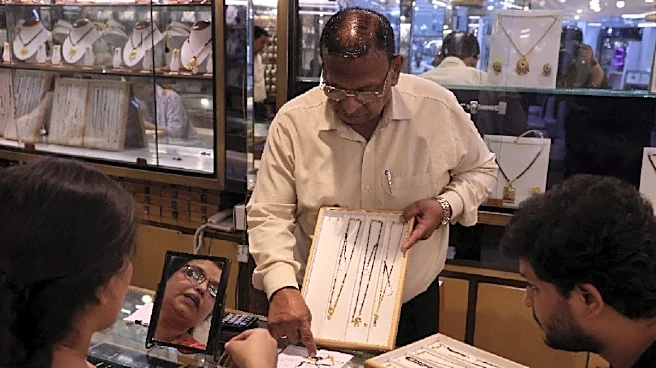
Indian buyers are known to be price-sensitive. Whenever prices surge sharply, jewellery purchases often slow temporarily as families postpone weddings or festive shopping. But over the long term, demand has consistently bounced back.The numbers tell the story. Even though local gold prices have surged by nearly 443% over the past decade, India’s annual gold demand has largely stayed steady between 666 and 803 metric tons, averaging around 718 tons.This is not the first time India has experimented with steep tariffs either. Between 2012 and 2013, New Delhi raised gold import duties from 2% to 10% in a bid to curb imports and reduce pressure on the current account deficit. But demand remained resilient despite the higher costs.Now, after already absorbing a massive 76.5% rise in gold prices in 2025 alone, consumers are unlikely to suddenly abandon purchases because of another tariff increase.That is because for millions of Indians, gold is not just jewellery or luxury spending. It is savings, security, status, and emergency insurance rolled into one.In urban households, gold is often viewed as a long-term store of value and a hedge against inflation or rupee weakness. In rural India, where formal banking penetration is still uneven in some regions, families and farmers frequently rely on gold as a financial cushion during difficult times.Gold-backed loans have also become one of the fastest and easiest ways for people to access cash. Banks and non-banking finance companies can often approve loans against gold within minutes, making it a critical source of emergency liquidity for millions.
Jewellery Demand May Feel The Pressure
While overall demand may stay strong, not every segment of the market will react the same way.
Jewellery still accounts for nearly 75% of India’s total gold consumption. The remaining demand comes from investments such as gold coins, bars, and gold exchange-traded funds (ETFs).Jewellery demand had already started weakening because of record-high prices, and the latest tariff hike could push more buyers to delay purchases or shift toward lighter and lower-carat jewellery in the near term.However, investment demand is telling a different story.Indian investors increasingly see gold as a safe-haven asset during periods of market volatility and economic uncertainty. Higher tariffs raise local prices further, reinforcing the perception that gold is an appreciating asset.That psychology often attracts even more buyers worried about missing future price gains.In fact, investment demand for gold overtook jewellery demand for the first time during the March quarter, as investors moved money into bullion amid weak returns from equities. Inflows into local gold ETFs have also been rising steadily and analysts expect that trend to continue.
/images/ppid_a911dc6a-image-177874063507352182.webp)


/images/ppid_59c68470-image-177847282585122485.webp)
/images/ppid_59c68470-image-177855264332452312.webp)

/images/ppid_59c68470-image-177865006961523549.webp)

/images/ppid_59c68470-image-177866260717798667.webp)



/images/ppid_59c68470-image-177873753939320557.webp)

/images/ppid_59c68470-image-177872506415175787.webp)
/images/ppid_59c68470-image-177860003642019301.webp)