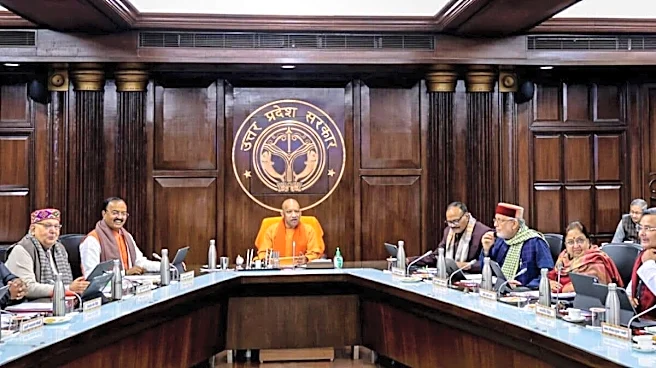
Uttar Pradesh Chief Minister Yogi Adityanath recently issued significant directives that will focus on bringing certain changes to the state's emergency response. Central to the proposal is a statewide Integrated Trauma and Emergency Network that will rely heavily on Artificial Intelligence (AI) to ensure accident victims receive treatment within the critical ‘Golden Hour’, which refers to the first sixty minutes after a traumatic injury when rapid intervention significantly improves survival chances."Uttar Pradesh’s healthcare system should be based on prompt treatment, timely diagnosis, modern technology, specialist human resources, and a robust referral system, so that every citizen can access quality and timely medical care close to their
place of residence", CM Yogi said.
Efforts to Resolve a Long Existing Issue
For India’s most populous state, which spans 75 districts and nearly a lakh villages, expanding infrastructure alone is not enough. Uttar Pradesh consistently records among the highest road accident fatalities in the country. Officials identify fragmentation in emergency response as a key problem. Currently, ambulance crews responding to crashes on routes such as the Agra-Lucknow or Purvanchal Expressway often make multiple calls to district hospitals to locate available ICU beds or on-call specialists. Patients are frequently transferred from Community Health Centres (CHCs) to district hospitals and then to medical colleges, a process that consumes critical minutes within the Golden Hour.To address these delays, the Chief Minister has directed that effective coordination be established among medical colleges, district hospitals, trauma centres and CHCs. The proposed solution is an artificial intelligence-based digital referral system designed to provide real-time monitoring of ambulances, medical personnel, bed availability and treatment facilities.
Public Private Model for Effective Implementation
According to sources aware of the developments regarding this model, AI would act as an emergency logistics hub rather than a diagnostic tool. The system would identify the nearest facility equipped for a patient's specific injuries, map the fastest route using live traffic data and transmit patient vitals to the receiving hospital. Trauma teams and operating theatres could be pre-activated before the ambulance arrives.The state’s plan builds on existing technologies in both private and public sectors. Private operators such as RED Health run 5G-enabled ambulances that stream patient vitals and video to emergency rooms, enabling doctors to begin treatment during transit. Health-tech platforms like AmbanaX provide real-time tracking of hospital resources and automated ambulance-hospital matching. In the public sector, the BHU Trauma Centre in Varanasi has implemented a digital system that displays ICU and ward bed availability, demonstrating the potential for government digitisation.Internationally, integrated emergency coordination is already standard practice. The United States uses a tiered Level I–IV trauma network that directs ambulances to specialised centres based on injury severity. In the UK, ambulance services electronically share patient data with hospitals while en route. Singapore’s SCDF operates an integrated GPS-dispatch-hospital coordination system. Advocates say rapid data flow can be as crucial as rapid transport in saving lives.Challenges remain, particularly around data quality and digital access. The effectiveness of an AI platform depends on accurate, timely data. Success in Uttar Pradesh will require reliable internet connectivity in rural areas, full digitisation of government health records and standardised emergency protocols across public and private providers. It will also demand trained paramedics who can operate digital systems and strong cybersecurity measures to protect patient information. Without rigorous data practices, AI risks becoming an expensive dashboard with limited impact.The state government has also directed that a robust system for rapid medical assistance be developed in accident-prone areas, on national highways and along expressways. If human resources and digital infrastructure keep pace with the technology, an integrated trauma network could substantially improve survival outcomes for thousands of accident victims across Uttar Pradesh
/images/ppid_a911dc6a-image-178360002980355359.webp)








/images/ppid_a911dc6a-image-178358602609028060.webp)