/images/ppid_a911dc6a-image-177549583242748217.webp)

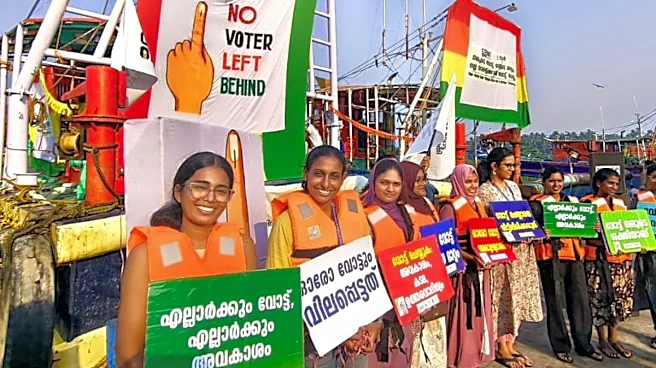
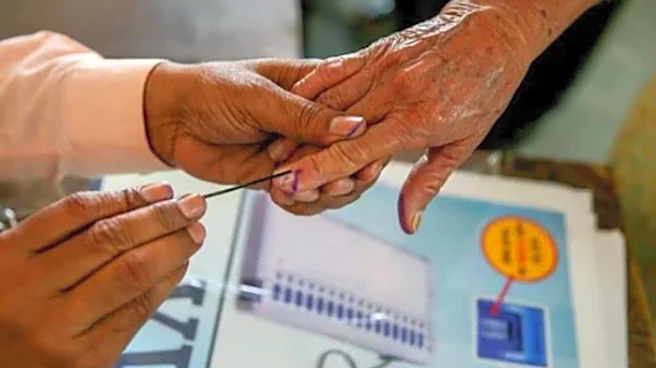

As the campaign season in Kerala enters its final leg, all major political parties are pushing the accelerator, framing the Assembly elections as a thrilling, high-stakes contest. In these tense final days, numbers become crucial to cut through the rhetoric to reveal the real pulse of the people. Various surveys have highlighted key voter concerns, from economic pressures to preferred leadership faces, painting a clear picture of what's driving decisions at the ballot box.UDF Gets EdgeAccording to the Poll Mantra Intelligence Report, the ruling Left Democratic Front (LDF) is projected to win 42-46 seats, reflecting a significant decline from its traditional strongholds. The BJP-led National Democratic Alliance (NDA) is likely to draw a blank
or win 0-2 seats, indicating continued struggle in converting its vote base into assembly seats in the southern state.
The Congress-led United Democratic Front (UDF) appears poised for a decisive victory in the Kerala Assembly elections, with a poll survey projecting the alliance to secure 88-92 seats in the 140-member House, comfortably crossing the majority mark of 70.Economic Concerns Dominate Voter MindsPrice rise and cost of living have emerged as the primary concern for Kerala voters at 24.5%, followed by jobs and youth out-migration (brain drain) at 20.2%. Together, economic stress factors account for nearly 45% of voter concerns.Corruption ranks third at 13%, followed by healthcare (10.8%) and issues related to drugs, alcoholism and crime (10.5%). Welfare schemes and pensions, traditionally a significant factor in Kerala politics, have declined to just 4% as a voting priority."The election is being fought on economic survival, not ideological narratives. Youth dissatisfaction is emerging as a decisive electoral force," the report observes. Party Loyalty Trumps CandidatesThe survey reveals that 44.1% of voters prioritize party over candidate, while 31.5% consider both equally important. Only 24.4% are driven primarily by individual candidates, indicating that state-level narratives are outweighing local equations.Voter commitment remains high, with 38.1% saying nothing will change their vote. However, economic situation (21.5%) and better local candidates (16.6%) remain potential swing factors.Vote Share and Regional BreakdownIn terms of vote share, the UDF has established a decisive lead of over 8 percentage points with 41.5% support, while the LDF trails at 33.4%. The NDA stands at 17.2%, with others at 2.3%. Only 5.6% of voters remain undecided, indicating a largely locked-in voter preference.Regionally, the UDF is projected to dominate across all zones. In Malabar, which accounts for 60 seats, the survey gives the UDF 41-43 seats against 15-17 for the LDF. In Central Kerala (41 seats), the UDF is projected to win 25-26 seats, while the LDF may secure 12-13. Travancore (39 seats) remains the only region showing a relatively close contest, with UDF projected at 22-23 seats and LDF at 15-16.Key Drivers: Change Over IdeologyThe survey identifies "desire for change" as the top voting driver at 22.8%, followed by welfare schemes received at 17.6%. Party ideology and values influence 16.2% of voters, while leadership (CM face) matters to 14.6%. Past government performance influences 12.1% of voters, with local candidate influence at 9.4%."Kerala voters are leaning towards a performance + change narrative, not identity politics. Welfare alone is not enough to retain voters without strong leadership perception," the report states.Leadership Preferences and MomentumOn the question of preferred Chief Ministerial face, VD Satheeshan leads with 21.3% support, closely followed by incumbent Chief Minister Pinarayi Vijayan at 18.5%. Ramesh Chennithala is at 17.2%, while KC Venugopal has emerged as a strong contender at 15.1%. Rajeev Chandrashekhar of the BJP trails at 9.6%.However, in terms of momentum over the last 60 days, Venugopal leads the narrative at 19.4%, ahead of Pinarayi Vijayan (18.6%) and Shashi Tharoor (18.2%). The survey notes that four out of the top five leaders shaping electoral momentum are from the UDF. Strategic Vulnerabilities AheadThe survey warns that the LDF's dependence on a single central figure creates "strategic vulnerability," while the UDF benefits from "collective leadership advantage" with multiple communicators driving the narrative.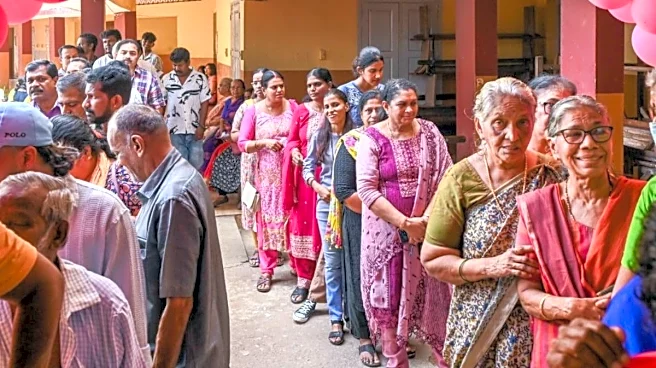

/images/ppid_a911dc6a-image-177537106927033301.webp)
/images/ppid_a911dc6a-image-177537886889969635.webp)
/images/ppid_a911dc6a-image-177532162978374969.webp)
/images/ppid_a911dc6a-image-177538155909467450.webp)