India is likely to receive first shipment of crude oil from Iran after a gap of seven years amid heightened tension in the Gulf and Middle East, triggered due to US-Israel joint war against Tehran. Iran was prohibited from exporting its oil due to US sanctions, however, even since the war-torn country blocked the Strait of Hormuz — a strategic shipping route — in the Persian Gulf of the Arabian Sea, countries in Asia and Europe have been struggling to meet their energy needs. Iran closed down Hormuz, halting almost all energy trade with hundreds of vessels stranded in the region, to build pressure on United States to pull out from the war.India, through its diplomatic outreach and friendly ties with Iran, juggled out ways to sail through 6 of its vessels so
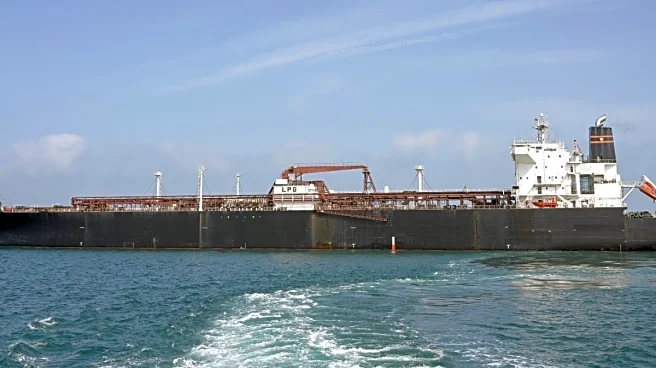
far while talks are underway for accessing safe passage for remaining vessels.India stopped purchasing oil from Iran in May 2019 in wake of the US sanctions and was getting its energy requirement meet from Saudi Arabia, Qatar, Oman and other sources. However, as Iran has been targeting the Gulf nations in the ongoing war, affecting Gulf nations energy installations, a foreign vessel carrying Iranian crude is now expected to reach India by April 4. According to ship tracking site MarineTraffic data, an Eswatini-flagged tanker named 'Ping Shun' was heading towards Vadinar facility of Deendayal Port at Kandla. Reports say Ping Shun is en route to Vadinar facility carrying 6 lakh barrels of crude oil.Indian refiners have been looking to purchase a few cargoes of Iranian oil on water following the recent sanctions waiver by Washington."The Indo-Iranian oil trade has flickered back to life. Following the US administration's decision to grant a 30-day window for Iranian oil "on the water" due to regional conflict, the vessel Ping Shun is now en route to Vadinar (in Gujarat) with 600,000 barrels of crude. This is the first such delivery since May 2019 and comes at a critical time for Indian refiners facing tightening inventories," said Sumit Ritolia, Lead Research Analyst, Refining and Modelling at commodity market analytic firm Kpler.While the identity of the buyer is unknown, Vadinar is home for 20 million tonnes a year oil refinery of Russian oil giant Rosneft-backed Naraya Energy. It also is the landing point for crude oil that goes to hinterland refineries such as Bina refinery of Bharat Petroleum Corporation Ltd (BPCL).
What Oil Ministry Said on Purchasing Iranian Crude
India's oil ministry has so far maintained that techno-commercial feasibility will drive the decision on resuming buying Iranian crude.Historically, India was a major buyer of Iranian crude, importing significant volumes of Iranian light and heavy grades due to strong refinery compatibility and favourable commercial terms.
Iranian Oil Once Was 11 Per Cent of India's Total Crude Import
Following sanctions tightening in 2018, imports ceased from May 2019, with volumes replaced by Middle Eastern, US and other grades. At peak, Iranian crude accounted for 11.5 per cent of India's total imports.India used to buy 518,000 barrels per day of Iranian oil in 2018, which slowed to 268,000 bpd between January and May 2019 when the US granted waivers to a few buyers. There have been no imports since.The key grades that Indian refiners used to purchase are Iran light and Iran heavy crudes."The Aframax Ping Shun (IMO 9231901) loaded with Iranian crude oil from Kharg Island in early March has emerged as the first vessel observed signaling a destination of Vadinar, India since May 2019, following sanction reimposition on Iranian oil by the first Trump administration," Ritolia said.
US Waives Sanction on Iranian Oil
The US earlier this month waived sanctions on the purchase of Iranian oil at sea for 30 days in its latest attempt to ease oil prices that have been driven up by the US-Israeli war on Iran.That window expires April 19. An estimated 95 million barrels of Iranian oil is on vessels on sea, of which around 51 million barrels could be sold to India while the remaining are better suited for buyers in China and Southeast Asia."The tanker is estimated to have loaded approximately 600 kb (600,000 barrels) from Kharg Island around 4 March, with a declared ETA to Vadinar on 4 April," he added.While the US waiver allowed countries to purchase those barrels, it is unclear how payments will be made.Iran remains cut off from SWIFT (Society for Worldwide Interbank Financial Telecommunication) -- a global messaging network used by banks and financial institutions to securely send and receive information about financial transactions.Last purchases from Iran were done in Euro using a Turkish bank as a go-between but that option no longer exists.Iran was cut off from the SWIFT system in March 2012 following European Union sanctions over its nuclear programme, with the move forcing the disconnection of multiple Iranian banks and severely restricting global financial transactions.Further disruptions occurred in 2018 after the US reimposed sanctions, leading to renewed suspension of several Iranian banks from the network, which significantly constrained Tehran's ability to conduct international trade, receive oil payments and access foreign currency reserves.
With inputs from PTI
/images/ppid_a911dc6a-image-177515005477569359.webp)


/images/ppid_a911dc6a-image-177497842712714047.webp)


/images/ppid_a911dc6a-image-177513963602059817.webp)
/images/ppid_a911dc6a-image-177512922689236957.webp)
/images/ppid_a911dc6a-image-177513443544245613.webp)
/images/ppid_59c68470-image-177511252986653731.webp)

/images/ppid_a911dc6a-image-177513706488830291.webp)
/images/ppid_a911dc6a-image-177514743677552660.webp)
/images/ppid_a911dc6a-image-177513702974180721.webp)

/images/ppid_a911dc6a-image-177492387404418600.webp)