/images/ppid_a911dc6a-image-178281486710745172.webp)







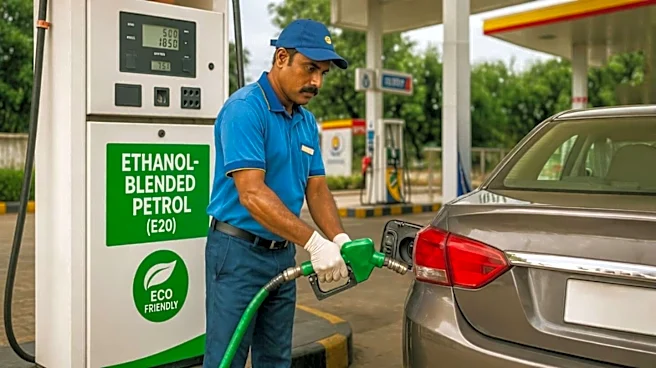
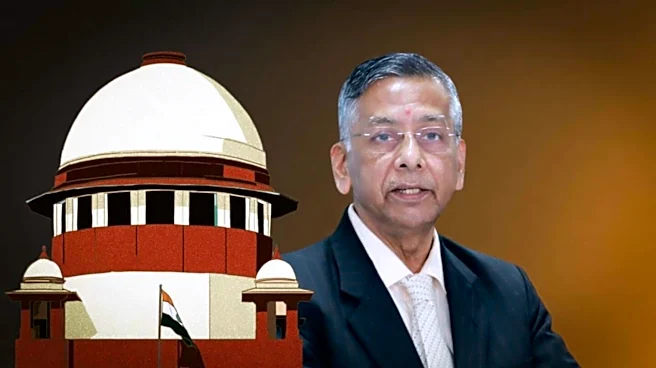
New Delhi: The Supreme Court on Tuesday (June 30) directed a status quo on ethanol supply allocation for the Ethanol Supply Year (ESY) 2025–26. Notably, the Centre told the Supreme Court that the 20 per cent ethanol blending initiative in petrol is still under the experiment stage, adding that the full impact of the policy is expected to be clearer by next year.A bench of Justice MM Sundresh and Justice Sheel Nagu heard arguments from Attorney General R Venkataramani, representing Bharat Petroleum Corporation Ltd and Senior Advocate Siddharth Dave before issuing the order, representing respondents. Venkataramani argued that the Karnataka High Court's order would affect the policy for 20 per cent ethanol-petrol blending. The top court also issued
notice to 24 respondents – the Union of India and 23 distilleries – on BPCL’s appeal challenging the high court's order.When the bench asked why the matter could not be taken up before the High Court's Division Bench, the Attorney General said ethanol supply contracts had already been finalised in October 2025 and that multiple petitions on the issue were pending before various high courts. He requested time to file the necessary transfer petitions.Notably, the Karnataka HC had directed further enhancement of ethanol's allocation. In its June 23 order, the High Court directed Oil Marketing Companies (OMCs) — BPCL, HPCL and IOC — to examine and decide a distillery's plea seeking higher ethanol allocation before finalising the tender process.The Attorney General challenged the High Court's order. Last week, the Centre had dismissed concerns being raised that India's ethanol blending program -- E20 fuel -- could affect the validity of vehicle insurance policies, and assured that it remains safe, consumer-friendly, and economically beneficial. In a statement, the oil ministry had said that claims linking E20 fuel use to insurance invalidation had been clarified with relevant stakeholders and were found to be incorrect.The Press Information Bureau (PIB) in a release said that the government had noted certain misleading and unsubstantiated claims being circulated on social media regarding Ethanol Blended Petrol (EBP), which appear to be aimed at confusing and misleading the public."Ethanol blending is a globally accepted practice and is successfully implemented in several countries, including the United States, Brazil, and Japan," it had said.Ethanol-blending in India conforms to stringent fuel quality specifications and undergo rigorous testing before deployment.Ethanol is made from a variety of feedstocks, such as sugarcane juice, molasses, broken rice and maize, but the properties of ethanol are vastly different from the input feed stock as it has undergone a series of processes, including fermentation, which leads to fermentation of the sugars present in the feedstocks.


/images/ppid_59c68470-image-178301258597335579.webp)




/images/ppid_59c68470-image-178301002755453140.webp)
/images/ppid_a911dc6a-image-178289283666958190.webp)