/images/ppid_a911dc6a-image-177626813468296505.webp)





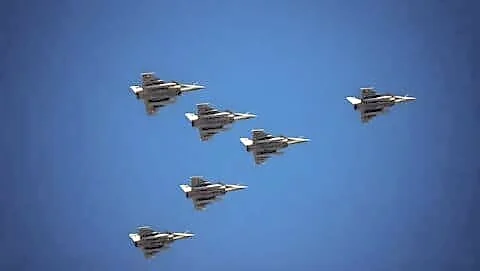
A pivotal Interface Control Document (ICD) may be an important part of the Euro 32 million (roughly $37 billion) deal for 114 Rafale fighters India is negotiating with Dassault, the French firm. The Rafale deal is the biggest deal that India has looked at since independence and the ICD is crucial as it will help with weapons integration. This means that Dassault will help to ensure that weapons, including indigenous ones, can be fitted on to the fighter. "We will tell them to give us the ICD, ideally. The contract, currently being negotiated, will make it clear that it is required. In our discussions, they have agreed," highly-placed government sources said. What it will do is ensure unilateral upgrade capability, meaning that in the future
India can fit weapons onto the plane without going back to Dassault. And this applies to not just Indian weapons, but theoretically, weapons made by a third country. The French Scalp cruise missile is likely to be fitted onto the plane. The Defence Acquisition Council, headed by defence minister Rajnath Singh, has already cleared the Scalp's purchase. Other weapon systems being considered include the Hammer precision guided munitions.
Indian missiles like the Astra-2 (which is under development and can have a range of 200 km+ is an option), as also, quite possibly the BrahMos-NG cruise missile with a range of at least 300 km, under development and considerably lighter than the one in use, can be fitted onto the plane, if necessary. The deal can be signed in about six months, if everything goes well, sources added. Levels of indigenous content is still an issue. India is hoping that it can reach about 50 percent, which will boost indigenous manufacturing. Asked about the French refusing to share source codes, the sources said: "It is not an issue for us. Nobody shares source codes in any case. I can't understand how this came up." The 114 Rafales will make up six squadrons, much needed by the IAF as it is down to about 30 squadrons. Currently, the IAF has two Rafale squadrons, having purchased 36 several years ago. The Navy has the maritime version of the Rafale, and the first of the 26 is likely to arrive in four-five months. These will be placed on the Navy's two aircraft-carriers, the INS Vikramaditya and the INS Vikrant.
/images/ppid_a911dc6a-image-17762680761834027.webp)
/images/ppid_a911dc6a-image-177626803965580743.webp)





/images/ppid_a911dc6a-image-177626756109635737.webp)
/images/ppid_a911dc6a-image-177626759575115615.webp)