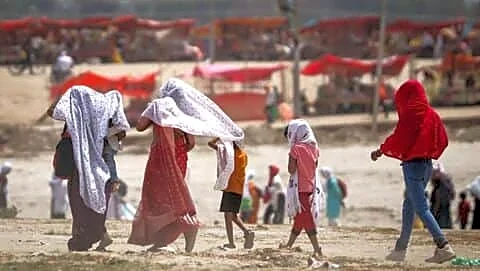
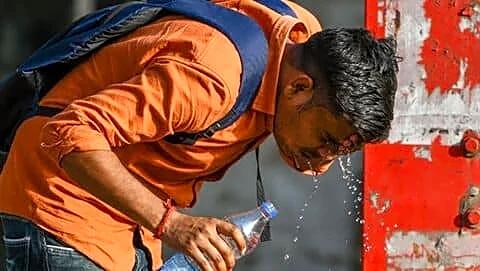
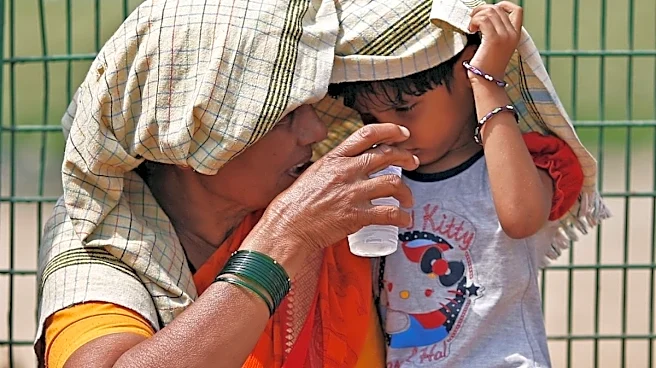
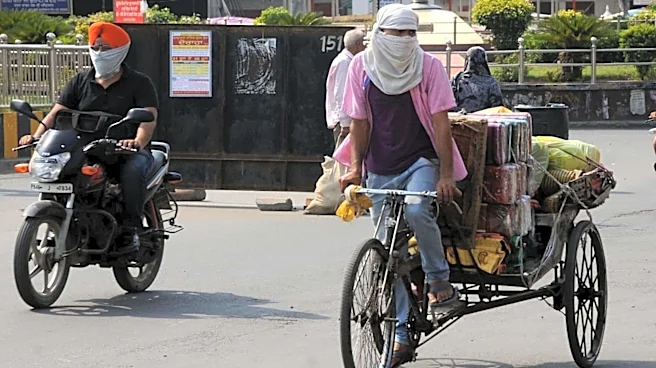
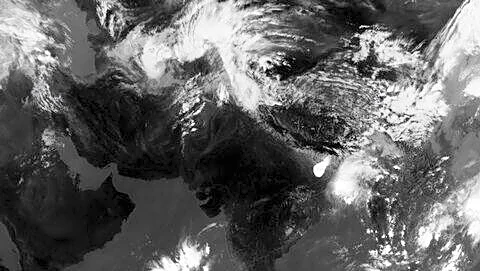
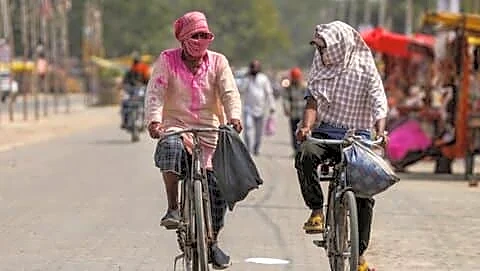
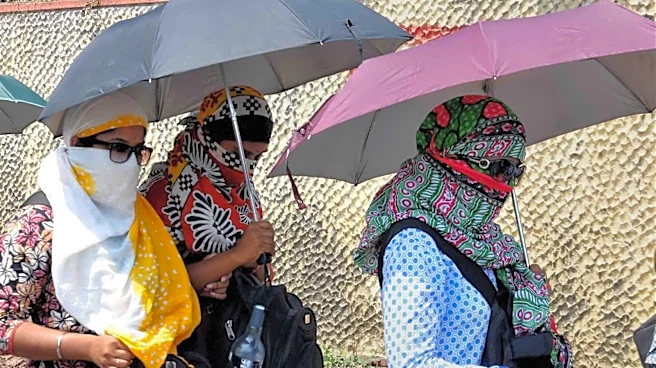
A severe heatwave has gripped the entire northern belt of the country and several regions in Central and Western India, with mercury looming between 43 degrees to 46 degrees, and no respite in visibility in the coming days. Adults, senior citizens, children, and animals are grappling with extreme heat conditions, but many are experiencing heat strokes and extreme climate-related health issues. Among the worst hit are those who are unprivileged, homeless, field workers, and animals who are left with limited options to fight these weather conditions.The punishing weather forced hospitals to operationalise heat stroke management units, while the IMD issued a heatwave alert in various parts of the country in the coming days. The extreme conditions have
begun to strain not just people, but also animals and birds, with veterinarians and animal rescuers reporting exhausted pigeons dropping unconscious from the sky, dehydrated eagles being picked up from roadsides, and street animals suffering from stomach toxicity.
UP Battles Heatwave, People Face Water Crisis, Power Supply Disruptions
In Uttar Pradesh's Prayagraj, people are facing a severe water crisis in the Shankargarh block as extreme heat conditions have left thousands of residents struggling for drinking water, with mercury crossing 40 degrees.
In another development in the state, Congress leader and MP Kishori Lal Sharma wrote to Chief Minister Yogi Adityanath seeking immediate intervention regarding the deteriorating power supply situation in the Amethi parliamentary constituency amid heatwave conditions.In his May 21 letter, Sharma said residents have been facing prolonged and unscheduled power cuts for several days during the intense summer heat, adversely affecting farmers, students, traders, and the general public. He said repeated outages were disrupting daily life, while irrigation activities in agricultural fields were also hit.
Delhi Trapped Under Heatwave
Delhi, too, remained trapped in intense summer conditions despite strong winds, thunderstorms, and light rain early morning, bringing temporary relief to parts of the city after days of searing heat.The India Meteorological Department (IMD) warned that temperatures across Delhi, Punjab, Haryana, and Chandigarh are likely to rise further from Sunday onwards. The heat's impact in the national capital has extended beyond humans.Across the city, veterinarians and rescuers say that distress calls involving birds and stray animals suffering from dehydration, heat strokes, and infections have risen sharply over the past few weeks as prolonged dry conditions and extreme temperatures continue to batter Delhi and the NCR.Delhi has been reeling under heatwave conditions over the past few days, with temperatures crossing the 45 degrees Celsius mark in several areas.According to doctors, hospitals across Delhi-NCR are witnessing a rise in patients reporting heat-related ailments, including eye irritation, dehydration-induced headaches, and heat-triggered neurological symptoms.
Mercury crosses 44 Degrees in Rajasthan's Chittorgarh
In Rajasthan, Chittorgarh emerged as the hottest place in the state in the last 24 hours at 44.2 degrees Celsius, as the meteorological department warned that temperatures were likely to rise further from Sunday, with severe heatwave conditions expected in isolated pockets.
IMD Says Weather To Remain Dry In Coming Days
According to the weather department, the weather in most parts of the state is likely to remain dry over the next week, and the temperatures are likely to rise by 2 to 3 degrees Celsius from Sunday. In the last 24 hours, the weather remained largely dry across Rajasthan.
Hot Conditions Prevail in Punjab and Haryana
In Punjab and Haryana, intense hot weather conditions prevailed. Rohtak in Haryana registered a maximum temperature at 44.1 degrees Celsius, while Punjab's Bathinda sizzled at 43.8 degrees Celsius.Among other places in Punjab, Amritsar recorded a high of 40.5 degrees Celsius, while Ludhiana's maximum was 41.2 degrees Celsius.Chandigarh, the common capital of the two states, recorded a high of 40.6 degrees Celsius.In Haryana, Ambala's maximum was 41.2 degrees Celsius, while Hisar's maximum settled at 42.4 degrees Celsius. Punjab Health Minister Dr Balbir Singh has directed the government hospitals to operationalise dedicated heat stroke management units with active cooling measures, including ice packs and cold IV fluids, and essential medical supplies.Singh said that his department has already taken proactive steps to prepare facilities and the workforce to prevent, mitigate, and manage the impacts of extreme heat. Essential medical supplies, such as ORS and emergency drugs, are well-stocked at every public health facility, he said in a statement.The minister further noted that ambulance preparedness has been strengthened to provide pre-hospital cooling during transit.In Himachal Pradesh, the Shimla meteorological centre has issued a yellow warning for heatwave conditions in parts of the state on May 26 and 27, with districts including Una, Bilaspur, Hamirpur, Kangra, Solan, and Sirmaur likely to be affected. It also forecast a fresh wet spell and thunderstorms in several parts of the state over the next few days under the influence of a western disturbance.In Jharkhand, the IMD issued a heatwave alert for the north-western districts of Garhwa, Palamu, and Chatra for Monday, while several other districts are likely to experience thunderstorms, lightning, and moderate rainfall over the next six days beginning May 24.An orange alert has also been issued for rain in north-eastern and some central districts, especially Dhanbad, for Sunday.In view of the prevailing heatwave-like conditions across the state, Chief Minister Hemant Soren, in a post on X, ordered all government officials and panchayat representatives to ensure proper arrangements for drinking water outside their offices and at public places for people.With heatwave conditions intensifying across several parts of the country, doctors are warning that prolonged exposure to high temperatures may adversely affect not only physical well-being but also eye and neurological functioning, especially among children, senior citizens and people with pre-existing medical conditions.
With inputs from PTI
/images/ppid_a911dc6a-image-177963243414052342.webp)






/images/ppid_a911dc6a-image-177945566369478210.webp)