India
has emerged as one of the countries with the highest number of ships passing through the Strait of Hormuz as Iran continues to tighten its grip on the crucial trade route. At least eight Indian vessels have passed through the Hormuz Strait since the Iran war began on February 28, while more than 10 vessels have crossed the West Asian region. According to Tehran, the Strait of Hormuz, a narrow shipping lane that is a conduit for oil and gas exports from Gulf countries to the world, is only closed for the US and its allies. Iran has allowed "friendly" nations to sail through the Hormuz.
Originally, there were 28 Indian-flagged vessels in the Strait of Hormuz when the war in West Asia broke out. Of these, 24 were on the West side of the Strait and four on the East side. Seven vessels from the west side and two from the east have managed to sail to safety, according to PTI.
Full List of Indian Vessels That Have Safely Crossed War Zone
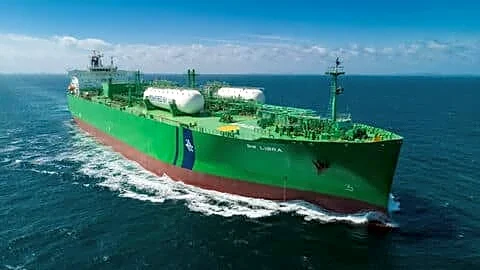
Green Sanvi - Green Sanvi, an Indian LPG tanker carrying roughly half a day's cooking gas supply, is the latest to have successfully crossed the war-hit Strait of Hormuz. "LPG vessel Green Sanvi has safely transited the Strait of Hormuz, carrying 46,650 tonnes of LPG cargo with 25 seafarers on board," a government statement said.
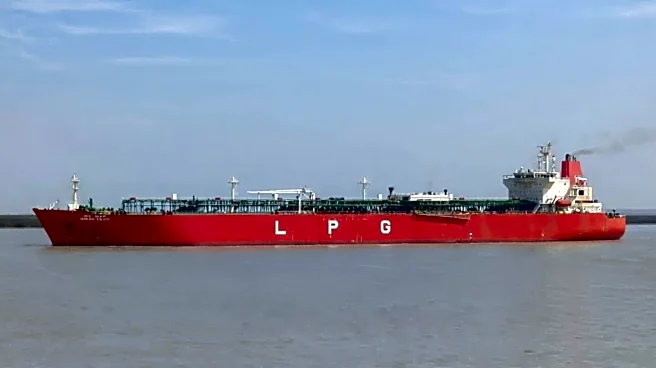
BW TYR and BW ELM - Earlier this week, two LPG carriers, BW TYR and BW ELM, carrying a combined LPG cargo of about 94,000 tonnes, safely transited the region. While BW TYR reached Mumbai on March 31, BW ELM docked at New Mangalore on April 1.
Pine Gas and Jag Vasant - Prior to that, two more Indian-flagged LPG tankers had safely sailed through the Strait of Hormuz. Pine Gas and Jag Vasant, carrying 92,612 tonnes of LPG, reached Indian ports between March 26 and March 28.
Shivalik and Nanda Devi - MT Shivalik and MT Nanda Devi were the first Indian vessels to cross the Strait of Hormuz after the Iran war broke out on February 28. The two vessels, carrying about 92,712 tonnes of LPG, had reached Mundra port in Gujarat on March 16 and Kandla port in the state on March 17, respectively.
Sea Bird - The Sea Bird, a vessel from Iran, also reached the port of Mangalore. "LPG vessel Sea Bird carrying around 44,000 tonnes of Iranian LPG berthed at Mangalore, India on April 2 and is currently discharging," the Ministry of Petroleum and Natural Gas said in a post on X. The purchase follows the United States last month waiving sanctions on Iranian oil and refined products temporarily to ease prices that have skyrocketed since the start of the Iran war.
Jag Laadki and Jag Prakash - Besides these LPG tankers, the Indian-flagged oil tanker Jag Laadki, with 80,886 tonnes of crude oil from the UAE, reached Mundra on March 18. It sailed from the Fujairah port in the United Arab Emirates (UAE) amid the ongoing war in West Asia. Another tanker, Jag Prakash, carrying gasoline from Oman to Africa, had previously safely crossed the strait and is en route to Tanzania.
LPG carriers Jag Vikram and Green Asha are still in the western Strait of Hormuz. One empty vessel is being filled with LPG.
How India's Quiet Diplomacy Helped Ease Hormuz Pressure
On Green Sanvi crossing the Hormuz on Saturday, Iran
conveyed a message of goodwill to India. In a post on X, the Iranian Consulate General in Mumbai said India, and Gujarat in particular, holds a "cherished place" in "our shared history," responding to Gujarat Deputy Chief Minister Harsh Sanghavi’s remarks on the safe passage of an Indian LPG tanker."One more ship. One more victory for Indian diplomacy. LPG carrier Green Sanvi has crossed the Strait of Hormuz and is on its way home to India," Sanghavi had posted on X (formerly Twitter). India's External Affairs Minister Dr S Jaishankar had earlier hailed direct talks with Iran as the most effective way to restart shipping through the Strait of Hormuz, in an interview with the Financial Times. Jaishankar said there was no "blanket arrangement" for Indian-flagged ships and that Iran had not received anything in exchange. "While this is a welcome development, there is continuing conversation because there is continued work on that,” he told the FT.
https://youtu.be/R3K1Agf5vqU?si=IvJYVEn96JgV5qgg
Indian Navy Ensures Security of Ships, Tankers: Rajnath Singh
Union Defence Minister Rajnath Singh on Friday noted the Indian Navy's indispensable role in securing commercial shipping lanes and oil tankers against emerging maritime threats.Speaking at the commissioning ceremony of INS Taragiri Visakhapatnam, the Defence Minister said the Indian Navy continuously maintains its presence in the Indian Ocean--whether it is the Persian Gulf or the Malacca Strait.Singh’s comments assume significance following the disruption of oil supplies and blockage of oil tankers in view of the prevailing situation in West Asia.
/images/ppid_a911dc6a-image-177536842543726024.webp)

/images/ppid_a911dc6a-image-177513706488830291.webp)

/images/ppid_a911dc6a-image-177519424853845840.webp)

/images/ppid_a911dc6a-image-177531122953844085.webp)


/images/ppid_a911dc6a-image-177523062468193791.webp)
/images/ppid_a911dc6a-image-177513443544245613.webp)
/images/ppid_a911dc6a-image-177515005477569359.webp)