As
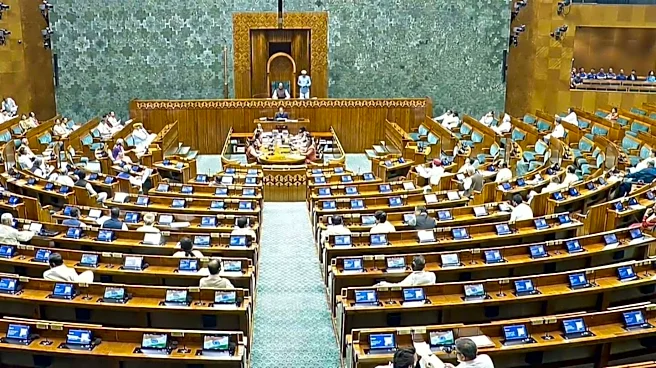
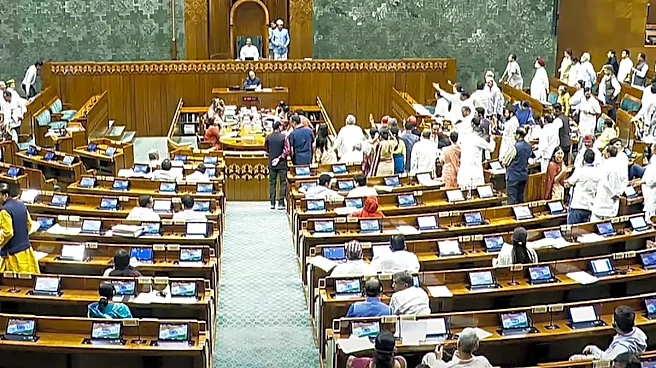
the delimitation debate intensifies in Parliament, the Opposition has argued that any future expansion of the Lok Sabha could tilt the balance in favour of northern states at the expense of the South. But historical data complicates this narrative, showing that the Hindi belt's share of Lok Sabha seats has, in fact, declined more than that of southern states.Between 1951 and 1977, when parliamentary seats were periodically reallocated following Census exercises, both regions saw their share shrink. However, the drop was significantly steeper for the Hindi belt, a decline of 3.1 percentage points compared to a 1.2-point fall for the South.
Does the North vs South debate hold up?
Data shows that the shift was not driven by gains for the South at the expense of the North, or vice versa. Instead, it reflected the growing representation of Union Territories, along with the rising share of western and eastern states.Before the linguistic reorganisation of states, India's map looked different. By 1956, states had largely taken their present form, but several Union Territories then had little or no representation in the Lok Sabha.Taken together, the data suggests that changes in parliamentary representation were shaped not just by the North-South dynamic, but also by state reorganisation, the expanding role of Union Territories, and the evolution of India’s federal map.
(The comparison tracks share of total Lok Sabha seats, not voter population per Member of Parliament or constituency size)According to government sources, delimitation will instead follow a formula that increases seats proportionately across all states by 50%. Under the proposed 50% formula, southern states would see a significant increase in seats - in many cases more than what a pure 2011 Census-based exercise would have delivered. As Parliament debates the Constitution (131st Amendment) Bill and the Delimitation Bill, 2026, voting is expected at 4 PM, April 17.
/images/ppid_a911dc6a-image-177640324944117568.webp)

/images/ppid_a911dc6a-image-177641376600686714.webp)
/images/ppid_a911dc6a-image-177636426633193838.webp)
/images/ppid_a911dc6a-image-177638777278193552.webp)




/images/ppid_a911dc6a-image-177650985765268910.webp)