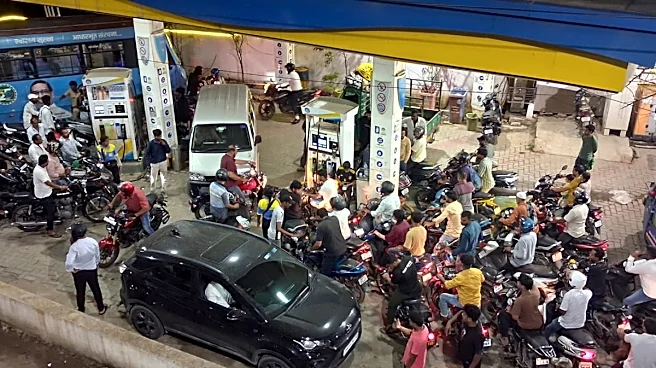
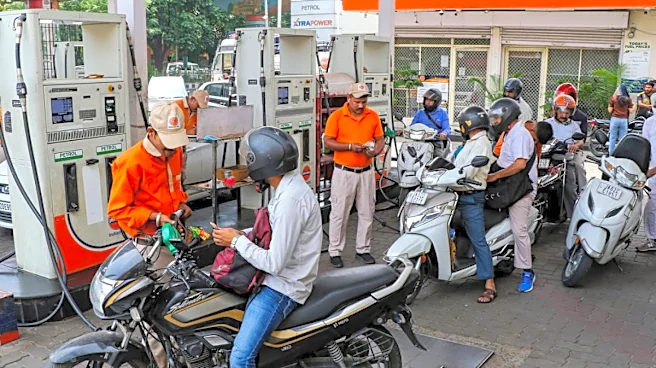
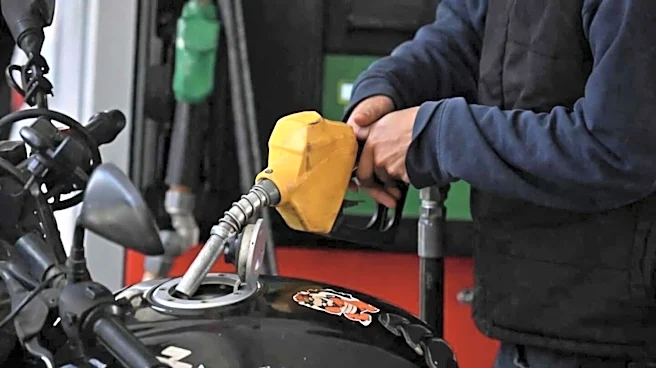
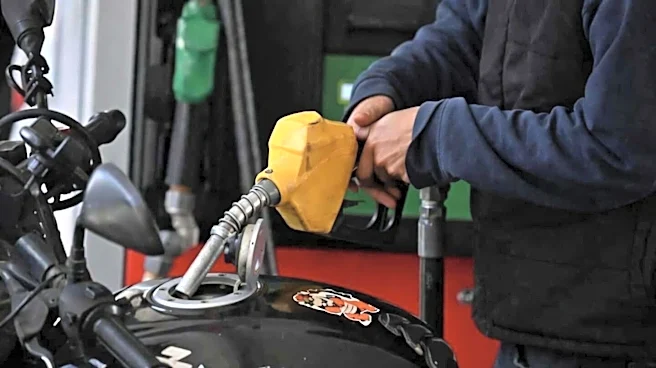
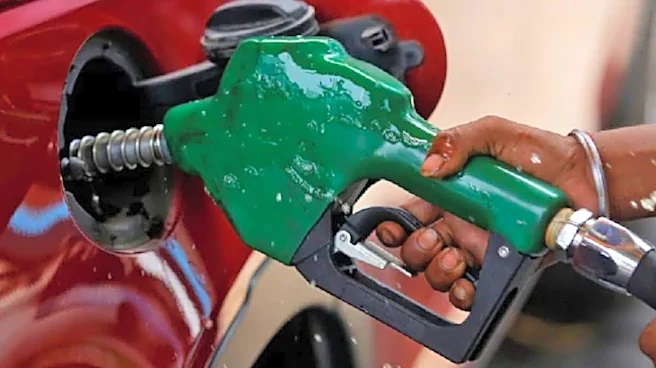
Petrol and diesel rates in India were increased for the first time in more than four years on Friday, May 15, amid soaring crude oil prices and disruptions in its supply due to the Iran war, which has been continuing for over 2 months now. While petrol and diesel prices were raised by Rs 3 per litre, CNG was hiked by Rs 2 per kg. The hike in prices has come following the Iran war that forced state-run fuel retailers to pass on part of their operating losses after months of holding rates steady.The increase pushed petrol prices in New Delhi to Rs 97.77 per litre from Rs 94.77, while diesel rose to Rs 90.67 from Rs 87.67. Though this was the price in Delhi, rates vary across states due to differences in value-added tax.Petrol in Mumbai now costs
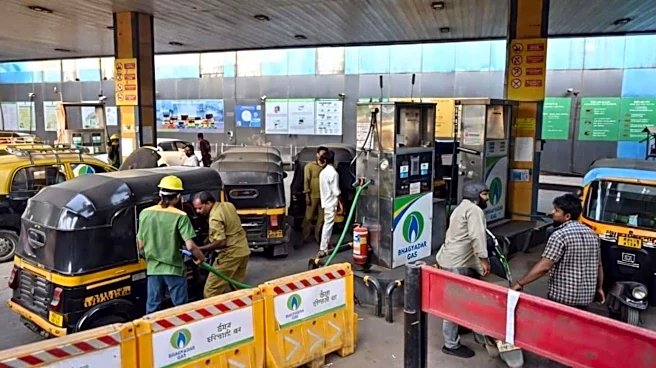
Rs 106.68 a litre and diesel comes for Rs 93.14 per litre. In Kolkata, petrol now costs Rs 108.74 per litre and diesel Rs 95.13, while in Chennai, prices increased to Rs 103.67 for petrol and Rs 95.25 for diesel.Meanwhile, the CNG prices were also raised by Rs 2 per kg in cities including Delhi and Mumbai. After revised prices, the CNG rate in Delhi was Rs 79.09 per kg, and in Mumbai it costs Rs 84. Apart from this, prices of both natural gas piped into household kitchens for cooking, called piped natural gas, as well as domestic cooking gas LPG, remained unchanged (to the last changed rate).However, in Delhi-NCR, CNG prices were hiked by Rs 1 on Saturday again — the second hike in two days, the first on Friday — taking the CNG rate to Rs 80.09 per kg.With already more than 2 months into the Iran war, which has adversely affected the supply chain of crude oil, leading to fluctuations in fuel prices, an uncertainty remains in the country as to whether the latest hike in petrol, diesel, and CNG prices is the first and final one, or it is just the beginning.
https://www.youtube.com/watch?v=RzCLaM9Cf68
Opposition Targets Govt
Many opposition leaders have criticised the government over the hike in fuel prices, questioning its policy and planning. Opposition leaders said that the government has failed to read the crude oil crisis in view of the Iran war and didn’t plan strategically to deal with the situation.Congress leader Rahul Gandhi attacked the government over the hike, saying the public was being forced to pay for the Prime Minister Narendra Modi-led administration's mistakes."Ghalti Modi sarkaar ki, keemat janta chukayegi (The public will pay the price for the Modi government's mistake)," Gandhi said in a post on X. "The Rs 3 shock has already arrived, the rest of the 'vasooli' (recovery) will be done in installments."
https://www.youtube.com/watch?v=W-zRZk-0lzc
Govt Defends Price Hike
BJP, however, defended the decision, saying the government had shielded consumers from the global oil shock for more than two months and implemented only a "limited and calibrated" increase of 3.2-3.4 per cent.
First Hike After 2022
Prices have remained on freeze since April 2022, but for a one-off reduction by Rs 2 a litre each on petrol and diesel in March 2024, just before Lok Sabha elections. Rates were last hiked in April 2022.
https://www.youtube.com/watch?v=4bKdMtn2WZE
Global Fuel Prices Surge by More Than 50 Per Cent Since Iran War
Global crude prices have surged more than 50 per cent since US-Israeli strikes on Iran on February 28 and Tehran's retaliation disrupted flows through the Strait of Hormuz, a key artery for global oil shipments.
Hike in Fuel Prices Lowest in India Among Major Nations
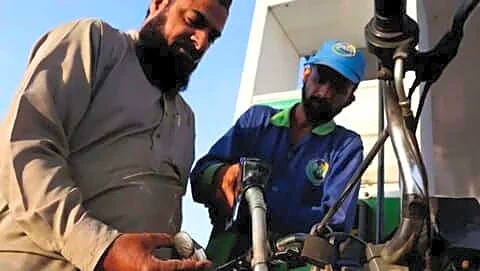
India has remained modest in terms of raising fuel prices compared to other nations where prices have gone up by almost 50-100 per cent.Talking about India’s neighbours, then Pakistan has raised petrol and diesel prices by PKR 64 and PKR 61 in the last three months. In Bangladesh, fuel prices have witnessed a 40-50 per cent surge. In Nepal, there has been an increase in fuel prices by 30-40 per cent. In Sri Lanka, a 45 per cent hike has been witnessed.Countries including the UK, Italy, and the Netherlands have also witnessed a hike of 20-35 per cent since the Iran war.Before increasing petrol and diesel prices, and despite the global surge, retail fuel rates were kept frozen in India at two-year-old rates as part of what the government said was an effort to shield price-sensitive consumers from higher global energy costs.However, the opposition parties saw political motives behind the move as key states went to polls.
https://www.youtube.com/watch?v=DC1PCWqPFvU
What Industry Insiders Say
According to PTI, industry sources said the price hike is modest relative to the rise in crude prices and still leaves retailers absorbing significant losses.Radhika Rao, Senior Economist at DBS Bank, said the higher pump prices were likely to moderate fuel demand, while adding 15-25 basis points to headline inflation, excluding second-round effects.Prashant Vasisht of Icra said the "modest" increase was insufficient to restore profitability for OMCs if crude prices remain elevated.ICRA estimates that at crude prices of USD 105-110 per barrel, OMCs continue to incur losses of around Rs 500 crore daily on sales of auto fuels and domestic LPG even after the fuel price increase, he added.Crisil's Sehul Bhatt described the increase as a "meaningful, if partial, step" toward reversing one of the longest under-recovery cycles in recent years."At their peak, oil marketing companies were absorbing losses of Rs 23-30 per litre on petrol and diesel, translating to a combined daily loss of Rs 1,300-1,400 crore," Bhatt said.According to Crisil estimates, the government's excise duty relief and the latest price increase have narrowed under-recoveries to about Rs 10 per litre on petrol and Rs 13 on diesel, though cumulative losses since the start of the conflict are expected to exceed Rs 1 lakh crore by the end of May.
Petrol, Diesel Price Hike Follows After Excise Duty Cuts
Friday's move follows excise duty cuts announced in March and comes as the government rolls out measures to curb fuel consumption and contain the country's oil import bill. Prime Minister Narendra Modi this week urged fuel conservation, work-from-home practices, and reduced travel as higher energy prices strain India's foreign exchange reserves and threaten to widen the current account deficit for a third straight year.Some state governments have already instructed departments to limit travel, avoid physical meetings, and operate with reduced office staffing.
Private Fuel Retailers Increase Pump Prices
Private fuel retailers had already increased pump prices. Nayara Energy, the country's largest private fuel retailer, in March, raised petrol prices by Rs 5 per litre and diesel by Rs 3, while Shell increased petrol prices by Rs 7.41 and diesel by Rs 25 per litre from April 1. In Bengaluru, Shell sells petrol at Rs 119.85 per litre and diesel at Rs 123.52.
A Look At Cooking Prices in India
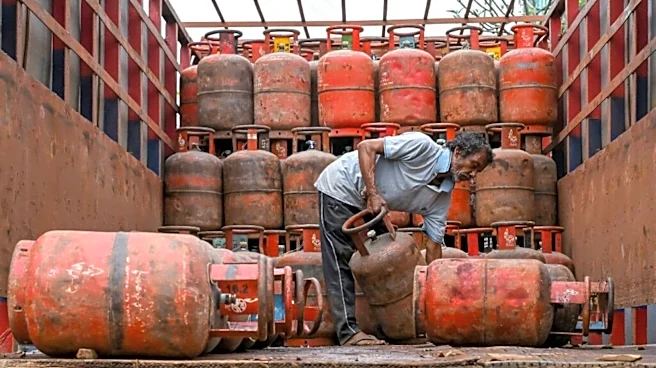
Domestic cooking gas LPG prices were raised in March by Rs 60 per cylinder, but they are still way lower than the actual cost. Oil companies are losing Rs 674 per 14.2-kg cylinder of LPG.Industry sources said the price hike appears calibrated - enough to partially ease margin pressure on oil companies without creating a major inflationary shock.The increase, however, will have some impact on inflation, they said.
India’s Retail Inflation
India's retail inflation, measured by the Consumer Price Index (CPI), rose to 3.48 per cent in April 2026 from 3.40 per cent in March, while wholesale price inflation (WPI) surged to 8.3 per cent, a 42-month high, driven by a sharp rise in fuel and energy prices amid elevated global crude oil rates.Petrol and diesel do not have a standalone category in the CPI basket, but are captured under the broader 'transport and communication' component and 'fuel and power' category. Petrol and diesel carry relatively smaller but still significant weights through transport-related items, and economists say fuel price hikes have a wider indirect impact because they raise freight, logistics, and input costs across sectors.
With inputs from PTI
/images/ppid_a911dc6a-image-177904743758435286.webp)

/images/ppid_a911dc6a-image-177881606374827962.webp)



/images/ppid_a911dc6a-image-177881342976732847.webp)
/images/ppid_a911dc6a-image-177881869827450930.webp)
/images/ppid_59c68470-image-177882502920381447.webp)