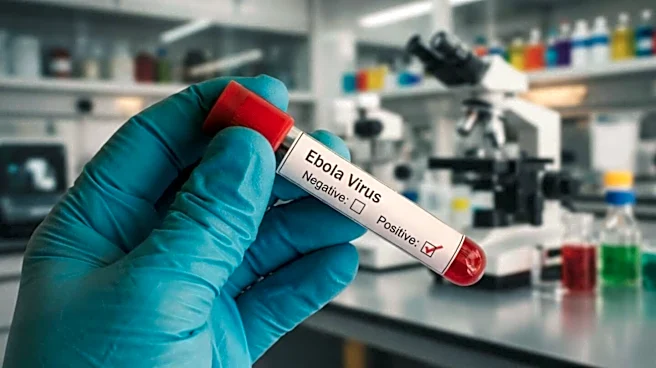
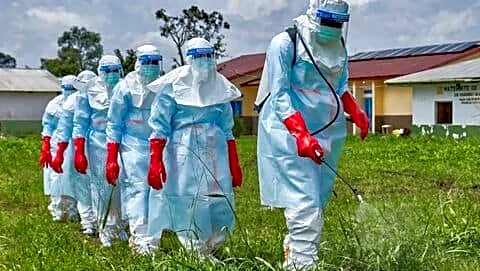
The World Health Organization (WHO) has formally declared the Ebola disease a Public Health Emergency of International Concern in view of the outbreaks across the Democratic Republic of the Congo and Uganda. The health organisation's action prompted a wave of international responses, including a travel advisory issued by the Indian government.The outbreak, caused by the rare Bundibugyo strain of the virus for which no approved vaccine or treatment exists, has recorded 204 deaths from 867 suspected cases across three provinces of the Democratic Republic of the Congo, making it the second largest Ebola outbreak in recorded history after the 2014 to 2016 West Africa epidemic.In wake of the outbreak, countries bordering the Democratic Republic of the Congo and Uganda,
including South Sudan, are accessed to be at high risk of transmission.
India Issues Travel Advisory For DRC, Uganda And South Sudan
Issuing a advisory, the Government of India has asked all Indian citizens to avoid non-essential travel to the Democratic Republic of the Congo, Uganda and South Sudan until further notice.According to a press release issued by the Ministry of Health and Family Welfare, Indian citizens currently residing in or travelling to these countries are advised to strictly follow public health guidance issued by local authorities and maintain heightened precautions.India has so far not reported any case of Ebola disease caused by the Bundibugyo virus strain.
Can Ebola Enter India Or Spread Internationally Through Travel?
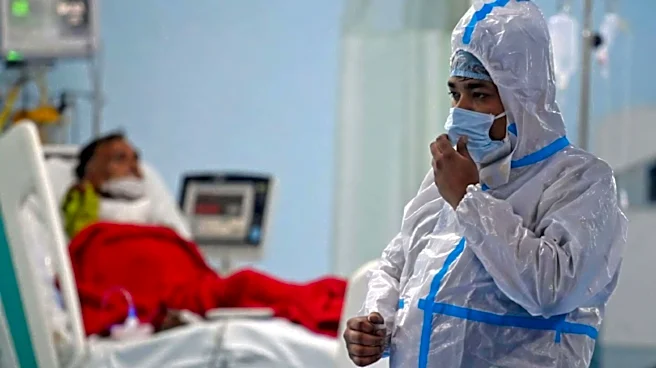
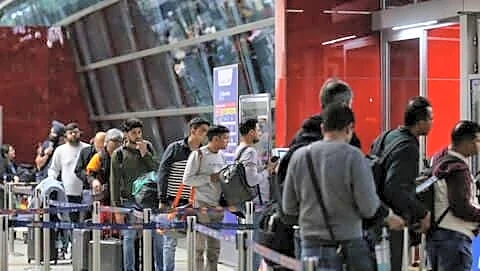
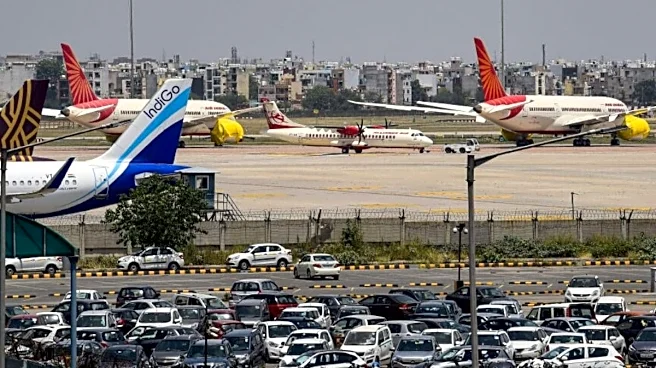
While Ebola outbreaks are usually concentrated in parts of Africa, international travel can occasionally carry infected individuals across borders. However, airports, hospitals, and health authorities worldwide now follow strict screening and isolation protocols. India has previously strengthened airport surveillance during Ebola outbreaks. Experts say the risk of widespread Ebola transmission in India remains low because the virus is not airborne like COVID-19.
What Is Bundibugyo Strain And Why Is It Dangerous
Ebola disease is a viral haemorrhagic fever caused by infection with the Bundibugyo strain of the Ebola virus. It is a serious illness with a high mortality rate. Critically, no vaccines or specific treatments can prevent or treat Ebola disease caused by this particular strain, leaving health authorities almost entirely dependent on public health measures to contain its spread.
/images/ppid_a911dc6a-image-17796012297039531.webp)

/images/ppid_a911dc6a-image-177937772589435244.webp)



/images/ppid_59c68470-image-177946756771962929.webp)

/images/ppid_59c68470-image-177935502368863246.webp)

/images/imfZ6nBC-image-17793517809577715.webp)