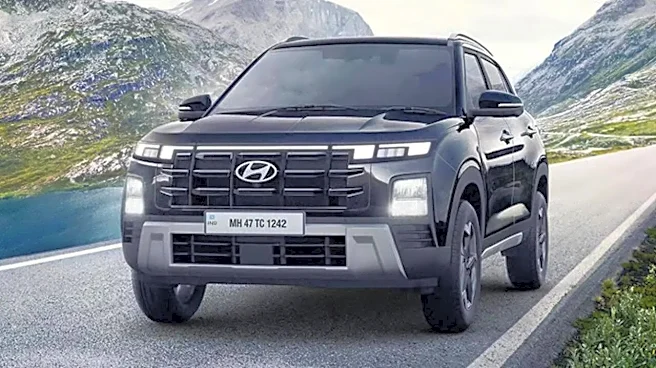
The government has dismissed concerns being raised that India's ethanol blending program -- E20 fuel -- could affect the validity of vehicle insurance policies, and assured that it remains safe, consumer-friendly, and economically beneficial. In a statement, the oil ministry said that claims linking E20 fuel use to insurance invalidation had been clarified with relevant stakeholders and were found to be incorrect.The Press Information Bureau (PIB) in a release said that the government has noted certain misleading and unsubstantiated claims being circulated on social media regarding Ethanol Blended Petrol (EBP), which appear to be aimed at confusing and misleading the public. It has also been observed that old images and videos are being recirculated
in an apparent attempt to garner viewership through sensationalism and create unwarranted concerns regarding ethanol-blended fuel."Ethanol blending is a globally accepted practice and is successfully implemented in several countries, including the United States, Brazil, and Japan," it said.It noted that Brazil has long adopted higher ethanol blending levels, with E27 serving as the country's standard petrol blend.The government said the ethanol blending programme has helped India save more than Rs 1.4 lakh crore in foreign exchange by reducing crude oil imports. It added that the programme has created sustained demand for agricultural feedstocks used in ethanol production, supporting farmers' incomes and strengthening rural economy."Ethanol blending plays an important role in enhancing India's energy security, reducing carbon emissions and advancing the country's transition towards cleaner mobility," the statement said.The government said it remains committed to implementing the programme "in a safe, transparent and consumer-centric manner, guided by scientific evidence and continuous stakeholder engagement."
Ethanol Blending Scientifically Validated
The Ministry of Petroleum and Natural Gas reiterates that the Ethanol Blending Programme is scientifically validated and continuously monitored by the Government.The Ethanol Blending Programme was launched in 2003 with the objectives of reducing crude oil imports, enhancing energy security and promoting environmental sustainability. The programme has been implemented in a phased manner based on technical preparedness and stakeholder consultations, culminating in the rollout of 20 per cent ethanol blending (E20) from 2023 onwards.
No Widespread Issues of Engine Failure Reported
The Government continuously monitors the implementation of the Ethanol Blending Programme in consultation with oil marketing companies, automobile manufacturers, fuel testing agencies and other stakeholders.Since the introduction of E20 petrol, no widespread issues of engine failure or vehicle breakdown attributable to ethanol blending have been reported.
Misleading Claims
A claim currently being circulated relates to the hygroscopic nature of ethanol. It is common knowledge that the entry of water into the fuel tank is undesirable for any fuel, whether ethanol blended or otherwise. Modern vehicles are equipped with design features and safeguards to prevent water entry into fuel tanks.It has also been observed that certain individuals are creating and sharing videos on social media falsely portraying sugarcane juice as being mixed directly with petrol. Such content is misleading and baseless. Ethanol used for fuel blending is produced through established industrial processes and conforms to stringent quality specifications before blending with petrol.Ethanol is made from a variety of feedstocks, such as sugarcane juice, molasses, broken rice and maize, but the properties of ethanol are vastly different from the input feed stock as it has undergone a series of processes, including fermentation, which leads to fermentation of the sugars present in the feedstocks.The circulation of such videos appears aimed at sensationalising the issue and increasing their viewership.Ethanol-blending in India conforms to stringent fuel quality specifications and undergo rigorous testing before deployment.The rollout of higher blending levels has been undertaken only after extensive technical evaluation and consultation with automobile manufacturers and other stakeholders.
With inputs from PTI
/images/ppid_a911dc6a-image-178224551002533831.webp)









/images/ppid_a911dc6a-image-178218303166121237.webp)



/images/ppid_59c68470-image-178210255520987451.webp)

/images/ppid_59c68470-image-178214508072482475.webp)
/images/ppid_59c68470-image-178213003896788385.webp)