/images/ppid_a911dc6a-image-17804800361417094.webp)

/images/ppid_a911dc6a-image-178039407137825436.webp)

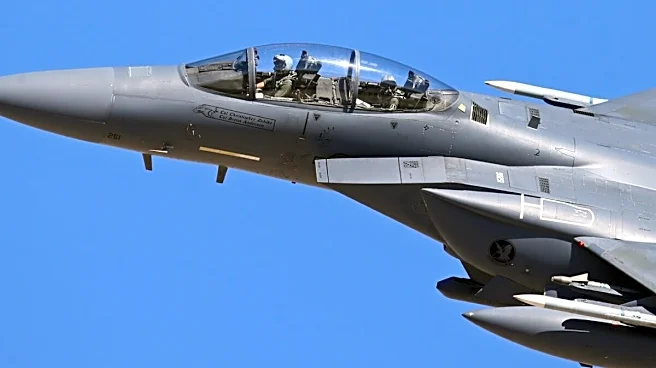

Twenty-six civilians lost their lives in the Pahalgam Attack on April 22, 2025. The tragedy triggered a chain of events that ultimately culminated in Operation Sindoor, one of the most complex conventional military operations undertaken by India in recent decades. While the operation's immediate objective was punitive action against terror-linked infrastructure and military targets across Pakistan and Pakistan-occupied Jammu and Kashmir, its strategic consequences continue to reverberate within India's defence establishment.The opening phase of Operation Sindoor began on May 7 with coordinated strikes against nine targets. Conducted during the night and lasting approximately 26 minutes, the operation showcased India's growing confidence in precision
strike warfare. As the conflict evolved, the campaign expanded dramatically, with Indian forces reportedly targeting eleven Pakistani air bases in what became one of the largest conventional military exchanges witnessed in South Asia in decades.
🚨| Operation Sindoor Proved India Needs An Integrated Missile Force — Now Comes The Hard Part“Wars are increasingly won not by the platform that launches the weapon, but by the network that finds the target first.”Operation Sindoor was not just a military operation.It may… pic.twitter.com/I508fGHyDH
— OpGrid India (@OpGridIndia) June 2, 2026
Operation Sindoor Showed The Growing Importance Of Missile Warfare
According to an assessment by OpGrid India, the operation was notable not simply because of the targets engaged, but because of the diverse range of weapon systems employed. India utilised French-origin SCALP cruise missiles, HAMMER precision-guided munitions launched from Rafale fighter aircraft, indigenous BrahMos supersonic cruise missiles and Harop loitering munitions.The combination reflected a layered strike architecture that blended imported capabilities with indigenous systems. Capt SB Tyagi (Retd) point to recent conflicts, particularly the war in Ukraine. "Overdependence on a single supplier or weapon category can create vulnerabilities during prolonged operations. India's evolving inventory appears increasingly designed around diversification and redundancy," Capt Tyagi told Times Now Digital.🚨| Operation Sindoor Redrew India’s Red Lines — Pakistan’s Nuclear Bluff Was Called“For acts against India, the response is assured.” — Indian ArmyAt 1:05 AM on May 7, 2025, India launched the opening strike of Operation Sindoor. What followed over the next 88 hours was not… pic.twitter.com/w43XT3QGEh
— OpGrid India (@OpGridIndia) May 6, 2026
Regional Missile Competition Is Accelerating
The strategic rationale for an Integrated Missile Force extends beyond lessons from Operation Sindoor. Regional military developments are increasingly shaping India's thinking. Pakistan has announced the establishment of an Army Rocket Force Command, a move widely viewed as inspired by China's People's Liberation Army Rocket Force.China's missile-centric force structure has become a central pillar of its military strategy, allowing Beijing to integrate conventional and strategic deterrence capabilities under a specialised command. Pakistan's efforts to replicate aspects of this model reflect the growing importance of long-range precision fires in regional military competition.Indian defence planners are also conscious of developments elsewhere. Turkey's use of integrated missile and drone capabilities in Syria, Libya and Nagorno-Karabakh demonstrated how unified command structures can provide operational agility. These examples have strengthened arguments that India's current arrangements, spread across services, may require institutional reform.At the same time, analysts caution against creating a fully tri-service missile command prematurely. While advocates of joint structures highlight interoperability benefits, critics point out that excessive coordination requirements can slow battlefield decision-making. Many experts instead favour an Army-led Integrated Missile Force with embedded Air Force and Navy liaison mechanisms, allowing jointness without sacrificing operational speed.A key aspect of the proposal is maintaining a clear separation from the Strategic Forces Command, thereby preserving the distinction between conventional and nuclear capabilities.Indigenous Firepower And The Future Of Soldier-Centric Warfare
Beyond organisational reform, the debate surrounding an Integrated Missile Force is closely linked to India's broader military modernisation efforts. Analysts argue that no missile force can remain effective without a robust domestic industrial base capable of sustaining wartime consumption rates.India already possesses a growing portfolio of indigenous systems, including BrahMos, Pralay, Nirbhay and emerging hypersonic technologies. The challenge now lies in creating institutional mechanisms capable of integrating, funding and prioritising these capabilities over the long term. Strategic partnerships with trusted allies may continue, but defence planners increasingly view self-reliance as a critical requirement.The discussion also intersects with another transformation underway within the Indian Armed Forces. Modern warfare is increasingly shifting from platform-centric models towards soldier-centric, network-enabled operations. In this framework, technology serves as an enabler rather than the centrepiece of combat power.The Indian Army's focus on networking, data-centric warfare, drones, counter-drone systems and real-time battlefield connectivity reflects this evolution. Sensors, communications networks and precision weapons are increasingly being integrated to enhance the effectiveness of soldiers and tactical units operating at the front line.🚨| Operation Sindoor Day 1 — 23 Minutes That Broke Pakistan’s Terror Shield“Deterrence is not built on words. It is built on demonstrated capability and the will to use it.”On the night of May 6–7, 2025, India didn’t just retaliate.It executed a calibrated, precision-driven… pic.twitter.com/IL6TkMfFSX
— OpGrid India (@OpGridIndia) May 7, 2026
/images/ppid_59c68470-image-178046253242552349.webp)


/images/ppid_59c68470-image-178028253263433528.webp)
/images/ppid_59c68470-image-178023253288468124.webp)
/images/ppid_a911dc6a-image-178020445357144771.webp)
/images/ppid_59c68470-image-178030256073694574.webp)
/images/ppid_59c68470-image-178042503574534603.webp)
/images/ppid_59c68470-image-178024008269215435.webp)