Nearly
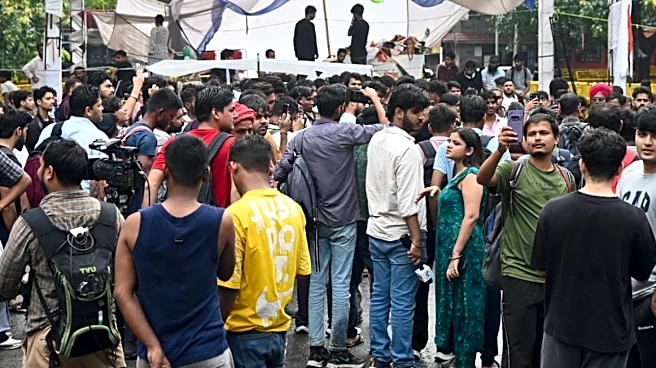
a month after students and protesters first gathered at New Delhi's Jantar Mantar, the protest has entered its fifth week with no signs of ending. What began as a demonstration against NEET exam paper leaks has now grown into a wider movement over education reforms, unemployment and government accountability. Despite police action and heavy rain, thousands continue to camp at Jantar Mantar, insisting they will not leave until their core demands are met.
How the protest began
The sit-in started in late June after repeated allegations of paper leaks in several competitive examinations. Protesters accused the government of failing to protect the future of millions of students. The movement soon expanded beyond the issue of leaked exams. Activists, students and civil society groups began demanding accountability from the Centre, compensation for affected families and the resignation of Union Education Minister Dharmendra Pradhan.
How Sonam Wangchuk Amplified The Protest
The protest gained national attention when activist Sonam Wangchuk joined the agitation with an indefinite hunger strike. His participation brought thousands more supporters to Jantar Mantar, with volunteers setting up community kitchens, medical camps and donation centres. The protest transformed from a student-led demonstration into a broader youth movement.
The turning point: 'Sansad Chalo'
The biggest turning point in the month-long agitation came on July 20, when the CJP carried out the 'Sansad Chalo' march during Parliament's Monsoon Session. What had until then remained a peaceful sit-in at Jantar Mantar spilled onto the streets as thousands of students, job aspirants and supporters attempted to march towards Parliament, demanding the resignation of Union Education Minister Dharmendra Pradhan.Delhi Police had imposed restrictions around the Parliament complex and erected multiple layers of barricades to stop the march.
As protesters tried to move forward, clashes broke out. Police used tear gas shells, water cannons, lathi charges and physical force to disperse the crowd. Videos from the scene showed students running through tear gas, volunteers carrying injured protesters to safety and demonstrators trying to shield one another from baton blows. Many protesters claimed they were beaten even after they had stopped resisting, while several alleged that
women protesters were dragged, manhandled and even molested during the crackdown. Police detained hundreds of demonstrators and shifted many to police stations across the city.
By evening, hospitals around central Delhi had treated scores of injured protesters for head injuries, fractures, bruises and breathing problems caused by tear gas. CJP spokespersons claimed nearly 180 people were injured, while several police personnel were also hurt in the clashes. Delhi Police, however, maintained that officers had used only the force necessary after protesters allegedly attempted to break security barricades and enter the high-security Parliament zone. Officials accused sections of the crowd of pelting stones and attacking police personnel, allegations denied by protest leaders.The scenes from July 20 quickly became the defining images of the movement. Videos of bloodied students, volunteers washing tear gas from protesters' eyes, women being carried away from the protest site and young aspirants seeking refuge spread rapidly across television and social media. The visuals sparked outrage, drew criticism from Opposition parties and civil society groups, and prompted demands for an independent inquiry into the police action.
Why are protesters still at Jantar Mantar?
The
protesters say the government's announcements do not address their main demands. They continue to seek the resignation of Dharmendra Pradhan, a court-monitored investigation into paper leak cases, accountability for officials involved in the leaks, compensation for families of students who died by suicide and comprehensive reforms to India's examination system to prevent future leaks.
What has the government done so far?
Over the past month, the Centre has taken several steps aimed at addressing concerns over exam leaks. The Government announced that the CBI would be taking over investigations into major paper leak cases and filing chargesheets in several cases. Centre has also held meetings with the protest leaders, assuring that those responsible would face strict legal action. The Government also agreed to hold discussions on strengthening the examination system and recruitment process and addressing the NEET paper leaks in Parliament. However, protesters say these measures fall short because no political accountability has been fixed.
PM Modi's first response
Prime Minister Narendra Modi responded publicly to the agitation for the first time. He announced that the government would set up fast-track courts to ensure speedy trials in examination paper leak cases. He also said those who "play with the future of the youth" would face swift and stringent punishment. The announcement marked the Centre's first direct response after weeks of protests.
Why protesters are not satisfied
While welcoming faster trials, protesters have said the announcement does not address their primary demand, which is the resignation of Education Minister Dharmendra Pradhan. They argue that fast-track courts and CBI investigations deal with the criminal cases but not with political accountability for repeated examination failures. Protesters have said the sit-in will continue until their demands are met.
What happens next?
As the protest enters its fifth week, Jantar Mantar remains occupied by students, job aspirants and volunteers from across the country. With Parliament in session, security around central Delhi has been tightened. The government is pushing legal action through CBI investigations and promises of fast-track courts, while protesters remain firm on their demand for ministerial accountability and systemic reform.For now, neither side appears ready to back down, making the month-long sit-in one of the most significant youth-led protests against the BJP government in recent years.
/images/ppid_a911dc6a-image-178479884336569136.webp)


/images/ppid_a911dc6a-image-178461152336582794.webp)

/images/ppid_a911dc6a-image-178472843138428634.webp)


/images/ppid_a911dc6a-image-178478763668185526.webp)
/images/ppid_a911dc6a-image-17846710209239494.webp)
/images/ppid_a911dc6a-image-178461855429923538.webp)
/images/ppid_a911dc6a-image-178470933248620563.webp)