/images/ppid_a911dc6a-image-177514230997458905.webp)

/images/ppid_a911dc6a-image-177513963602059817.webp)
/images/ppid_59c68470-image-177510753113526498.webp)


When US President Donald Trump declared April 2, 2025 as “Liberation Day” for American trade policy, India felt the impact almost immediately. What followed was not a single round of talks, but a full year of challenges, adjustments, and strategic moves as New Delhi dealt with sweeping US tariffs, geopolitical tensions, and shifting global supply chains.The first major blow came on April 2, 2025, when Trump imposed an additional 26% tariff on Indian goods — a 10% baseline duty plus a 16% reciprocal levy. This sudden move made Indian exports less competitive in the US market, hitting sectors like textiles, engineering goods, and chemicals particularly hard. Instead of rushing into concessions, India chose a measured approach. Key areas such as agriculture,
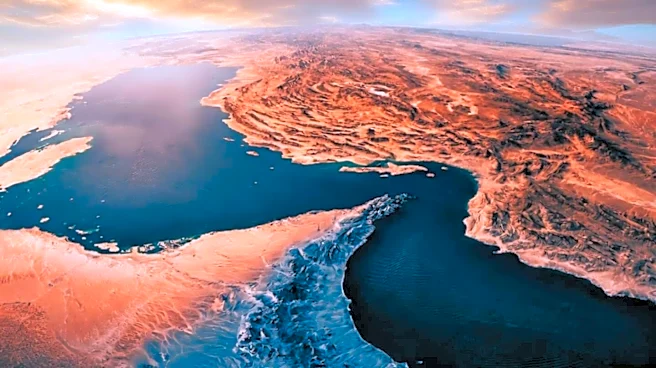
dairy, and IT services were kept off the table for quick compromises. A temporary breather arrived on April 9 when Trump suspended the additional 16% tariffs for 90 days, bringing the effective rate down to 10%. But this was clearly a tactical pause rather than a final solution.Negotiations gained momentum in mid-April after US Vice President JD Vance visited New Delhi. Over the following months, Indian officials led by Commerce Minister Piyush Goyal held multiple rounds of talks in Washington. Discussions covered tariff reductions, market access, and non-tariff barriers, but differences remained, especially on agriculture and regulatory issues.By July, the situation worsened. When the 90-day pause ended without a deal, the US reimposed a 25% tariff on Indian goods, effective August 7. In some cases, effective duties reached as high as 50% when including penalties linked to India’s continued purchase of Russian oil. Apparel exports to the US fell by about 6% in dollar terms between April and December 2025, while overall export growth remained subdued.Rather than panic, India focused on diversification. In July 2025, it signed a free trade agreement with the UK, giving near-zero duty access to 99% of Indian exports. Talks with the European Union also advanced rapidly, culminating in a near-complete deal by January 2026. Engagements with Gulf nations and Israel slowed due to regional tensions, but the broader strategy was clear: reduce dependence on any single market.At home, the government and the Reserve Bank of India introduced supportive measures. The RBI extended export credit timelines to 450 days to ease working capital pressure on exporters. The rollout of “GST 2.0” with simplified tax slabs aimed to boost domestic consumption and offset some of the weakness in exports.Just as tariff pressures began to ease, a new challenge emerged from the West Asia conflict. Disruptions in the Strait of Hormuz increased freight costs and delayed shipments, shifting the problem from pricing pressure to physical supply chain issues. In response, the government allowed Special Economic Zone (SEZ) units to sell a portion of their output domestically at reduced duties, helping companies utilise excess capacity.The turning point came in early 2026. After direct conversations between Trump and Prime Minister Narendra Modi, and several rounds of high-level talks, India and the US announced an interim trade deal on February 2, 2026. The US agreed to reduce tariffs on Indian goods to 18% from 25% and scrapped the additional 25% penalty linked to Russian oil purchases. In return, India committed to lowering tariffs on a range of US goods and significantly increasing purchases of American energy, technology, and other commodities — potentially exceeding $500 billion over time.The deal also covered non-tariff barriers, digital trade rules, and supply chain cooperation, signalling a broader strategic partnership.Even after the agreement, uncertainties lingered. In February 2026, the US Supreme Court struck down several of Trump’s tariffs, forcing Washington to adjust its approach. New duties were introduced, first at 10% and later raised to 15%, adding another layer of complexity.India's experience over the past year highlights the volatile nature of global trade. Tariffs are no longer simply economic measures; they have become intertwined with geopolitics, court decisions, and supply chain disruptions. India has taken steps to weather the economic turbulence through strategic negotiations, reforming their domestic market, and actively pursuing alternatives for sourcing products. Because of this multi-faceted response from the Nation, many analysts are surprised at how effectively India has adjusted.The road ahead remains challenging. The February deal is an interim framework, and final terms of a broader bilateral trade agreement are still being worked out. Global uncertainties, from the West Asia conflict to shifting US trade policy, continue to loom large. What is clear, however, is that India has shown resilience and strategic thinking in one of the most turbulent trade periods in recent memory.
/images/ppid_a911dc6a-image-177515005477569359.webp)

/images/ppid_59c68470-image-177509761267668618.webp)

/images/ppid_a911dc6a-image-177513702974180721.webp)
/images/ppid_a911dc6a-image-177519424853845840.webp)