New
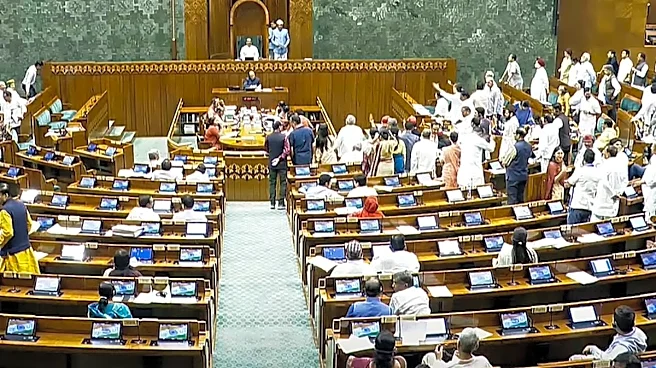
Delhi: A key Constitution Amendment Bill aimed at modifying the women’s reservation framework failed to pass the Lok Sabha test on Friday after falling short of the required two-thirds majority when put to a vote. Following the setback, the Centre decided not to proceed with two associated bills, namely the Delimitation Bill and the Union Territories Laws (Amendment) Bill, both of which were seen as crucial to operationalising women's quota in specific regions. The proposed constitutional amendment was intended to fine-tune the implementation of the Nari Shakti Vandan Adhiniyam, which mandates 33% reservation for women in the Lok Sabha and state assemblies.
What's Next For The Other Two Bills?
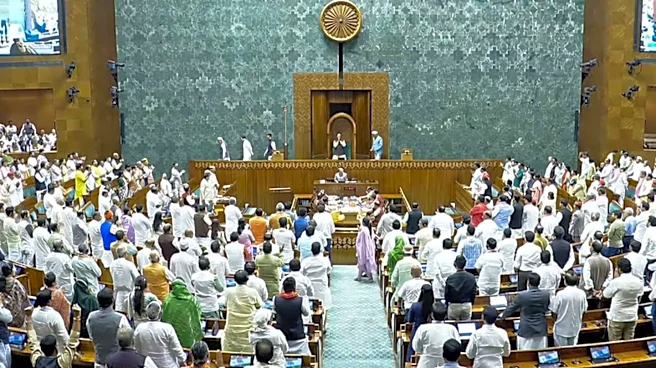
Under constitutional provisions, any amendment bill requires the support of at least two-thirds of members present and voting. Despite securing 298 votes in favour against 230 opposing it, the ruling NDA fell short of this number. With approximately 293 MPs, around 54% of the Lok Sabha, the alliance lacked the numbers needed to push the bill through without additional backing or abstentions from opposition members.The legislative push was part of a special three-day Parliament session, which also sought to pave the way for implementing the quota by 2029. A key proposal included increasing the strength of the Lok Sabha from 543 to 850 seats, linked to a future delimitation exercise based on the most recent census. This expansion was projected as necessary to accommodate reserved seats without significantly reducing existing constituencies.However, the Opposition strongly opposed the proposed amendments from the outset, raising concerns over the sequencing of delimitation and reservation, as well as the potential political implications for different states.In the Rajya Sabha, the numbers present a more favourable scenario for the NDA, which holds about 141 seats, roughly 58% of the House, compared to the Opposition’s 83. Despite this, the failure in the Lok Sabha effectively stalls the legislative process for now.The debate also saw regional concerns come to the forefront. Naveen Patnaik, chief of the BJD, urged MPs from Odisha to unite in protecting the state’s political and economic interests, warning they could be adversely impacted by the proposed delimitation exercise.During the debate, Prime Minister Narendra Modi made a strong appeal for bipartisan support, stating that while he was willing to take the political blame if the Opposition blocked the bills, he was equally ready to share full credit if consensus was achieved.
/images/ppid_a911dc6a-image-177645267047443255.webp)

/images/ppid_a911dc6a-image-177626027001610746.webp)
/images/ppid_a911dc6a-image-17762500257813059.webp)


/images/ppid_a911dc6a-image-177627846997370647.webp)
/images/ppid_a911dc6a-image-177631485847165429.webp)


/images/ppid_a911dc6a-image-177637982885929658.webp)
/images/ppid_a911dc6a-image-177641376600686714.webp)
/images/ppid_a911dc6a-image-177638777278193552.webp)