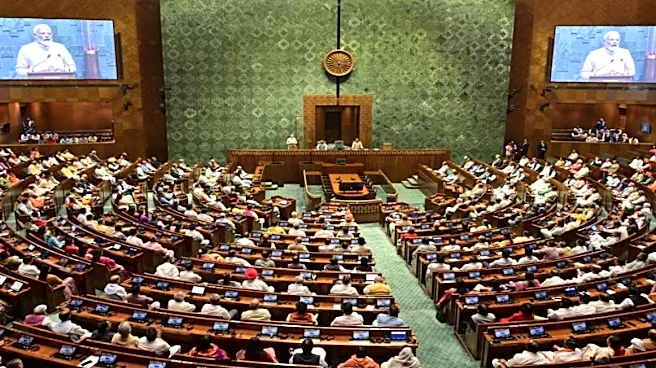
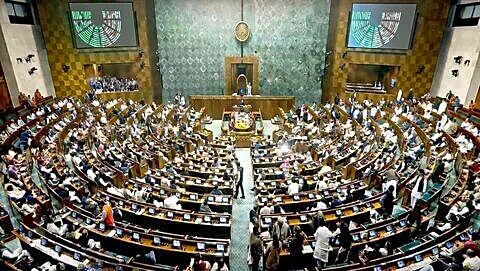
The government’s proposed Bills on delimitation, aimed at enabling the early rollout of women’s reservation in Parliament and state Assemblies, seek to address several key questions, even as they open up new areas of debate likely to surface during the special session of Parliament later this week. One major proposal is to cap the number of elected Lok Sabha members at 815, a 50% increase from the current strength of 543. The new Parliament building’s Lok Sabha chamber can seat up to 888 members, with the capacity expandable to 1,272 during joint sessions.However, the formula for allocating seats among states based on population remains unclear. While the government has indicated it will preserve the current proportion of seats held by each
state, this could prove challenging under the constitutional principle of “one person, one vote, one value,” especially given the widening population gap between northern and southern states over the past four decades.Notably, no delimitation exercise has taken place since the one based on the 1971 Census. The upcoming exercise is expected to rely on data from the 2011 Census.
From Constitutional Mandate to Legislative Control
More significantly, the proposed Bills could fundamentally reshape how delimitation is conducted in the future. They seek to dismantle the long-standing constitutional requirement of carrying out the exercise after every decadal Census.At the centre of this shift is a proposed amendment to Article 82. The draft Constitution -- One Hundred and Thirty-First Amendment -- Bill, 2026 proposes renaming it from “Readjustment after each Census” to “Readjustment of constituencies,” while removing the explicit mandate that seat allocation and constituency boundaries must be revised following every Census. In effect, delimitation would no longer be a compulsory, periodic exercise tied to updated population data.A parallel amendment to Article 81 redefines how “population” is determined for seat allocation. Instead of relying strictly on the most recent Census, Parliament would be empowered to decide—through legislation—which Census figures to use. While this introduces flexibility, it also places significant discretion in the hands of the government of the day.
A Departure from Established Practice
Under the proposed framework, a Delimitation Commission would carry out the exercise “in such manner and on the basis of such census” as specified by Parliament. This means both the timing of delimitation and the data it relies on could be determined by a simple majority vote.This marks a clear break from past practice. Since the 1970s, postponing delimitation, largely to avoid disadvantaging states that successfully curbed population growth, required constitutional amendments passed with a two-thirds majority, as seen in 1976 and 2001. The new approach lowers that bar, potentially giving future governments greater leeway in shaping the process.While the Bills continue to base delimitation on population, they stop short of outlining how Lok Sabha seats will be distributed among states without disturbing existing regional balances.The Delimitation Bill, 2026 refers to using the “latest census figures” available when the Commission is constituted and reiterates established criteria such as administrative boundaries, geographical features, and public convenience. However, the absence of a clear formula for seat allocation creates a gap between the political assurance of maintaining current state-wise proportions and the legal provisions being proposed.This tension becomes more pronounced when viewed against the constitutional principle of equal representation. Article 81 mandates that the ratio between a state’s population and its number of seats should, as far as possible, be uniform across the country, and that constituencies within each state should have roughly equal populations.Balancing this principle with the promise of preserving existing seat shares across states is likely to emerge as a central point of contention when the Bills are debated in Parliament.
/images/ppid_a911dc6a-image-177618487495332317.webp)


/images/ppid_59c68470-image-177591008378511282.webp)




/images/ppid_a911dc6a-image-177600542971385695.webp)
/images/ppid_a911dc6a-image-177614066528894231.webp)
/images/ppid_a911dc6a-image-177605222883099514.webp)
/images/ppid_a911dc6a-image-17760756278433294.webp)
/images/ppid_a911dc6a-image-177597163112971246.webp)