/images/ppid_a911dc6a-image-17833322243782201.webp)

/images/ppid_a911dc6a-image-178306183045379595.webp)



As Prime Minister Narendra Modi’s three-day visit to Indonesia begins on July 6, Yudho Sasongko, Deputy Chief of Mission of the Embassy of the Republic of Indonesia spoke exclusively to Times Now on the India-Indonesia partnership.1. Defense Cooperation: Indonesia has expressed interest in BrahMos cruise missiles, and India has proven experience building Scorpene-class submarines at Mazagon Docks. As PM Modi visits Jakarta, is Indonesia looking at concrete steps toward defense industrial cooperation with India in missiles and submarine construction during this visit? Defence and security cooperation is one of the strongest pillars of our partnership, spanning joint exercises, staff talks, training, defence-industrial collaboration, and co-production
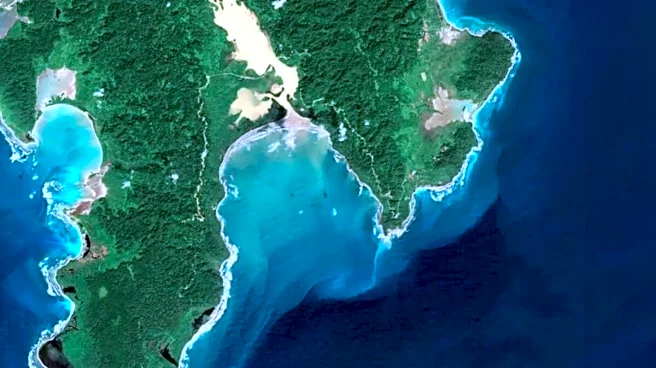
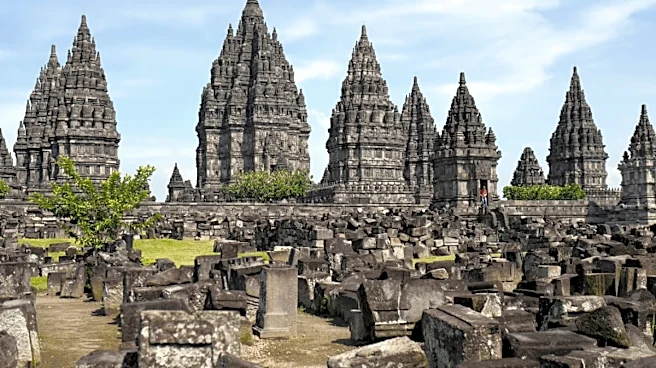
of new technologies. On specific platforms and procurement matters, I would note that these are best addressed by the relevant defence authorities through their own channels, so I would not want to pre-empt them here. What I can say clearly is that the direction of our defence relationship is toward deeper industrial and technological cooperation, and India's growing and capable defence-industrial base makes it a natural partner as Indonesia modernises its armed forces.2. Mining & Critical Minerals: Indonesia accounts for about 60% of global nickel production and both countries have growing EV and battery ambitions. In what specific areas — nickel, rare earths, or battery supply chains — can India and Indonesia deepen mining and critical minerals partnership during PM Modi’s visit? As one of the world's largest nickel producers, Indonesia sees itself as a natural partner for India's clean-energy and manufacturing ambitions. Both countries underscore the importance of strengthening collaboration on critical minerals and rare earths, with a focus on building diversified and resilient supply chains that reduce vulnerabilities and strengthen economic security. The most promising areas are precisely those you mention: nickel and its downstream processing, rare earths, and the battery supply chain that underpins the electric-vehicle ecosystem. Our interest is not simply in exporting raw materials, but in cooperation that adds value downstream to the benefit of both economies, and we view India as a serious, long-term partner in this transition. 3. Maritime Security & Indo-Pacific: India and Indonesia already conduct coordinated patrols near the Malacca Strait and our Andaman & Nicobar Islands are geographically close to Sumatra. How do you see India-Indonesia maritime security cooperation evolving to ensure a free, open and inclusive Indo-Pacific, especially in the Indian Ocean region? As two major maritime nations, with the Andaman and Nicobar Islands sitting only 100 nautical miles from Aceh, we are geographically destined to cooperate. Building on the 2018 Shared Vision on Maritime Cooperation, we are deepening coordination between our maritime agencies, including between BAKAMLA and the Indian Coast Guard, across maritime domain awareness, coastal surveillance, HADR, and search and rescue, alongside our coordinated patrols. Our shared aim is to ensure safe, open, and secure sea lanes and a free, open, and inclusive Indo-Pacific, based on mutual respect of each other's maritime boundaries and, of course, in accordance with international law, including UNCLOS. This is a cornerstone of stability for the wider Indian Ocean region. 4. ASEAN-India & Act East Policy: PM Modi has consistently emphasized ASEAN centrality in India’s Act East Policy. With Indonesia as ASEAN’s largest member, what role does Jakarta see for itself in taking India-ASEAN engagement to the next level — in trade, connectivity and digital cooperation? Indonesia appreciates India's consistent emphasis on ASEAN unity and ASEAN centrality, and as ASEAN's largest member we see a natural role for ourselves in helping advance India-ASEAN engagement. We want to see the ASEAN-India Comprehensive Strategic Partnership deepened through concrete initiatives, particularly in trade, connectivity, and digital cooperation, and greater synergy between the ASEAN Outlook on the Indo-Pacific and India's Indo-Pacific Oceans' Initiative. On trade, we look forward to an early and balanced conclusion of the ASEAN-India Trade in Goods Agreement Review. The guiding principle for us is that any regional architecture must reinforce, not dilute, ASEAN's central role. 5. PM Modi’s Connect with Indian Diaspora: PM Modi will address nearly 120,000 people of Indian origin in Indonesia on July 7, with President Prabowo Subianto also attending. What does this large turnout and presidential presence say about the importance of the Indian diaspora in Indonesia-India ties? The Indian community in Indonesia is a living bridge between our two societies, and the two leaders will participate together in a reception hosted by that community in honour of the visit. President Prabowo's presence speaks to the deep value both governments place on people-to-people ties. The diaspora contributes meaningfully to Indonesia's economy and social fabric, and it carries forward the civilisational bonds that have connected our peoples for over two millennia. We see it as one of the great strengths of the Indonesia-India relationship. 6. People-to-People & Cultural Ties: The Ramayana and Mahabharata remain hugely popular in Indonesia and PM Modi is also expected to visit a UNESCO heritage site here. How can India and Indonesia leverage these deep civilizational and cultural linkages to further strengthen people-to-people ties? Cultural diplomacy is at the very heart of our relationship, which is rooted in centuries of civilisational exchange. The enduring popularity of the Ramayana and Mahabharata in Indonesia, and Prime Minister Modi's visit to Prambanan and India's support for its restoration, beautifully symbolise that shared heritage. We are also proud to commemorate 2026–2027 as the "Tagore–Dewantara Year," marking the centenary of Tagore's 1927 visit, through a year-long programme of cultural, educational, and people-to-people initiatives. These deep civilisational links give our modern partnership a depth and warmth that few relationships enjoy, and we intend to build on them through expanded cultural, educational, and youth exchanges.