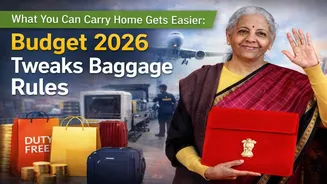

The Union Budget for 2026–27 has proposed easing baggage rules for international travellers, raising duty-free allowances and simplifying customs procedures
to address long-standing concerns of passengers, while also cutting customs duties on a range of goods, including cancer medicines. Finance Minister Nirmala Sitharaman said the revised baggage rules would better reflect present-day travel realities and provide clarity on the temporary movement of goods brought into or taken out of the country.
The Budget proposed changes to the Baggage Rules, 2016, under which Indian residents and foreigners residing in India arriving from countries other than Nepal, Bhutan or Myanmar are currently allowed to bring duty-free goods worth up to Rs 50,000. The revised framework aims to make the process more passenger-friendly and transparent.
nsitharamanoffc
2017876961025278428
In a major relief for travellers, the Budget also proposed reducing customs duty on goods imported for personal use from 20% to 10%. The concession, however, will not apply to motor vehicles, alcohol and tobacco.
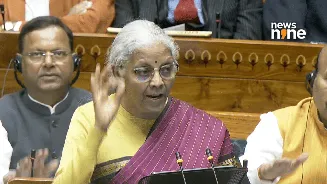
VIDEO | Union Budget 2026–27: Finance Minister Nirmala Sitharaman says, “…I propose to revise provisions governing baggage clearance during international travel to address genuine concerns of passengers. The revised rules will enhance duty-free allowances in line with… pic.twitter.com/GPZguDGnYN
— Press Trust of India (@PTI_News) February 1, 2026
Alongside baggage reforms, Sitharaman unveiled a “trust-based” customs regime designed to simplify cargo clearances and reduce compliance costs. The new system will rely on a single-window platform, lower verification requirements for regular importers with established supply chains, and easier duty payment norms for Authorised Economic Operators.
The government also plans to use artificial intelligence for scanning at ports and roll out a Customs Integrated System within two years to cover all customs processes.
Sitharaman said honest taxpayers would be allowed to settle customs disputes by paying an additional amount instead of facing penalties. She also announced that advance rulings would be binding on customs authorities for five years, up from the current three-year period.
The Budget further proposed transforming the customs warehousing framework into a warehouse operator-centric system based on self-declaration, electronic tracking and risk-based audits.
“These proposals aim to further simplify the tariff structure, support domestic manufacturing, promote export competitiveness and correct inversion in duty,” Sitharaman said in her Budget speech.
The reforms, she added, would move away from officer-dependent approvals and help reduce transaction delays and compliance costs.
In addition to baggage and procedural changes, the Budget waived customs duty on 17 cancer drugs as part of its effort to rationalise exemptions and improve access to essential medicines.