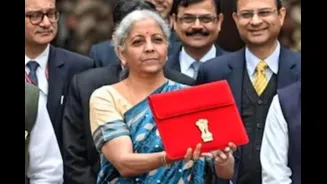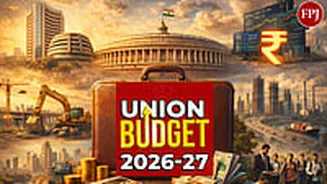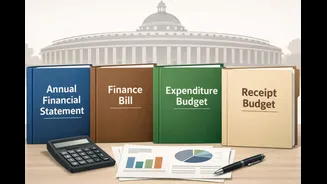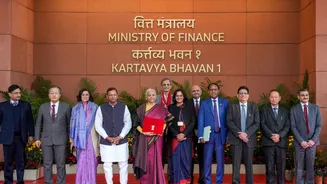






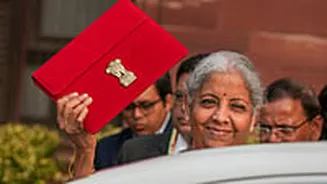
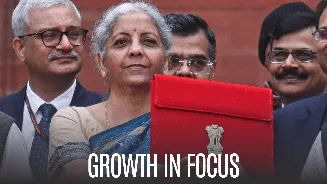
Like every Union Budget, 2026 brings a mix of benefits and challenges for different segments of the economy. Finance Minister Nirmala Sitharaman on Sunday,
February 1, rolled out a budget aimed at fostering growth while maintaining stability and pushing reforms. While the measures offer relief in some areas, they also tighten rules elsewhere, reflecting the government’s effort to balance fiscal prudence with economic growth.
This year's Budget was based on three 'Kartavyas'
- Accelerating and Sustaining Economic Growth
- Fulfilling Aspirations of the Indian People
- Ensuring Inclusive Development (Sabka Vikas)
For investors, the budget raised foreign portfolio investment limits in listed Indian equities, with individual caps doubling to 10 per cent and the overall limit increasing to 24 per cent. Compliance has been simplified; property buyers from non-residents no longer require a TAN for tax deduction, and proceeds from share buybacks will now be taxed as capital gains, benefiting minority investors. Tax incentives for IFSCs and Offshore Banking Units have been extended to encourage offshore banking and ship ownership.
On the flip side, the government has increased Securities Transaction Tax (STT) on derivatives and restricted deductions on interest expenses related to dividends and mutual funds. Capital gains exemptions on sovereign gold bonds are limited to the original subscriber who holds until maturity.
Mahavir Lunawat, Chairman and Managing Director, Pantomath Capital, noted, "This budget provides a massive boost to the capital market by creating new, efficient pathways for raising capital. The Rs 100 crore incentive for municipal bonds and the push for CPSEs to launch dedicated REITs show a clear strategy to unlock value from public assets. By simplifying the Foreign Exchange Management (FEMA) rules and expanding the Portfolio Investment Scheme, the government is opening the doors wide for global capital to flow into Indian companies. These reforms make it significantly easier and cheaper for both the government and private enterprises to fund their next phase of growth, ensuring that the pipeline for new listings and infrastructure projects remains robust and attractive to investors."
"The introduction of a market-making framework and total return swaps for corporate bonds is a game-changer; it ensures that investors can buy and sell with much greater ease and lower costs. Additionally, turning TReDS receivables into asset-backed securities creates an entirely new category of liquid assets for the market to trade. While the adjustments in Securities Transaction Tax (STT) reflect a move toward market stability, the overall emphasis on digital integration and faster settlement processes makes our trading ecosystem more transparent and resilient. We are seeing the Indian markets evolve into a highly efficient, world-class platform," Lunawat added.
For Taxpayers
The Finance Minister announced multiple measures to reduce compliance burdens. “The deadline to revise income tax returns can now be extended by three months, from December 31 to March 31, on payment of a nominal fee,” easing procedural pressures for taxpayers. Overseas spending has also been made lighter, with the Tax Collected at Source (TCS) under the Liberalised Remittance Scheme cut from 5 per cent to 2 per cent for foreign education, medical treatment, and overseas travel.
Other relief measures include automated online processes for lower- or nil-tax deduction certificates and a six-month window for voluntary disclosure of undisclosed foreign assets or income without interest during the appeal. The Minimum Alternate Tax (MAT) rate has been trimmed to 14 per cent from 15 per cent and is now treated as a final tax. Additionally, minor offences under the Income Tax Act will attract fines rather than prosecution.
However, some limitations remain. MAT credit accumulation will stop from April 1, 2026, and only existing credits can be set off under the new tax regime. Tax exemptions on disability pensions have also been narrowed to service personnel forced to retire early due to disability.
Srikrishna Narasimhan, Whole-Time Director & CEO, GlobalPay, said, "The rationalisation of TCS under the Liberalised Remittance Scheme for education, medical expenses, and overseas travel will directly reduce friction for students, young professionals, NRIs, and families who engage in legitimate cross-border transactions. At the same time, clarity on TDS for manpower services and the one-time foreign asset disclosure scheme demonstrates a balanced approach that combines compliance with fairness and practicality for small taxpayers."
Consumers And Businesses
Consumers benefit from duty-free imports on 17 life-saving drugs, including cancer medications, and specific parts for microwaves. Yet, certain everyday and digital items, such as e-readers, adult diapers, and video games, face no duty concessions, and a 10 per cent BCD applies to CD-ROMs of educational materials.
Prathap C Reddy, Founder and Chairman, Apollo Hospitals, “The Union Budget 2026–27 sends a reassuring message that India’s growth will be anchored in healthier citizens and stronger health systems. The continued focus on expanding public health capacity, strengthening prevention, and improving access across tier-2 and tier-3 India is consistent with the vision of Viksit Bharat.”
He added, “We welcome the emphasis to deepen India’s life sciences and innovation ecosystem through Biopharma SHAKTI, including new and upgraded education and research institutions and a nationwide network of 1000 accredited clinical trial sites. These steps will accelerate the development of advanced therapies and reinforce India’s position as a trusted global destination for healthcare and life sciences.”
Reddy said that the focus on people is especially heartening. “Adding 10,000 medical seats in the coming year, alongside training 1.5 lakh caregivers and scaling allied health disciplines, can strengthen the Prime Minister's vision of Heal in India, Heal by India. Supporting states to create five hubs for medical tourism will elevate quality standards across regions. We appreciate the reaffirmed commitment to mental health and trauma care through the proposal to establish NIMHANS-2, upgrade apex mental health institutions in Ranchi and Tezpur, and expand emergency and trauma care capacity by 50 per cent in district hospitals through dedicated centres,” he noted.
“Measures to improve affordability, including duty-free access to 36 life-saving drugs, can ease the financial burden for patients,” he opined.
Additionally, businesses gain from simplified customs and excise rules, extended validity of advance rulings, and measures promoting exports of marine, leather, and textile products. However, duty exemptions on ATMs, cameras, TV equipment, and filmmaking gear are set to lapse, signalling a gradual tightening of incentives.